Category Monday Cloud Tips

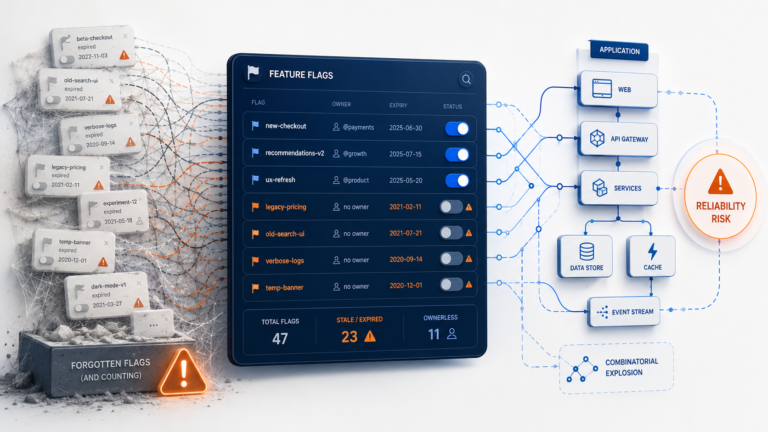
Feature flag dashboard showing expired and ownerless flags accumulating around an application architecture and increasing reliability risk.

Feature Flag Debt: The Reliability Risk Nobody Audits

Every feature flag your team ships carries an expiry date nobody enforces. The pull request says “thirty minute experiment” or “gate for phased rollout,” and eighteen months later the flag is still live, evaluated on every request, owned by an…
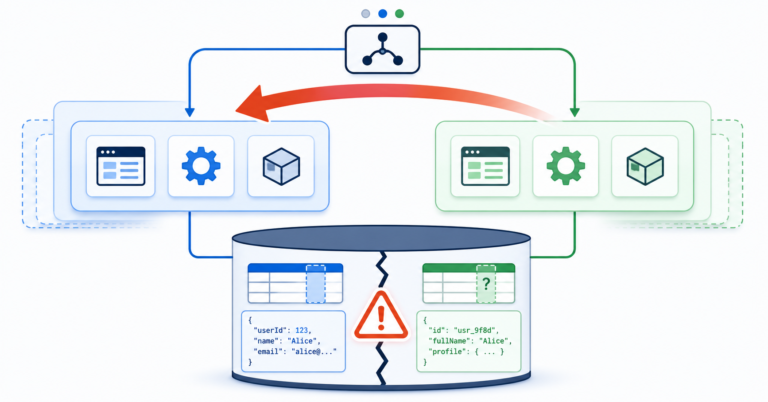
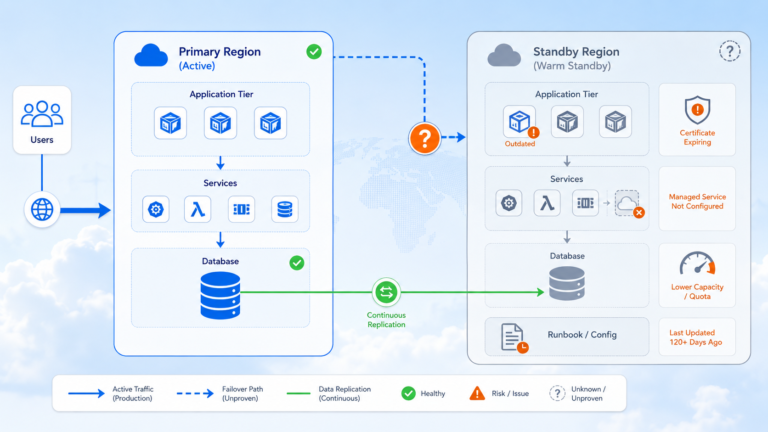
Active production region replicating data to a warm standby with untested failover, configuration drift and capacity risks.

Your Warm Standby Is a Hypothesis, Not a Recovery Plan

Somewhere in your estate there is a warm standby environment that has never taken production traffic. It replicates data continuously, consumes budget every month, appears in the disaster recovery section of every architecture review, and has never once been asked…

Cloud engineers reviewing a dashboard where CPU looks healthy while backlog, latency, and service pressure are rising.

CPU Is the Wrong Signal for Most Autoscaling Policies

64% of organisations use the Kubernetes Horizontal Pod Autoscaler to manage workload capacity, and most of those autoscaling policies scale on exactly one signal: CPU or memory utilisation. Only 20% scale on anything else. The other 80% inherited a default…

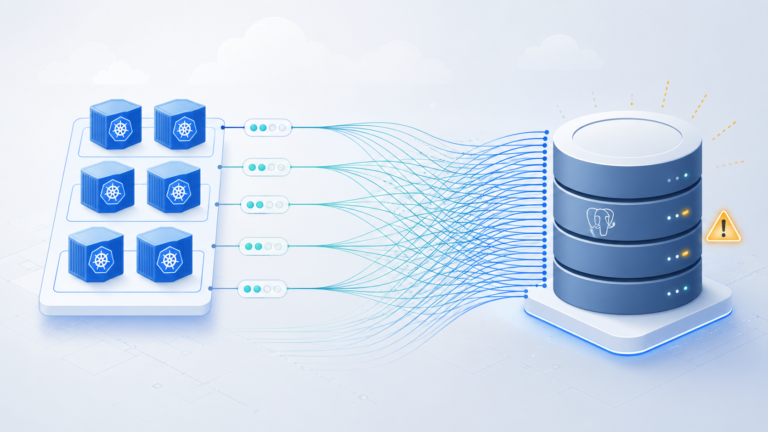
Application containers multiplying database connection lines into a single strained PostgreSQL database, illustrating hidden connection pool scaling risk.

Your Database Connection Pool Is an Architectural Decision

Most teams treat connection pool sizing as a configuration detail, the kind of thing you set once during initial deployment and revisit only when something breaks. That assumption is wrong, and the consequences of getting it wrong are asymmetric in…

A security analyst stands in front of a glowing digital log archive, while older records dissolve into fragments, symbolising lost forensic evidence caused by short log retention.

Log Retention Is a Risk Decision, Not a Storage Decision

Most teams set log retention periods the same way they set default instance sizes: they accept whatever the console suggests, adjust slightly when the bill arrives, and move on. GCP’s _Default log bucket retains 30 days. Azure Monitor defaults to…

Cloud architecture landscape showing data moving between regions, services, edge nodes and external platforms, with glowing cost markers representing hidden cloud egress charges.

Egress Costs Are an Architecture Problem, Not a Billing One

Cloud egress costs arrive as a billing surprise. They appear across dozens of line items that nobody owns, growing steadily month over month in a way that makes attribution difficult and root cause harder to establish. The standard response is…

CDN edge layer serving users quickly while a slow origin infrastructure struggles in the background

Your CDN Is Not a Performance Strategy

CDN deployment is the most common first response to a slow application. Point a CNAME at a vendor, watch the dashboard metrics improve, and close the performance ticket. For a while it works, because a CDN helps with the fraction…

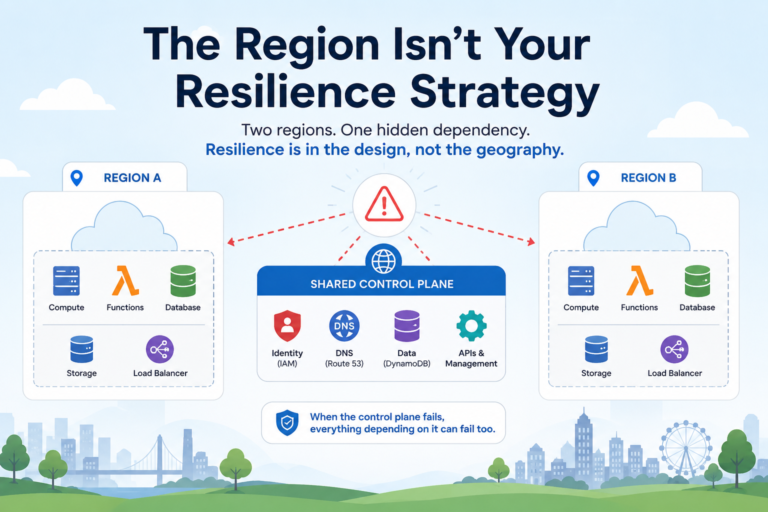
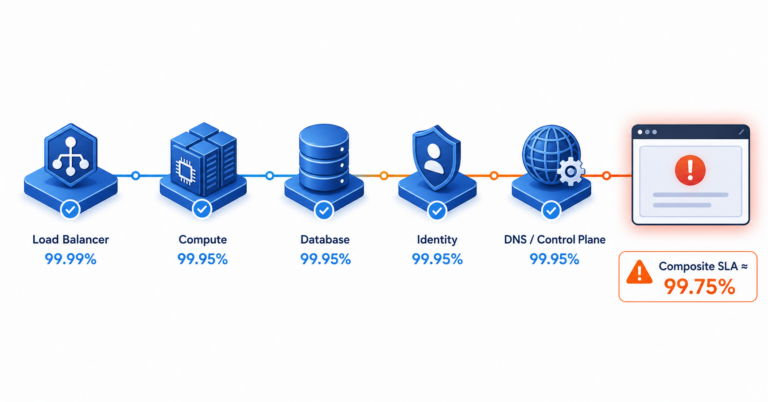
Illustration of two cloud regions connected to a shared control plane, showing that regional deployment alone does not guarantee resilience.

The Region Isn’t Your Resilience Strategy

“We’re deployed across two regions” has become the enterprise answer to the resilience question. Architects include it in design documents, leadership repeats it to auditors, and engineering teams treat it as sufficient. In most cases, it is not. Having infrastructure…