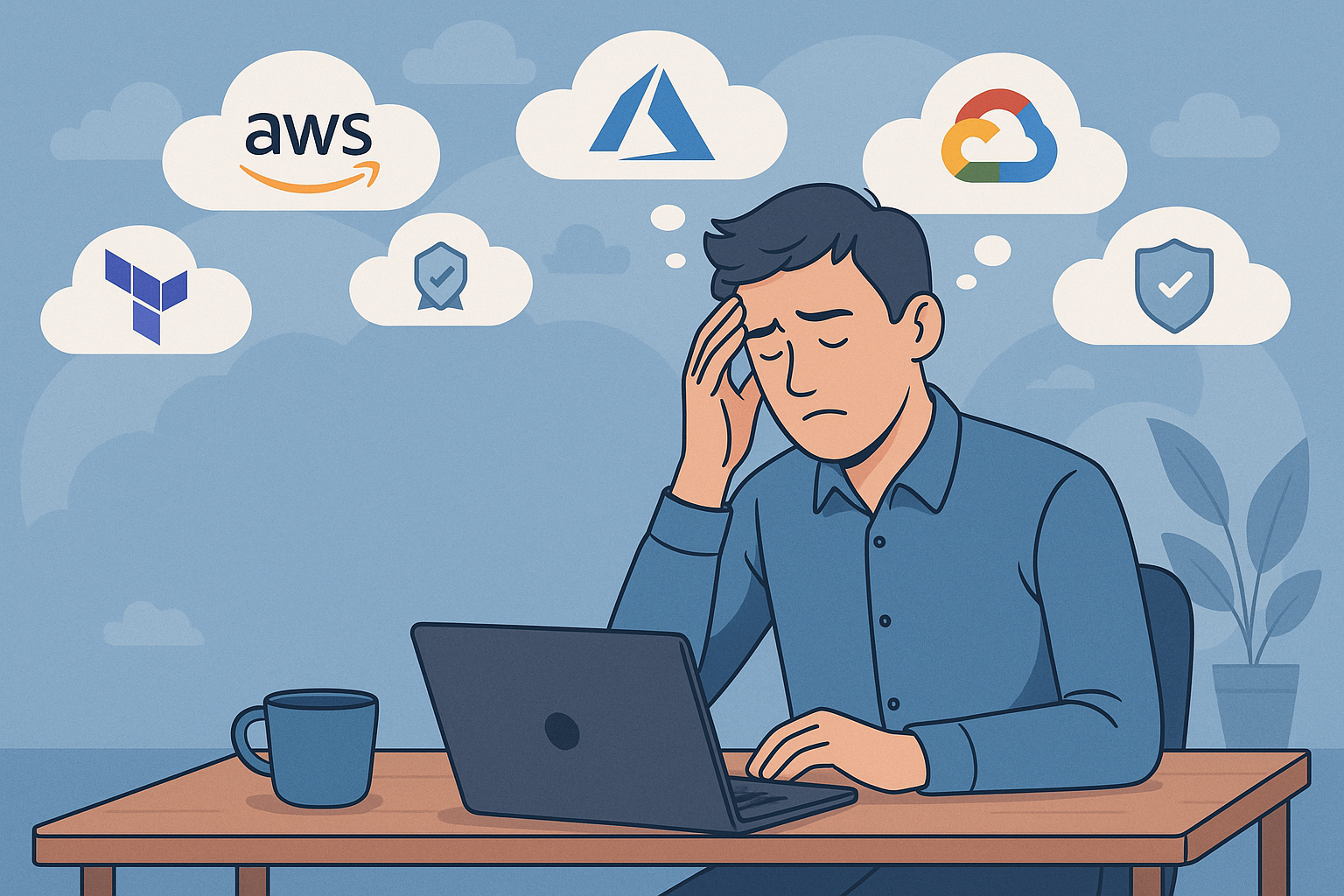
There’s a quiet pressure that every cloud professional feels but rarely admits.
It’s that constant hum in the background, the sense that no matter how much you learn, you’re already behind.
One week it’s FinOps, the next it’s AI-native operations, then someone mentions “sovereign cloud” and suddenly your reading list doubles again. You tell yourself this is just how tech works, you adapt or you fade. But somewhere between the next certification and another “what’s new in Azure” video, the excitement turns into exhaustion.
Welcome to cloud learning fatigue.

The never-ending treadmill
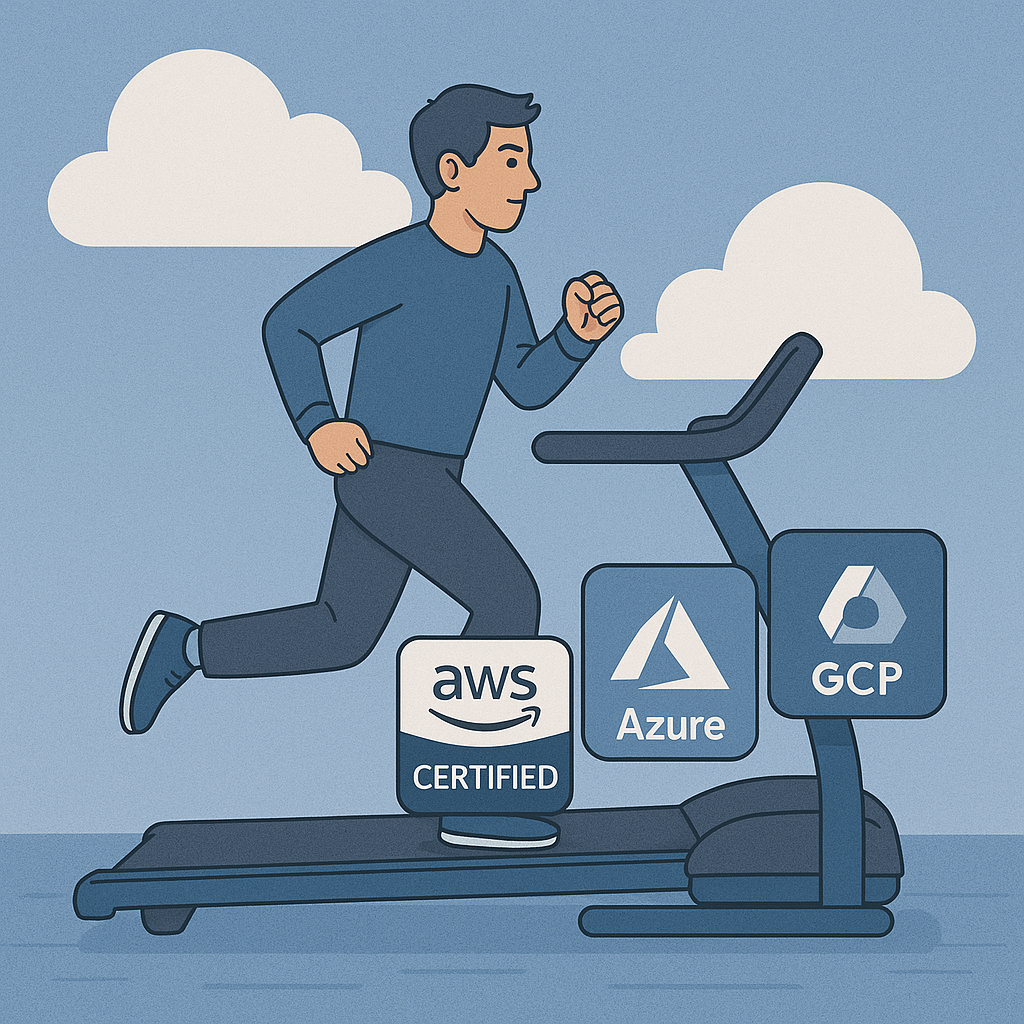
When I first started out in cloud, every new service announcement felt like Christmas. I’d dive into the docs, spin up a sandbox, and lose hours tinkering. But somewhere along the way, the pace shifted.
Cloud stopped being something you could “catch up” with. You couldn’t just take a week off, read the release notes, and feel up to date.
Now, every platform evolves simultaneously. AWS, Azure, GCP, Oracle, VMware, FinOps frameworks, compliance changes, all demanding your attention.
And in the middle of that noise, it’s easy to lose the joy of learning.
You start watching training videos with one tab open to your inbox. You buy a certification course because you feel you should. You tick boxes, collect badges, but don’t feel smarter, just tired.
Why it hits cloud professionals harder
Cloud work attracts curious people. We like to build, automate, break, and rebuild. But curiosity, when left unchecked, becomes a trap.
Because the cloud isn’t just “a topic”, it’s a universe. You could spend a lifetime on just one service family and still miss half of it. Yet our job titles architect, consultant, specialist, carry an invisible expectation to know everything.
The truth?
Nobody does.
But we pretend we do, and that’s where fatigue grows.
The moment you realise it’s too much
For me, the warning sign came when I couldn’t explain what I’d actually learned that month. I’d watched hours of training, skimmed half a whitepaper, earned a badge and yet, when I was asked a question, I found myself Googling something I thought I already knew.
That’s when it hit me: I wasn’t learning, I was consuming.
It’s a subtle but crucial difference.
Real learning happens when you slow down enough to connect ideas, when you build, write, or teach something that forces understanding. Consuming, on the other hand, is passive. It looks productive, but it doesn’t stick.
And the more you consume, the more fatigued you become because your brain’s trying to file away information it never had time to make sense of.
Relearning how to learn

If you’ve hit that wall, you’re not alone.
The good news is, it’s not about quitting, it’s about rebalancing.
I started treating cloud learning less like a sprint and more like a training cycle. Some weeks you push, some weeks you recover.
I began to:
- Pick one area to go deep on for a quarter.
- Limit myself to one certification per year, only if it truly aligned with my direction.
- Replace endless tutorials with small hands-on projects tied to real outcomes.
- Block learning time on Fridays, even if it’s just 30 minutes, no guilt if I skip, no pressure if I stay longer.
And maybe most importantly: I started saying no to learning topics that didn’t serve my path.
Because every time you say yes to a new trend, you’re saying no to depth.
Permission to pause
You don’t have to learn every week. You don’t need to chase every announcement. The cloud will still be there after your weekend off.
Some of the best breakthroughs happen when you step away. When you go for a walk, grab a coffee, or work on something completely unrelated. That downtime is when the mental pieces click together.
There’s a kind of wisdom in knowing when to pause. It’s not laziness, it’s maintenance.
Think of it as giving your brain a patch cycle.
Staying relevant the sustainable way
The future belongs to the professionals who learn well, not constantly.
Relevance doesn’t come from memorising every new service, it comes from understanding how they fit together, and how they solve business problems.
If you can do that, explain why a specific architecture matters, how it affects cost, risk, or agility, you’ll always be relevant, even when the tech changes.
So take a breath. Unsubscribe from a few newsletters. Let one certification expire. Focus on application, not accumulation.
The best cloud professionals I know aren’t the ones who know everything, they’re the ones who know what to ignore.
✳️ Final thought
You don’t owe the cloud industry your evenings.
You owe yourself enough time to keep enjoying what made you join it in the first place: curiosity.
So learn at your own pace. Build with purpose