

Part 2 of The Cloud Professional’s Industry Playbook series
Financial services represents the most challenging yet rewarding sector for cloud professionals in the UK. With financial institutions being 300 times more likely to be targeted by cyber attacks than other industries, and 84% of financial organisations recognising the critical importance of cloud and edge computing, the demand for skilled cloud professionals who understand both cutting-edge technology and stringent regulatory compliance has never been higher.
The sector offers exceptional compensation. Often 15-25% above standard cloud roles, alongside unparalleled career stability and intellectual challenges. However, success requires navigating complex regulatory frameworks, understanding financial crime prevention, and mastering technologies that process billions in transactions daily whilst maintaining microsecond-level performance standards.
Financial services cloud transformation accelerated dramatically following the 2008 financial crisis, with regulatory changes making it easier for new financial institutions to receive licences. Today, 60% of financial institutions report that over 25% of their workload now resides in the cloud, with this figure expected to rise significantly as capabilities evolve. From traditional banking giants to fintech unicorns, the industry demands cloud professionals who can balance innovation with the highest standards of security and compliance.
The Financial Services Cloud Career Landscape
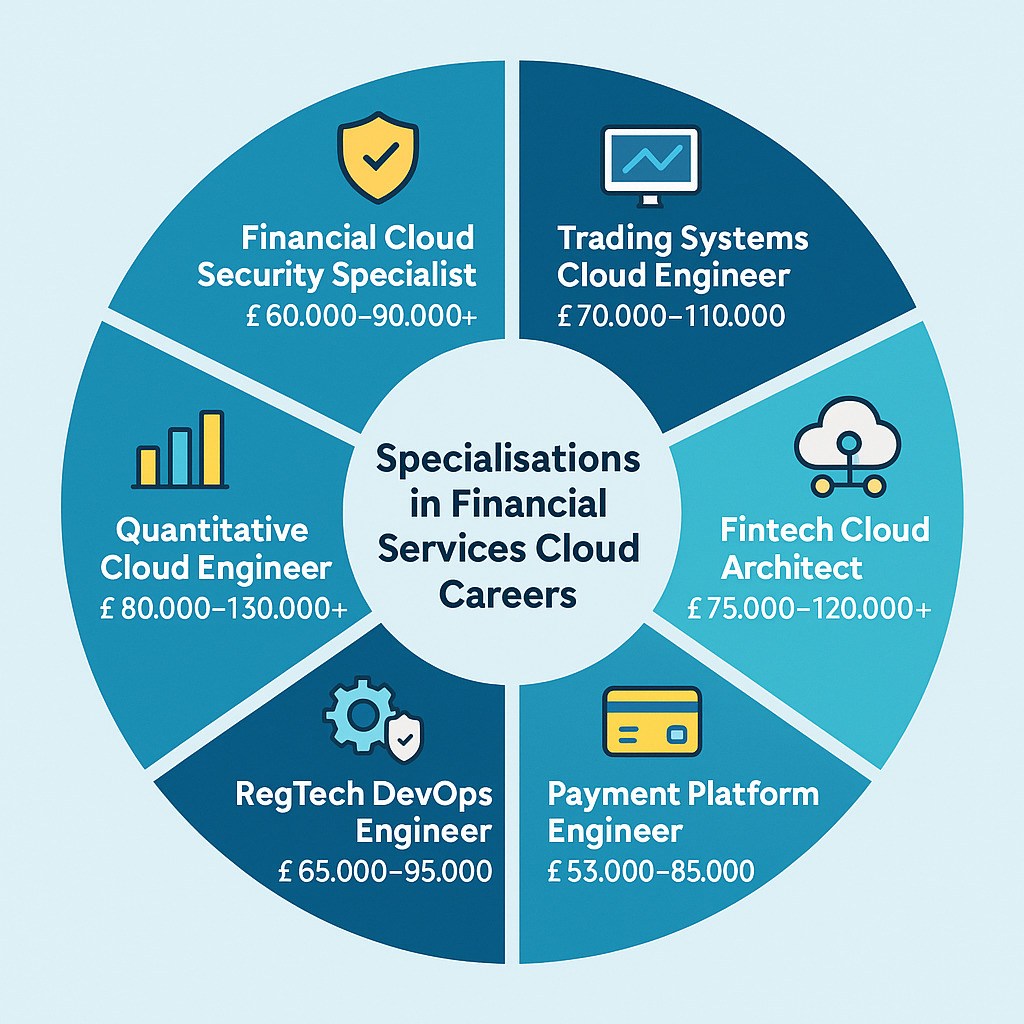
Financial services cloud roles encompass a broader range of specialisations than most professionals realise. Beyond traditional cloud engineering positions, the sector requires specialists who understand trading systems, payment processing, fraud detection, and regulatory compliance, creating unique career paths that command premium compensation.
Financial Cloud Security Specialists earn between £60,000-£90,000 annually, focusing exclusively on PCI-DSS compliance, FCA regulations, and financial crime prevention. These professionals often transition from cybersecurity or financial risk roles, combining deep security knowledge with understanding of financial regulations and fraud patterns.
Trading Systems Cloud Engineers command £70,000-£110,000, building and maintaining ultra-low-latency trading platforms that process millions of transactions per second. The role requires understanding market microstructure alongside traditional cloud skills, making it ideal for professionals who enjoy high-performance computing challenges.
Fintech Cloud Architects represent an emerging specialisation, earning £75,000-£120,000+ while designing cloud infrastructures for challenger banks, payment processors, and digital lending platforms. This role combines traditional architecture skills with understanding of financial product development and rapid scaling requirements.
Payment Platform Engineers focus on building and maintaining cloud-based payment systems, earning £55,000-£85,000 while working on technologies that process billions in transactions. The position requires understanding payment card industry standards, fraud detection algorithms, and real-time transaction processing.
RegTech DevOps Engineers bridge technology and compliance teams, earning £65,000-£95,000 while ensuring cloud implementations meet evolving regulatory requirements. This role suits professionals who enjoy detailed process work and regulatory interpretation alongside technical implementation.
Quantitative Cloud Engineers combine financial modelling with cloud computing, earning £80,000-£130,000+ while building risk management systems, algorithmic trading platforms, and derivatives pricing engines that leverage cloud-scale computing power.
Essential Skills and Knowledge Areas
Financial services cloud professionals require unique skill combinations that extend far beyond standard cloud competency. Technical expertise must be paired with deep understanding of financial markets, regulatory frameworks, and risk management principles.
Core Technical Skills
Cloud platform expertise takes on specialised dimensions in financial services, where performance, security, and compliance requirements exceed those of other industries. AWS’s HIPAA-eligible services, Azure’s financial services compliance offerings, and Google Cloud’s financial services APIs require deep understanding of their financial-specific configurations and limitations.
Infrastructure as Code becomes critical when managing systems subject to regulatory audit requirements. Terraform and CloudFormation aren’t just efficiency tools, they’re compliance necessities that provide audit trails and reproducible deployments required by financial regulators.
Security skills must encompass financial-specific threats including market manipulation, insider trading detection, and sophisticated fraud schemes. Understanding microsecond-accurate timing, cryptographic protocols for high-frequency trading, and secure multi-party computation for private data sharing distinguishes financial services cloud professionals from their peers.
Financial Domain Knowledge
Payment systems represent the backbone of financial services IT, and cloud professionals must understand how card networks, SWIFT messaging, and real-time payment rails integrate with cloud services whilst maintaining transaction integrity and regulatory compliance.
Trading systems dictate technology requirements in ways that pure business applications don’t. Understanding market data feeds, order management systems, and the regulatory requirements around trade reporting helps design systems that support rather than hinder financial operations.
Regulatory frameworks extend beyond PCI-DSS to include FCA conduct rules, CBEST penetration testing requirements, and emerging regulations around operational resilience. Staying current with regulatory changes becomes part of the role, as new rules requiring critical third parties to provide regular assurance to financial regulators take effect from January 2025.
Financial Crime and Risk Management
Anti-Money Laundering (AML) and Know Your Customer (KYC) systems require cloud architectures that can process massive datasets whilst maintaining data lineage and audit trails. Understanding how machine learning models detect suspicious transactions helps design cloud platforms that support rather than impede financial crime detection.
Risk management systems must process market data in real-time to calculate exposure across millions of positions. Cloud professionals working on these systems need understanding of Value at Risk calculations, stress testing scenarios, and regulatory capital requirements that drive technology architecture decisions.
Certification Pathways and Professional Development
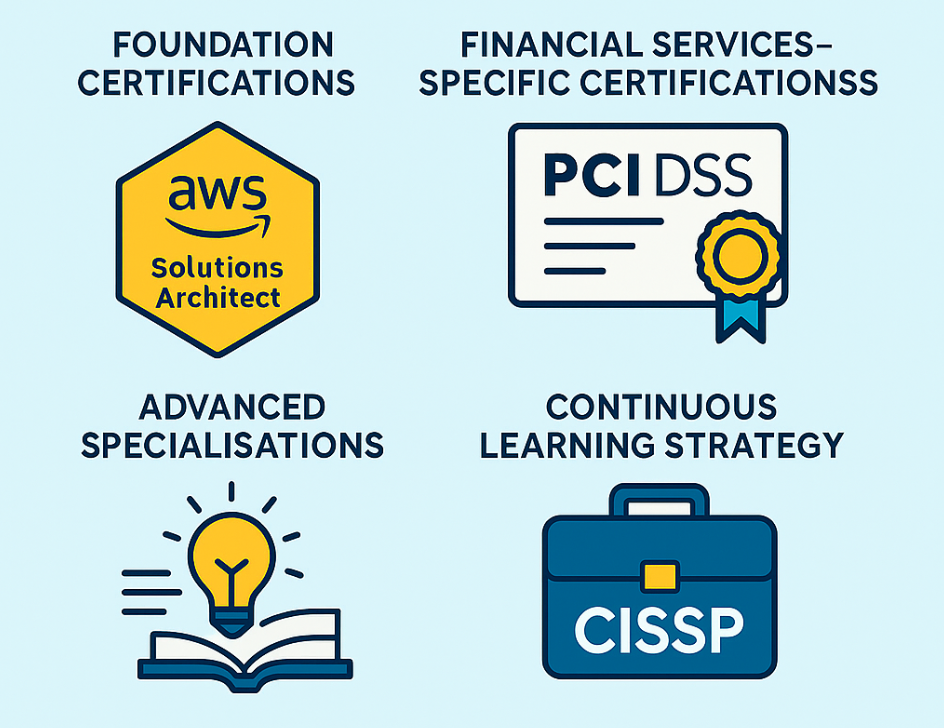
Financial services cloud careers benefit from strategic certification combinations that demonstrate both technical competency and financial services knowledge. The sector values professionals who understand both cutting-edge cloud technologies and the regulatory environment in which they operate.
Foundation Certifications
Start with core cloud platform certifications. AWS Solutions Architect, Azure Solutions Architect, or Google Cloud Professional Cloud Architect. These establish credibility and demonstrate fundamental cloud competency to financial services employers who expect technical excellence as a baseline requirement.
Security certifications like CompTIA Security+ or (ISC)² CISSP provide essential cybersecurity foundations that financial services environments demand. The sector’s threat profile requires professionals who understand security architecture principles and can implement defence-in-depth strategies.
Financial Services-Specific Certifications
PCI-DSS compliance training has become mandatory for most financial services cloud roles, particularly with PCI-DSS 4.0 requirements taking effect and additional requirements becoming mandatory by March 2025. Understanding encrypted data storage, authenticated vulnerability scanning, and network segmentation requirements provides immediate value.
FCA compliance training demonstrates understanding of UK financial regulations, conduct rules, and operational resilience requirements. Several organisations offer comprehensive FCA training programmes that result in recognised certificates valued by UK financial institutions.
Certified Anti-Money Laundering Specialist (CAMS) certification appeals to financial institutions increasingly focused on financial crime prevention and regulatory compliance. The certification demonstrates understanding of AML frameworks and their technology implications.
Advanced Specialisations
Certified Information Systems Auditor (CISA) or Certified Information Security Manager (CISM) certifications prove valuable for senior roles, as financial services technology implementations often involve complex, multi-stakeholder projects with strict audit requirements.
Financial Risk Manager (FRM) or Professional Risk Manager (PRM) certifications help cloud professionals understand how technology decisions impact financial risk management, making them more valuable for senior technical leadership roles.
Continuous Learning Strategy
Financial services technology evolves rapidly, with new regulations, emerging threats, and advancing trading technologies requiring ongoing education. Successful professionals establish learning routines that include regulatory updates, financial crime intelligence, and emerging financial technologies.
Professional associations like the Institute of Financial Services provide networking opportunities, continuing education, and industry insights essential for career advancement. The London Financial Studies Society offers technical education specifically focused on financial services technology professionals.
Salary Expectations and Market Demand
Financial services cloud salaries consistently exceed general cloud positions by 15-25%, reflecting the specialised knowledge requirements, regulatory pressures, and sector-specific challenges. The average cost of cybercrime for financial services is 40% higher than other sectors, driving demand for skilled security-focused cloud professionals.
Entry-Level Positions (0-2 years experience)
- Financial Services Cloud Support Specialist: £38,000-£50,000
- Junior Payment Systems Engineer: £42,000-£55,000
- Financial Compliance Analyst: £40,000-£52,000
Mid-Level Positions (3-7 years experience)
- Financial Services Cloud Engineer: £55,000-£75,000
- Trading Systems Cloud Specialist: £65,000-£85,000
- Payment Platform Engineer: £60,000-£80,000
Senior-Level Positions (8+ years experience)
- Senior Financial Cloud Architect: £80,000-£120,000+
- Financial Cloud Security Manager: £90,000-£130,000
- Head of Cloud Technology (Financial Services): £100,000-£180,000
Factors Affecting Compensation
Organisation type significantly impacts salary levels. Investment banks and hedge funds typically offer the highest compensation, with JPMorgan listing 118 cloud engineer positions and Goldman Sachs listing several hundred cloud roles, reflecting massive demand for cloud talent.
Fintech companies often provide equity participation alongside competitive salaries. Revolut engineers earn average compensation of £86,500, whilst Monzo’s average engineering compensation reached £136,500 in 2022.
Regulatory specialisation consistently commands salary premiums. Professionals with deep PCI-DSS, FCA compliance, or CBEST testing experience earn 20-30% more than those with only general cloud skills, reflecting the critical importance of regulatory compliance and the shortage of qualified professionals.
Performance-sensitive roles like trading systems engineering offer significant bonuses tied to system performance improvements and cost optimisation. Professionals who can demonstrate microsecond improvements in latency or percentage point improvements in system availability often receive substantial performance-based compensation.
Transition Strategies for Current Cloud Professionals
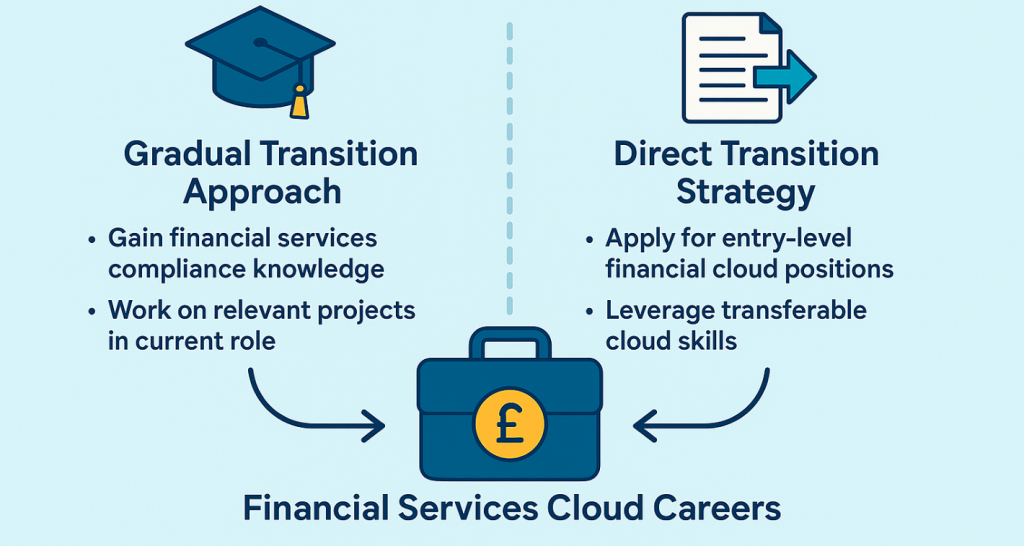
Moving into financial services cloud work requires understanding both the technology and business context that drives financial institutions. Existing cloud skills provide strong foundations, but success requires adding financial services domain knowledge and regulatory understanding.
Gradual Transition Approach
Begin by gaining financial services compliance knowledge through professional training courses, industry certifications, or volunteer work with financial technology meetups. Understanding PCI-DSS requirements, financial crime prevention, and market structure provides context for technical decisions.
Seek opportunities to work on financial services-adjacent projects within current roles, perhaps supporting vendors who serve financial clients or working on projects involving payment processing or financial data.
Consider contract or consulting work with financial institutions to gain direct experience whilst maintaining current employment stability. Many financial services firms prefer hiring experienced cloud professionals and training them on financial requirements rather than attempting the reverse.
Direct Transition Strategy
Some professionals prefer immediate immersion in financial services environments. This approach requires thorough preparation but can accelerate career development significantly.
Target entry-level financial services cloud positions that value transferable skills whilst providing financial domain training. Many financial institutions prefer hiring experienced cloud professionals and training them on financial requirements rather than hiring financial services professionals and teaching them cloud technologies.
Building Financial Services Networks

Financial services operates as a relationship-driven industry where professional networks significantly impact career opportunities. Attend fintech meetups, financial technology conferences, and professional development events.
LinkedIn engagement with financial services technology content and professionals helps establish industry presence and demonstrate genuine interest in financial services challenges. Joining groups like “Fintech Professionals London” or “Financial Services Technology” provides networking opportunities.
Consider attending industry conferences like Money 20/20, FinTech World London, or The Trading Show to understand industry trends and meet potential employers.
Key Employers and Career Paths

Financial services cloud opportunities exist across diverse organisation types, each offering different career experiences, compensation structures, and advancement paths.
Traditional Investment Banks
JPMorgan Chase, Goldman Sachs, Barclays, and Morgan Stanley offer exposure to cutting-edge trading technologies, massive scale systems, and generous compensation packages. These organisations provide excellent technical challenges and career progression opportunities, though work-life balance may be demanding.
Investment banks typically offer structured career progression paths, extensive training programmes, and exposure to global technology initiatives. Compensation packages often include significant bonuses tied to firm and individual performance.
Retail and Commercial Banks
HSBC, Lloyds Banking Group, NatWest Group, and Nationwide Building Society provide stable employment, comprehensive benefits, and exposure to retail banking technology challenges. These organisations often offer better work-life balance than investment banks whilst providing solid career progression opportunities.
Traditional banks increasingly focus on digital transformation, creating opportunities for cloud professionals to lead modernisation initiatives affecting millions of customers.
Fintech Unicorns
Revolut (valued at £19.8 billion), Monzo (£4.5 billion), Starling Bank (£3.15 billion), and Wise (£6.67 billion) offer equity participation opportunities alongside competitive salaries. These fast-growing companies provide exposure to rapid scaling challenges and cutting-edge financial technologies.
Fintech environments often feature more autonomous work cultures, innovative technologies, and opportunities to influence product development directly. However, the pace can be intense, and equity value depends on company performance.
Payment Processors and Financial Infrastructure
Companies like SumUp (£8.5 billion valuation) and emerging payment technology companies provide opportunities to work on core financial infrastructure that enables other businesses to operate.
These roles often involve building highly scalable, reliable systems that process millions of transactions daily, providing excellent technical challenges and exposure to payment industry standards.
Specialist Financial Technology Companies
RegTech companies focusing on compliance automation, risk management platforms, and financial crime detection offer opportunities to work on cutting-edge applications of artificial intelligence and machine learning in financial services.
These organisations often provide exposure to multiple financial institutions as clients, offering broad industry experience and networking opportunities.
Future Prospects and Emerging Opportunities
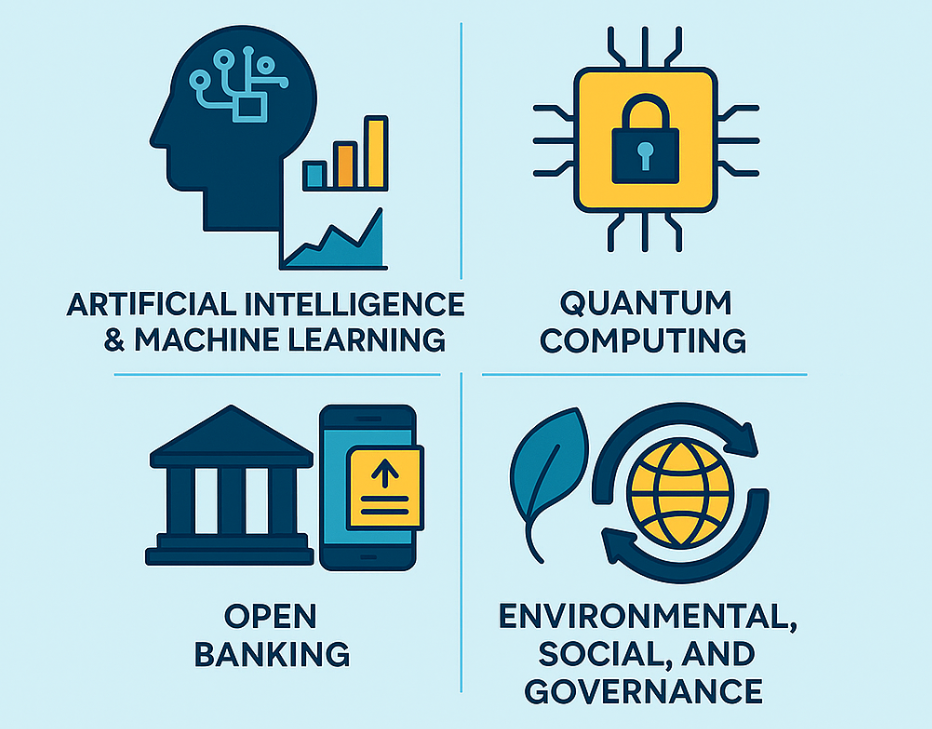
Financial services cloud careers benefit from several positive trends that suggest strong long-term prospects and expanding opportunities across traditional finance and emerging fintech sectors.
Artificial Intelligence and Machine Learning
Financial services AI applications are expanding rapidly, creating demand for cloud professionals who understand AI/ML platforms within financial contexts. These roles combine traditional cloud skills with financial AI ethics, regulatory compliance, and algorithmic trading strategies.
Fraud detection systems increasingly rely on machine learning models that require sophisticated cloud architectures for real-time processing of transaction data. Understanding how to build and maintain these systems creates significant career opportunities.
Robo-advisors and algorithmic trading platforms require cloud professionals who understand both financial markets and machine learning infrastructure, creating highly specialised and well-compensated career paths.
Quantum Computing and Cryptography
Financial services institutions are early adopters of quantum computing for portfolio optimisation, risk simulation, and cryptographic applications. Cloud professionals with quantum computing knowledge will find increasing opportunities as these technologies mature.
Post-quantum cryptography implementation requires understanding both cryptographic principles and cloud security architectures, creating a highly specialised niche for security-focused cloud professionals.
Open Banking and API Ecosystems
Open banking regulations create demand for cloud professionals who understand API design, security, and compliance within financial services contexts. Building platforms that enable third-party integrations whilst maintaining security and regulatory compliance requires specialised knowledge.
Environmental, Social, and Governance (ESG) Technology
Growing focus on ESG investing and climate risk assessment creates opportunities for cloud professionals to build systems that analyse environmental data, assess climate risk in investment portfolios, and support sustainable finance initiatives.
Central Bank Digital Currencies (CBDCs)
As central banks explore digital currencies, opportunities emerge for cloud professionals to work on the infrastructure that would support national digital payment systems.
Getting Started: Your Next Steps
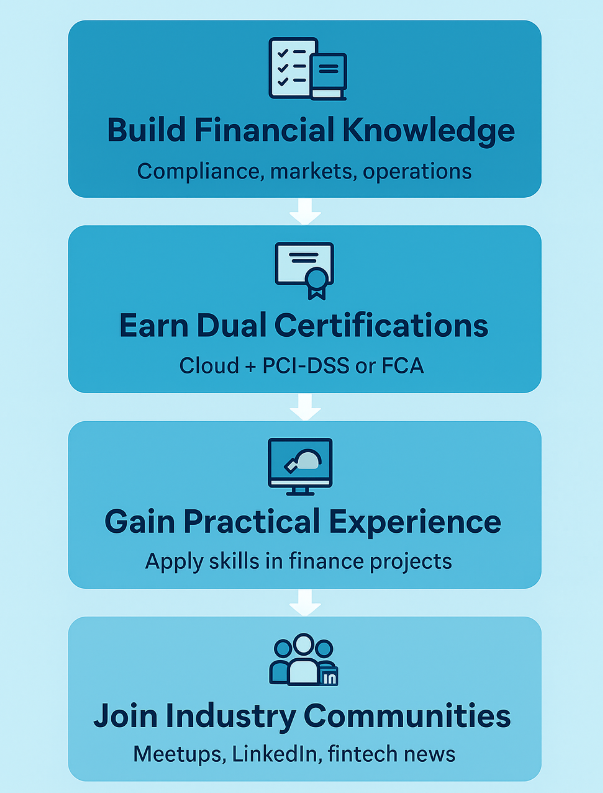
Financial services cloud careers offer exceptional opportunities for professionals willing to invest in sector-specific knowledge and navigate complex regulatory requirements. The combination of technical challenges, meaningful work, and strong compensation makes financial services cloud an attractive specialisation.
Immediate Actions
Research financial institutions in your area to understand local opportunities and requirements. Many financial services organisations publish technology strategies that reveal their cloud adoption plans and skill needs.
Begin PCI-DSS compliance education through professional training programmes. Understanding payment card security requirements provides immediate value and demonstrates genuine sector interest.
Connect with financial services technology professionals through LinkedIn, professional associations, and local networking events to understand industry dynamics and career opportunities.
Medium-Term Development
Pursue relevant certifications that combine cloud expertise with financial services knowledge. The investment in dual credentials pays dividends through expanded opportunities and higher compensation.
Seek opportunities to apply cloud skills in financial services contexts, whether through volunteer work, side projects, or transitional roles that provide financial services exposure.
Long-Term Career Planning
Consider specialisation areas that align with personal interests and emerging financial technology trends. Early investment in emerging technologies like quantum computing, blockchain applications, or financial AI could provide significant career advantages.
Develop financial domain expertise through continuing education, professional development, and practical experience. The most successful financial services cloud professionals understand both technology and financial markets operations.
Financial services cloud careers represent more than job opportunities—they offer chances to apply technical skills in ways that directly impact global financial systems and economic stability. For cloud professionals seeking intellectually challenging work alongside exceptional compensation and career stability, financial services provides an ideal environment to build expertise whilst contributing to the technological transformation of one of the world’s most important industries.
The sector’s continued evolution ensures that financial services cloud professionals will remain in high demand, with expanding opportunities for specialisation and advancement. The key lies in understanding that success requires commitment to both technical excellence and financial services domain expertise—a combination that creates exceptional value for both professionals and the financial institutions they serve.