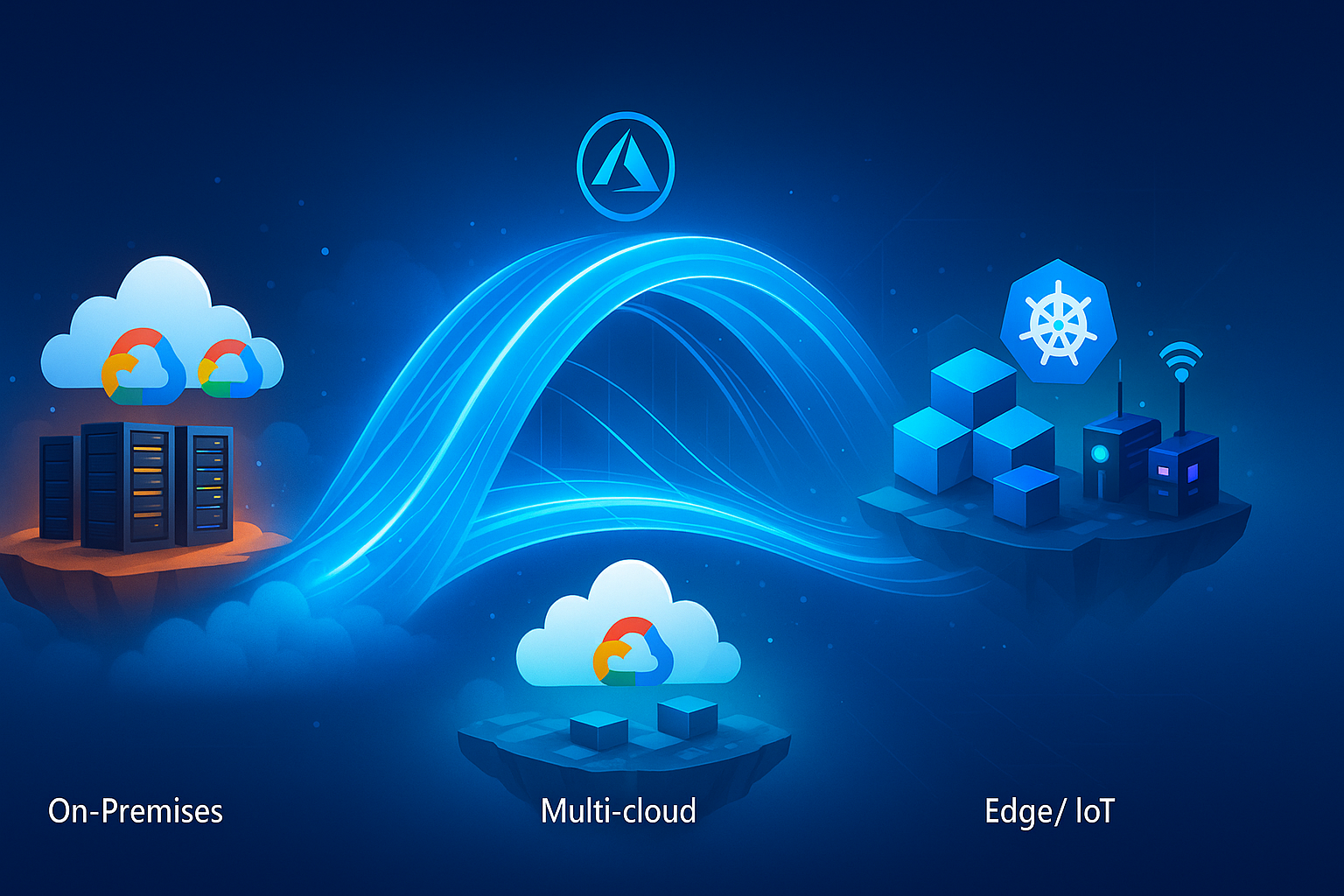
The modern enterprise operates across a complex landscape of on-premises infrastructure, multiple cloud providers, and edge locations. Managing this distributed environment presents significant challenges: inconsistent tooling, fragmented governance, and the complexity of maintaining security and compliance across diverse platforms. Microsoft Azure Arc emerges as a compelling solution to these challenges, offering a unified control plane that extends Azure services and management capabilities beyond the boundaries of Azure’s data centres.
What Is Azure Arc?
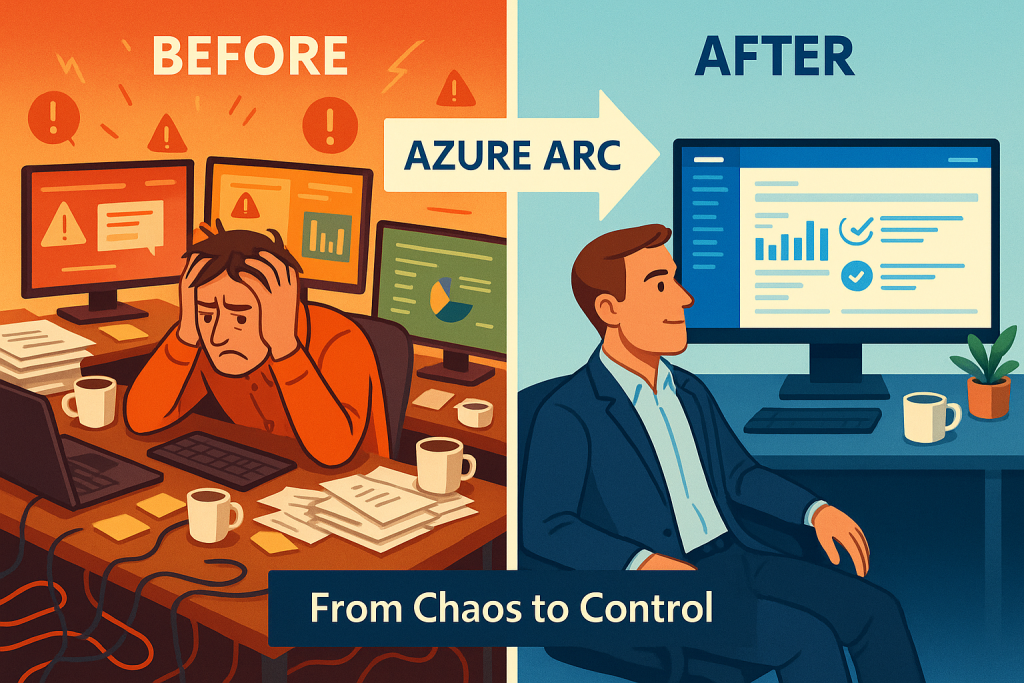
Azure Arc represents Microsoft’s strategic response to the reality of hybrid and multi-cloud computing. Rather than viewing non-Azure resources as external entities, Arc treats them as native Azure resources, bringing them under the same management umbrella that Azure customers have grown to appreciate.
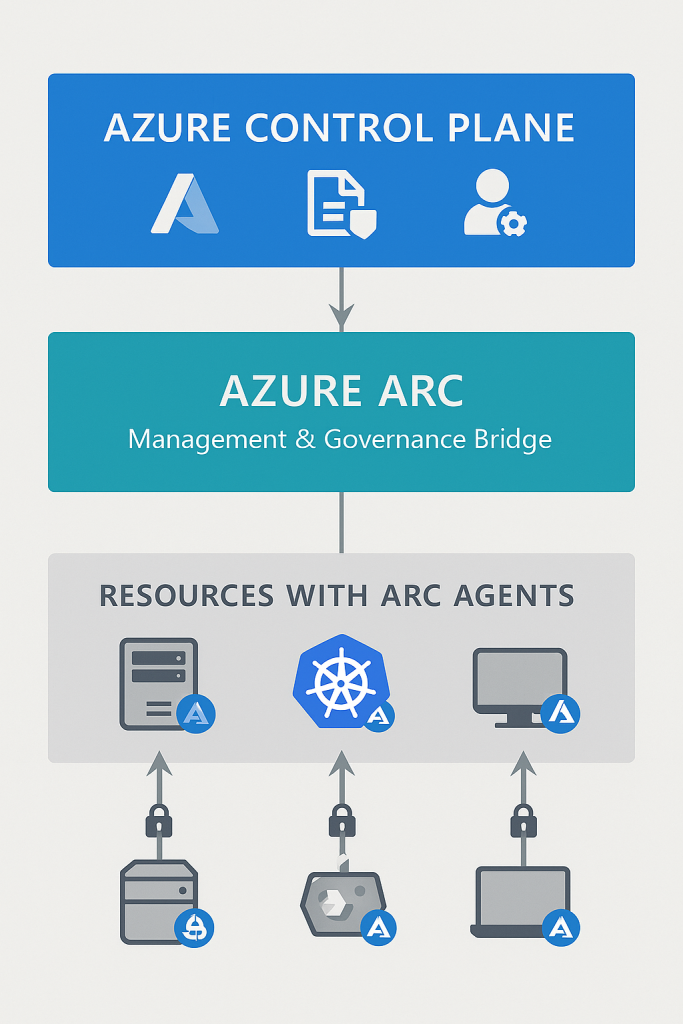
At its core, Azure Arc extends Azure Resource Manager (ARM) to manage infrastructure and applications running anywhere. This includes on-premises servers, Kubernetes clusters running in other clouds, and even data services deployed outside Azure. The technology achieves this through lightweight agents that establish secure connections between remote resources and Azure’s control plane.
The platform operates on three fundamental principles: projection, governance, and services. Projection involves representing external resources as Azure resources, complete with resource IDs and the ability to apply Azure Resource Manager templates. Governance extends Azure Policy, role-based access control (RBAC), and tagging to these projected resources. Services allow actual Azure services to run on external infrastructure, bringing cloud-native capabilities to any location.
The Business Case for Azure Arc
Organisations typically consider Azure Arc when facing specific operational challenges. The most common scenario involves enterprises with significant existing investments in on-premises infrastructure or commitments to other cloud providers. Rather than forcing a wholesale migration, Arc allows these organisations to gradually modernise whilst maintaining their current investments.
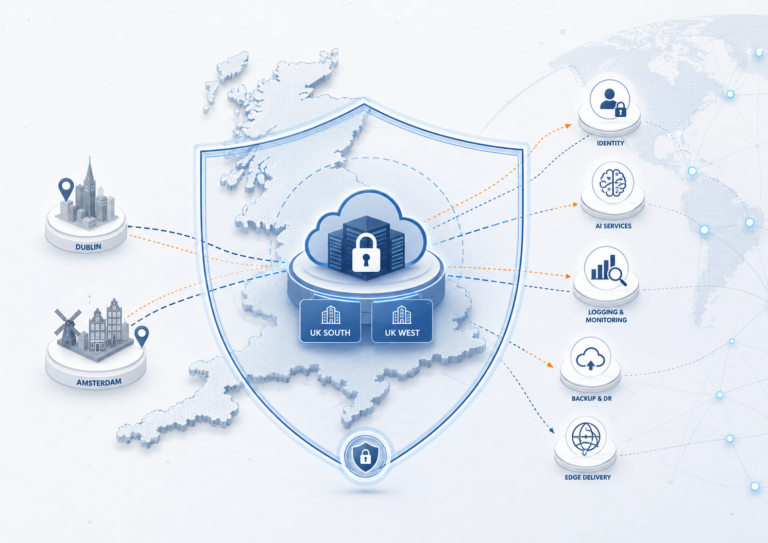
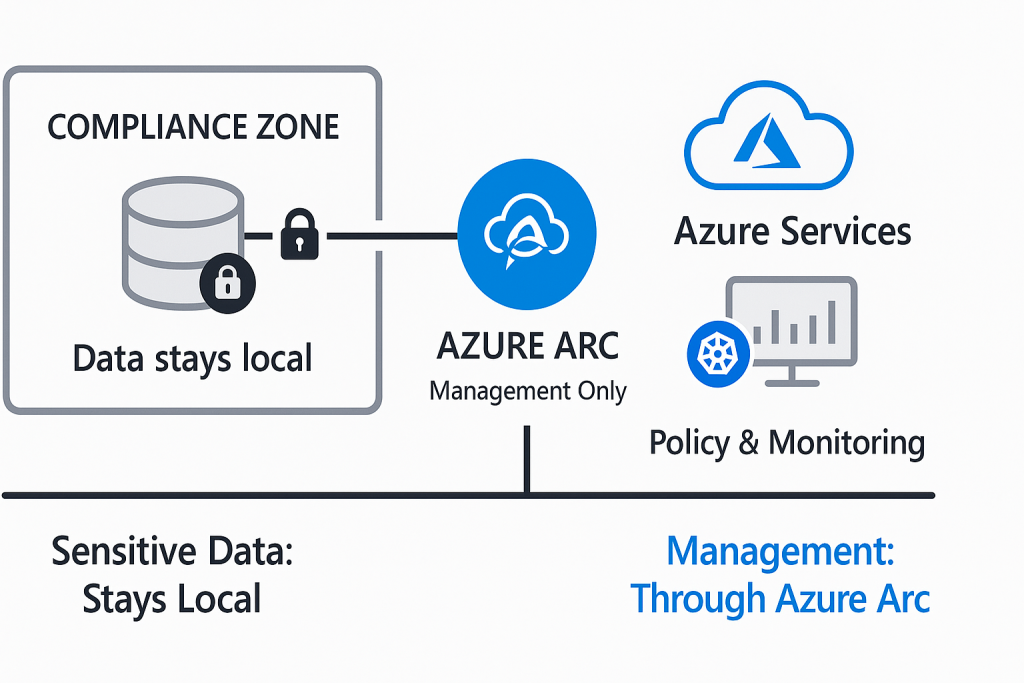
Data sovereignty requirements present another compelling use case. Many organisations, particularly in regulated industries or certain geographical regions, must keep specific data within particular boundaries. Arc enables these organisations to leverage Azure’s management capabilities whilst maintaining local data residence.
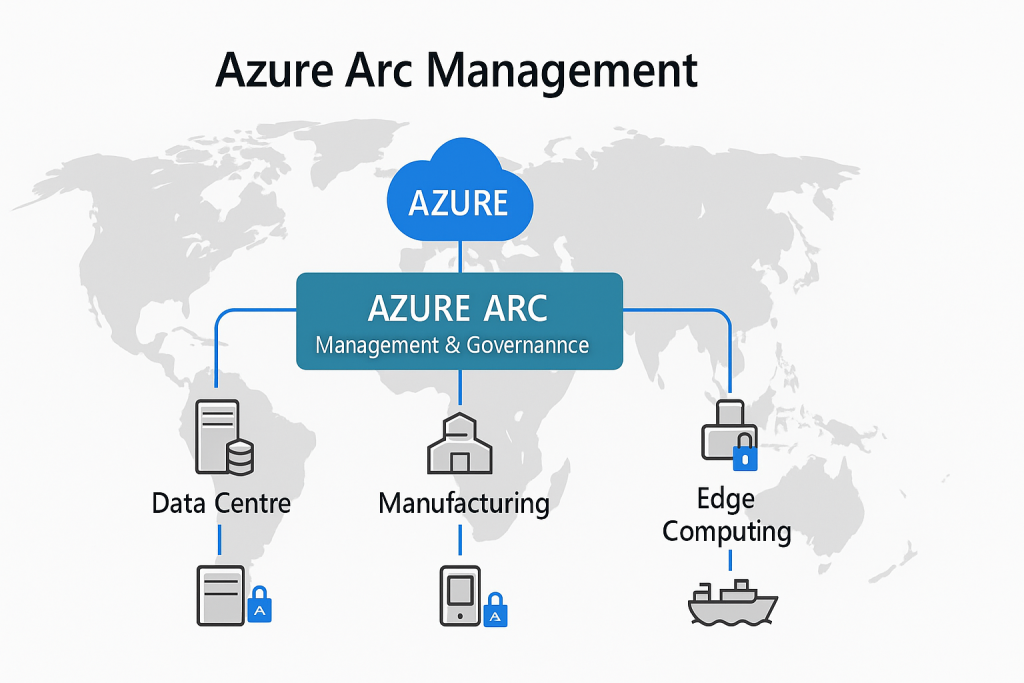
Edge computing scenarios also benefit significantly from Arc’s capabilities. Manufacturing facilities, retail locations, and remote offices often require local processing power but need consistent management and governance. Arc provides the framework to manage these distributed resources as if they were native Azure components.
Core Components and Capabilities
Azure Arc-enabled Servers
The server component extends Azure management to Windows and Linux machines running anywhere. Once enrolled, these servers appear in the Azure portal alongside native Azure virtual machines, enabling consistent application of policies, monitoring, and security configurations.
The implementation involves installing the Azure Connected Machine agent, which establishes an outbound HTTPS connection to Azure. This agent reports machine metadata, allows policy enforcement, and enables Azure services like Azure Monitor and Azure Security Centre to operate on non-Azure machines.
Configuration management becomes significantly more consistent through integration with Azure Automation State Configuration and Azure Policy. Rather than maintaining separate tooling for different environments, administrators can apply the same governance frameworks across their entire infrastructure estate.
Azure Arc-enabled Kubernetes
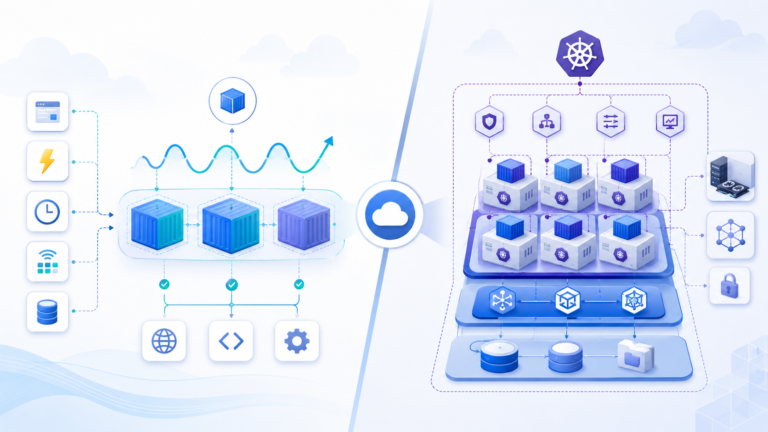
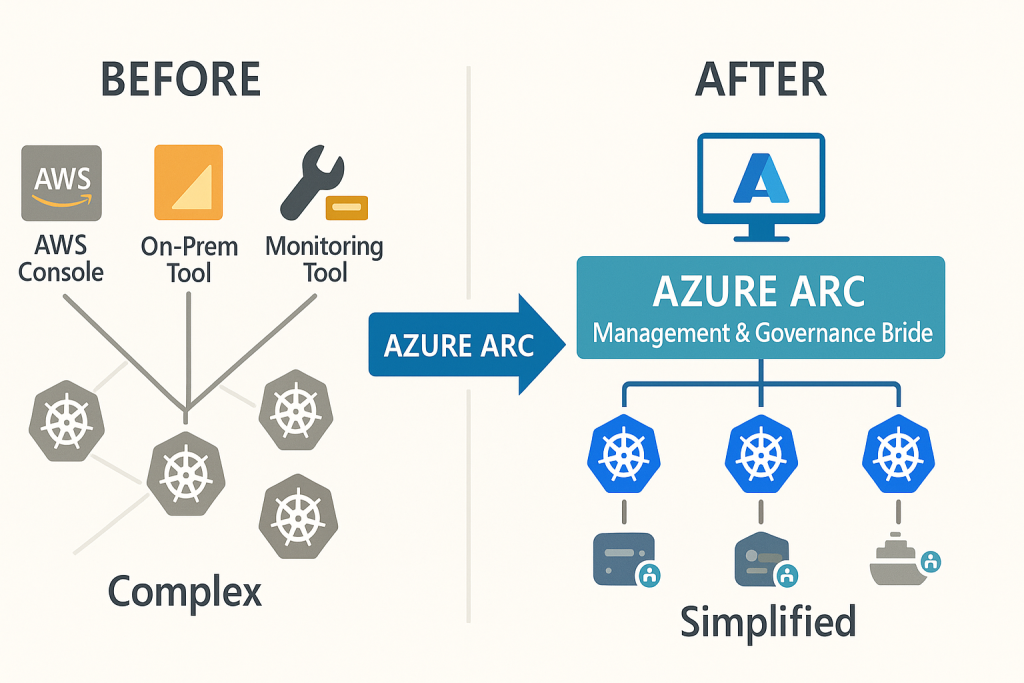
Kubernetes management presents particular challenges in multi-cloud environments, with different providers offering distinct management interfaces and capabilities. Azure Arc addresses this by extending Azure’s Kubernetes service capabilities to any Kubernetes cluster, regardless of where it runs.
The Arc Kubernetes agent creates a representation of the remote cluster within Azure Resource Manager. This enables the application of Azure Policy for Kubernetes, Azure Monitor for containers, and GitOps-based application deployment through Azure Arc-enabled GitOps.
Security posture management becomes more consistent through integration with Azure Security Centre, which can now assess and protect Kubernetes workloads running anywhere. This unified approach reduces the complexity of maintaining security standards across diverse Kubernetes deployments.
Azure Arc-enabled Data Services
Perhaps the most transformative component, Arc-enabled data services bring Azure’s platform-as-a-service (PaaS) database offerings to any infrastructure. This includes Azure SQL Managed Instance and Azure PostgreSQL Hyperscale, running with cloud-like elasticity and management on customer-controlled infrastructure.
These services maintain the same APIs, tooling, and operational characteristics as their cloud counterparts whilst running on infrastructure that meets specific latency, sovereignty, or compliance requirements. Automated patching, backup, and scaling capabilities operate independently of constant internet connectivity, whilst synchronising with Azure when connectivity permits.
The licensing model reflects this hybrid approach, with customers paying for the control plane capabilities whilst running the actual workloads on their own infrastructure. This arrangement provides cost predictability whilst enabling access to Azure’s advanced data platform capabilities.
Implementation Best Practices
Planning and Assessment
Successful Azure Arc deployments begin with thorough assessment and planning. Organisations should start by cataloguing their existing infrastructure and identifying which resources would benefit most from Arc management. Priority typically goes to servers requiring consistent configuration management and Kubernetes clusters needing unified governance.
Network connectivity planning deserves particular attention. While Arc requires only outbound HTTPS connectivity, organisations should ensure reliable internet access and consider the implications of connectivity disruptions. The platform handles temporary disconnections gracefully, but extended outages will limit certain management capabilities.
Security planning should address the implications of extending Azure’s control plane to external resources. This includes reviewing firewall rules, understanding the security model of Arc agents, and planning for credential management across the extended environment.
Gradual Rollout Strategy
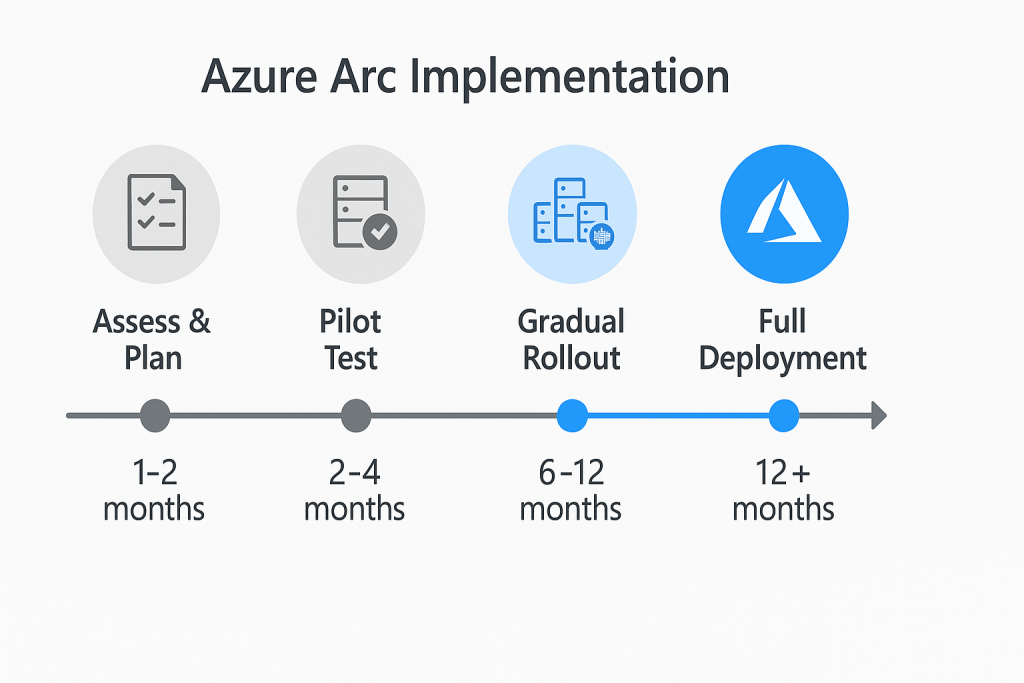
Microsoft recommends a phased approach to Arc deployment, beginning with non-production environments and gradually extending to more critical systems. This approach allows organisations to develop operational expertise whilst minimising risk to essential services.
The initial phase should focus on basic server management capabilities: inventory, monitoring, and policy application. As confidence grows, organisations can expand to more advanced features like Azure Arc-enabled data services and complex Kubernetes management scenarios.
Change management becomes crucial during rollout. Teams familiar with traditional infrastructure management need time to adapt to Azure-centric workflows and tooling. Providing adequate training and maintaining parallel management approaches during transition periods helps ensure smooth adoption.
Governance and Security Considerations
Azure Arc’s strength lies partly in extending Azure’s governance model to external resources. However, this requires careful planning to ensure policies designed for cloud resources translate appropriately to on-premises or multi-cloud environments.
Role-based access control planning should consider the implications of unified management. Teams previously responsible for specific infrastructure segments may need revised permissions to reflect the new management model. Azure AD integration becomes particularly important for maintaining consistent identity and access management.
Policy compliance across diverse infrastructure requires thoughtful configuration. Azure Policy for Arc-enabled resources should account for the different capabilities and constraints of various deployment environments. What works for Azure virtual machines may require modification for on-premises servers with different update management requirements.
Security posture monitoring benefits from Arc’s unified approach, but organisations must ensure they’re not creating new attack vectors. The Arc agents require outbound internet connectivity, which may necessitate firewall rule changes. However, the security benefits of consistent monitoring and policy enforcement typically outweigh these considerations.
Common Use Cases and Scenarios
Hybrid Application Development
Development teams increasingly build applications that span cloud and on-premises resources. Azure Arc enables consistent development and deployment experiences across these environments. Developers can use familiar Azure DevOps pipelines and tooling whilst deploying to infrastructure running anywhere.
GitOps deployment patterns become particularly powerful with Arc-enabled Kubernetes. Development teams can commit application configurations to Git repositories, triggering automated deployments to Kubernetes clusters regardless of their physical location. This approach ensures consistency whilst maintaining the flexibility to deploy where business requirements dictate.
Database development scenarios benefit significantly from Arc-enabled data services. Developers can work with Azure SQL Managed Instance running on their preferred infrastructure whilst maintaining the same APIs and tooling they would use with cloud-hosted instances.
Regulatory Compliance and Data Sovereignty
Financial services, healthcare, and government organisations often face strict requirements about data location and processing. Azure Arc enables these organisations to meet compliance requirements whilst leveraging cloud-native capabilities.
The approach allows sensitive data to remain within required jurisdictions whilst enabling Azure-based analytics, machine learning, and application services to operate on that data. This hybrid model satisfies regulatory requirements whilst avoiding the limitations of purely on-premises solutions.
Audit and compliance reporting becomes more straightforward through unified Azure tooling. Rather than aggregating compliance data from multiple management systems, organisations can leverage Azure’s built-in compliance dashboards and reporting capabilities across their entire infrastructure estate.
Edge Computing and IoT
Manufacturing, retail, and logistics organisations increasingly deploy computing resources at edge locations. These deployments require local processing power but benefit from centralised management and governance.
Azure Arc provides the framework for managing edge Kubernetes clusters running industrial IoT applications. Local processing ensures low latency for time-critical operations, whilst Arc integration enables consistent monitoring, security, and application deployment across potentially hundreds of edge locations.
Data preprocessing at edge locations can leverage Arc-enabled data services for local analytics whilst synchronising insights with cloud-based data platforms. This approach minimises bandwidth requirements whilst maintaining comprehensive data governance.
Challenges and Limitations
Connectivity Dependencies
Despite Microsoft’s efforts to build resilience into Arc, the platform fundamentally depends on periodic connectivity to Azure. While short-term outages don’t affect running workloads, extended connectivity loss limits management capabilities and prevents policy updates.
Organisations with unreliable internet connectivity should carefully consider these implications. Critical operational decisions shouldn’t depend solely on Arc-managed resources if connectivity cannot be guaranteed.
Complexity Management
While Arc aims to simplify hybrid management, it introduces its own complexity. Teams must understand both traditional infrastructure management and Azure’s operational model. This dual expertise requirement can complicate training and operational procedures.
The integration between Arc and existing management tools isn’t always seamless. Organisations may find themselves operating parallel management systems during transition periods, potentially increasing rather than reducing operational complexity.
Cost Considerations
Arc’s pricing model can be complex to predict, particularly for organisations with dynamic infrastructure requirements. While the platform offers potential cost savings through improved efficiency, the licensing costs for Arc-enabled services require careful analysis.
Organisations should model both the direct costs of Arc licensing and the indirect costs of operational changes. Training, tool integration, and process modification all contribute to the total cost of Arc adoption.
Future Outlook and Strategic Considerations
Azure Arc represents Microsoft’s long-term vision for hybrid computing, and the platform continues evolving rapidly. Recent developments include expanded support for different Kubernetes distributions, enhanced data services capabilities, and deeper integration with Microsoft’s broader technology ecosystem.
The trend towards edge computing and distributed processing will likely increase Arc’s strategic importance. As organisations deploy more computing resources outside traditional data centres, unified management platforms become essential for maintaining operational efficiency.
Artificial intelligence and machine learning workloads present particular opportunities for Arc. The ability to deploy AI services consistently across cloud and edge environments enables new application architectures that balance latency requirements with computational demands.
Integration with Microsoft’s broader ecosystem continues expanding. Connections with Microsoft 365, Power Platform, and Dynamics 365 create opportunities for comprehensive digital transformation strategies centred around unified data and management platforms.
Making the Decision
Azure Arc merits serious consideration for organisations managing infrastructure across multiple environments. The platform’s ability to extend Azure’s proven management capabilities to any location addresses real operational challenges whilst supporting strategic modernisation initiatives.
However, Arc isn’t universally appropriate. Organisations with simple, static infrastructure requirements may find traditional management approaches more cost-effective. Similarly, those committed to other cloud providers’ management ecosystems might not benefit from Arc’s Azure-centric approach.
The decision ultimately depends on organisational strategy, existing investments, and future direction. Companies committed to Azure’s ecosystem and facing hybrid infrastructure management challenges will likely find Arc transformative. Those seeking vendor-neutral solutions or operating primarily within other cloud ecosystems may prefer alternative approaches.
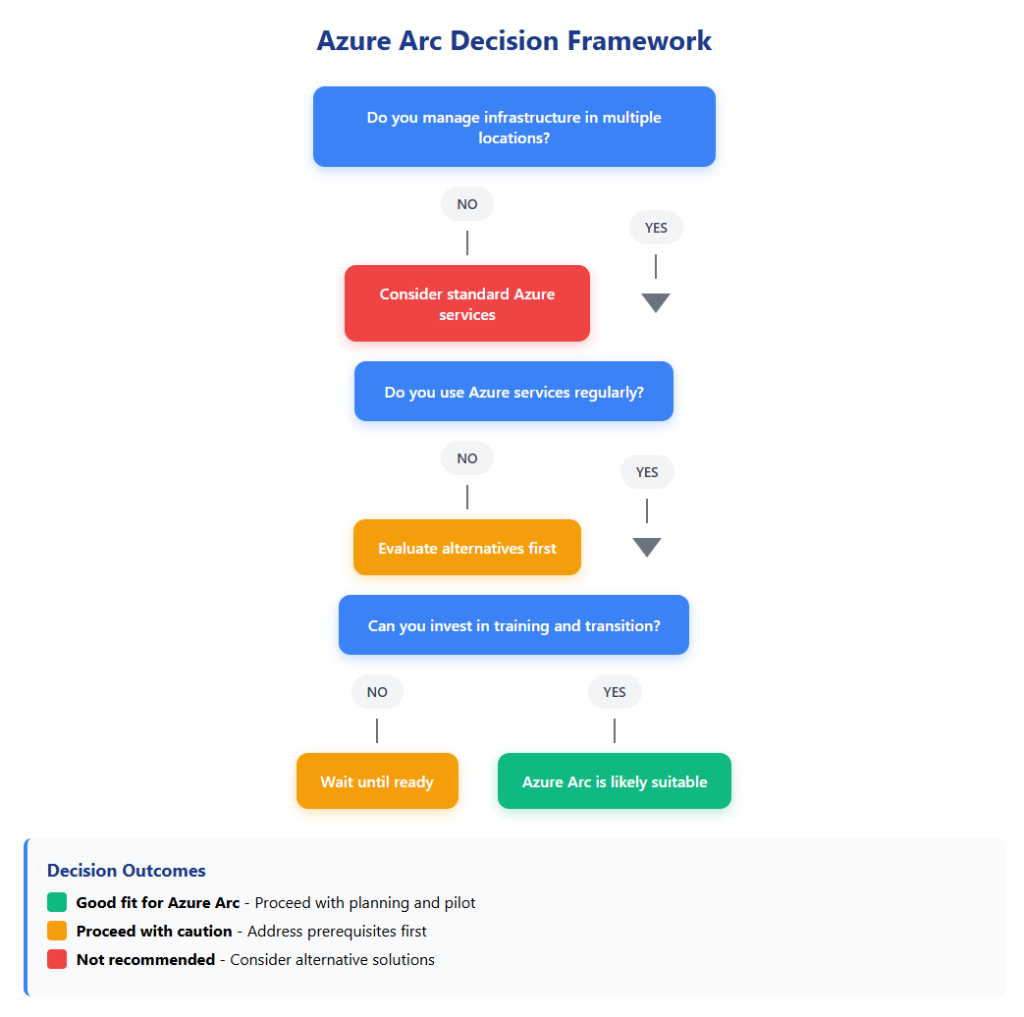
Success with Azure Arc requires commitment to both the technology and the operational changes it enables. Organisations prepared to invest in training, process modification, and gradual implementation will likely realise significant benefits. Those seeking quick fixes or minimal operational change may find the transition challenging.
The hybrid cloud landscape continues evolving, but Azure Arc represents a mature, strategic approach to managing this complexity. For organisations aligned with its capabilities and committed to its adoption, Arc offers a compelling path toward unified, efficient hybrid infrastructure management.