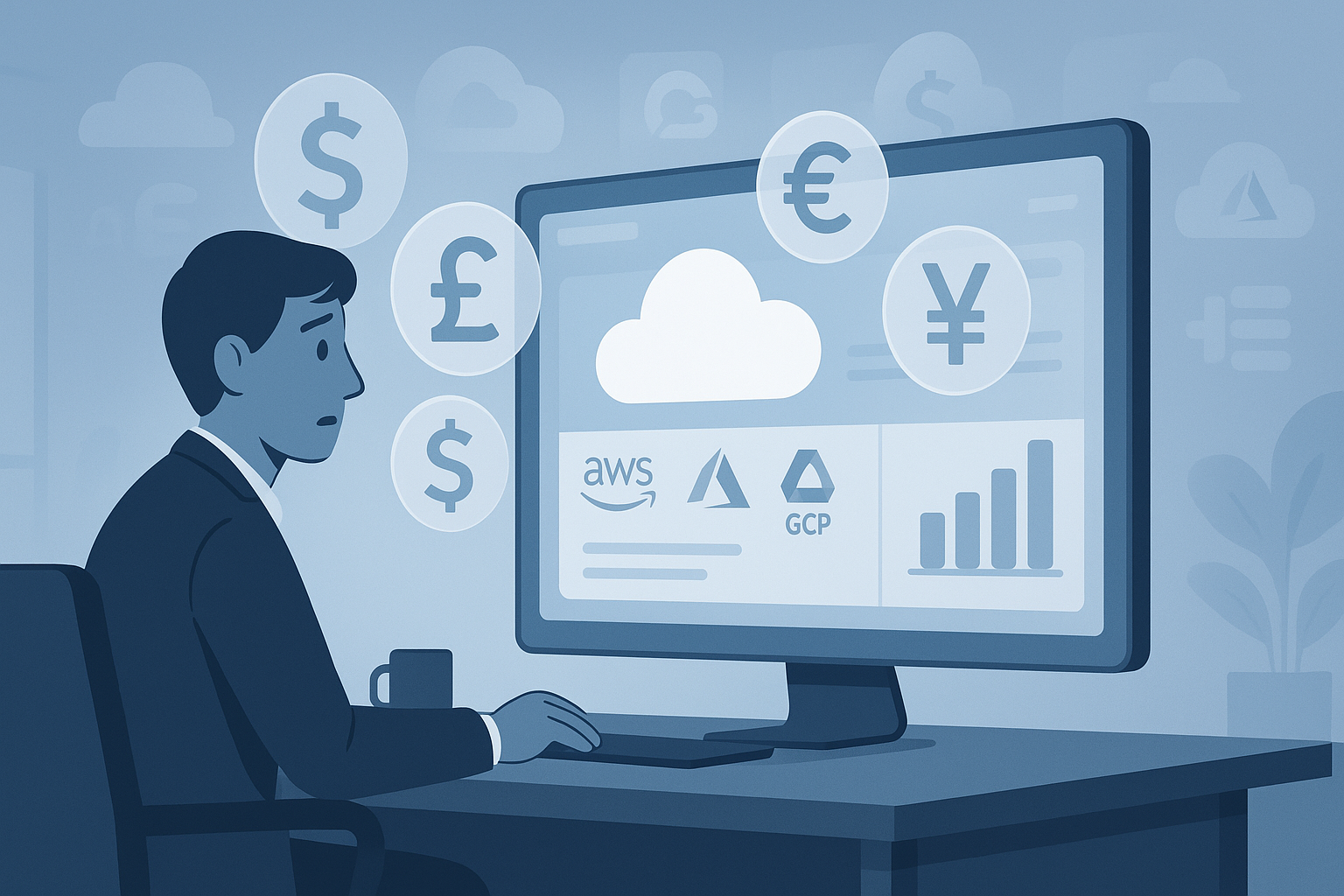
Moving to the cloud promises significant cost savings, operational efficiency, and enhanced scalability. Yet many businesses discover that their cloud bills tell rather a different story than their initial projections suggested. Whilst the headline figures for compute and storage often align with expectations, it’s the hidden costs that rather catch organisations off guard, sometimes adding 30-50% to projected budgets.
Understanding these concealed expenses isn’t about disparaging cloud adoption; it’s about entering migration with a proper understanding and budgets that won’t leave finance directors reaching for the aspirin. The reality is that cloud pricing models, whilst transparent in principle, contain numerous variables that even experienced IT professionals can overlook during initial planning phases.
The Anatomy of Cloud Cost Surprises
Before diving into specific hidden costs, it’s worth understanding why these surprises occur with such regularity. Traditional IT budgeting focuses on capital expenditure for hardware and software licenses, with relatively predictable operational costs. Cloud computing inverts this model, shifting to operational expenditure with usage-based pricing that can fluctuate dramatically based on consumption patterns, data movement, and service configurations.
The challenge lies in the sheer complexity of cloud pricing models. AWS, for instance, has over 200 services, each with its own pricing structure. Azure and Google Cloud Platform follow similar patterns. When you multiply these services by different regions, instance types, and usage patterns, the permutations become rather staggering.
The Data Transfer Trap: More Complex Than It Appears
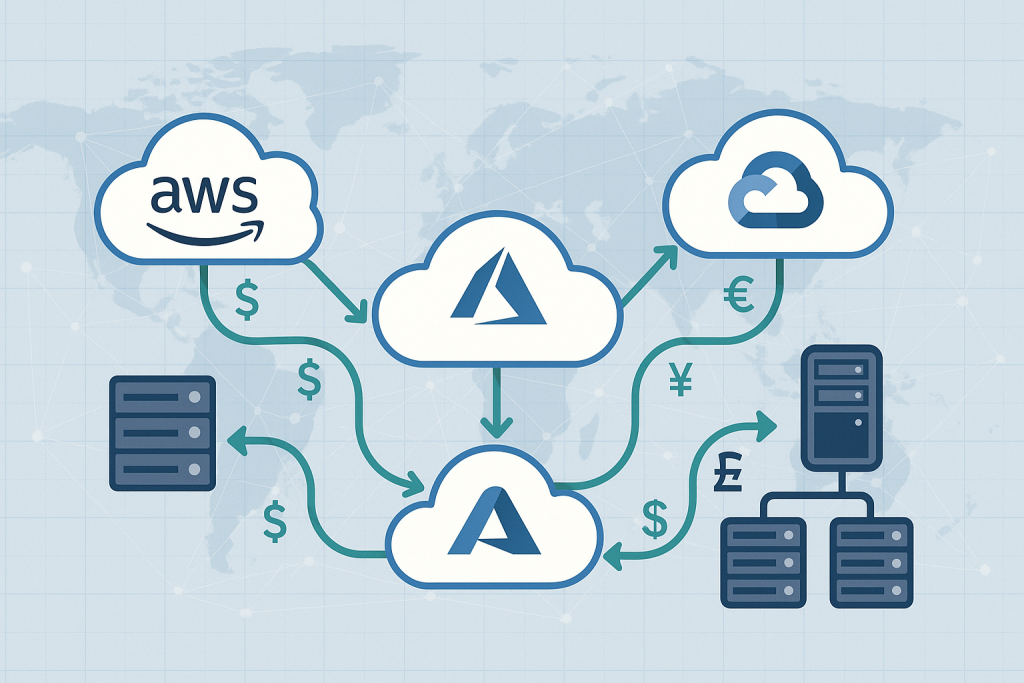
Perhaps the most common surprise for businesses comes from data egress charges, the cost of moving data out of cloud providers’ networks. AWS, Azure, and GCP all charge for data leaving their platforms, and these fees mount up rather quickly for businesses with frequent data synchronisation between cloud and on-premises systems, regular large file downloads or backups, multi-cloud architectures requiring cross-provider data movement, customer-facing applications serving content globally, and development and testing environments that mirror production data.
The complexity deepens when considering that data transfer costs vary significantly based on destination. Moving data between availability zones within the same region might cost £0.01 per GB, whilst transferring to the internet could cost £0.09 per GB or more. For organisations processing terabytes of data monthly, these seemingly small differences compound into substantial expenses.
Regional variations add another layer of complexity. Data transfer costs from Asia-Pacific regions are typically higher than from US or European regions. A company with a global presence might find that their Singapore operations incur significantly higher egress charges than their Frankfurt deployment, even with identical usage patterns.
The Compliance Premium: Regulatory Reality Bites
Businesses face increasingly complex regulatory requirements that often translate to higher cloud costs. GDPR compliance, data residency requirements, and sector-specific regulations frequently demand premium security features and certifications, data encryption at rest and in transit, dedicated tenancy or private cloud options, enhanced logging and monitoring capabilities, professional services for compliance assessments, regular security audits and penetration testing, and compliance-specific backup and disaster recovery solutions.
Financial services firms, in particular, discover that meeting regulatory requirements in the cloud often necessitates enterprise-grade services that cost considerably more than standard offerings. It’s rather like discovering that economy class doesn’t include the seat you actually need.
The compliance tax varies significantly by industry and geography. Healthcare organisations in the United States dealing with HIPAA requirements might face additional costs of 25-40% over standard cloud deployments. Financial institutions subject to PCI-DSS compliance often require dedicated hardware security modules, adding thousands of pounds monthly to their cloud bills.
European businesses operating under GDPR face particular challenges with data residency requirements. Ensuring that personal data never leaves specific geographic boundaries often necessitates dedicated regional deployments instead of global, cost-optimised architectures, enhanced data lifecycle management tools, specialised legal and compliance consultancy, and additional staff training on data protection principles.
Skill Set Gaps and Training Costs: The Human Element
The shift from traditional infrastructure management to cloud-native operations requires new competencies. Many organisations rather underestimate the investment required for staff training and certification programmes, hiring cloud specialists in an increasingly competitive market, external consultancy during transition periods, ongoing managed services to bridge capability gaps, knowledge retention as staff turnover increases, and cross-training to avoid single points of failure.
Conservative estimates suggest budgeting £2,500-£6,000 per team member for comprehensive cloud training, plus potential salary premiums of 15-25% for cloud-skilled professionals. That’s before considering the cost of keeping good people who might otherwise be tempted by more cloud-savvy competitors.
The skills gap extends beyond technical capabilities to include financial management. Traditional IT teams focused on hardware lifecycle management suddenly need to understand complex pricing models, cost allocation strategies, and financial optimisation techniques. This shift often requires FinOps training for technical teams, technical training for finance teams, new tools and processes for cost management, and regular upskilling as cloud services evolve.
Consider the certification pathway costs alone: AWS certifications can cost £150-£300 per exam, with most professionals needing multiple certifications. Add Microsoft Azure and Google Cloud certifications, and the investment per person can easily exceed £2,000 annually, not including training materials, courses, and time away from productive work.
Integration Complexities: When Legacy Meets Modern
Legacy systems rarely migrate to the cloud quite as seamlessly as one might hope. Integration challenges often generate unexpected costs through bespoke middleware development, API gateway services and transaction charges, third-party integration platforms, extended parallel running periods during phased migrations, application refactoring to optimise for cloud architectures, data transformation and migration tools, and performance tuning and optimisation services.
It’s rather like renovating an old building, you never quite know what you’ll find when you start pulling up the floorboards.
The integration tax often manifests in several ways. API Management costs can be particularly surprising. Enterprise API gateways charge per million API calls, and legacy systems often make far more API calls than anticipated when integrated with cloud services.
Message queuing and event streaming services like Amazon SQS, Azure Service Bus, or Google Cloud Pub/Sub charge per message or per throughput unit. High-frequency trading systems or IoT applications can generate millions of messages daily, creating substantial ongoing costs that weren’t apparent during initial planning.
Data transformation requirements often exceed initial estimates. ETL (Extract, Transform, Load) processes that seemed straightforward during planning can require sophisticated data transformation services, especially when dealing with complex legacy data formats or when ensuring data quality standards.
The Monitoring and Management Overhead: Visibility Comes at a Price
Cloud environments require rather different monitoring approaches than traditional infrastructure. Comprehensive observability across distributed systems often involves premium monitoring and logging services, application performance monitoring tools, security information and event management platforms, cloud cost management and optimisation tools, backup and disaster recovery solutions beyond basic provisions, compliance monitoring and reporting tools, and automation and orchestration platforms.
The monitoring stack can become surprisingly expensive. Enterprise-grade monitoring solutions often charge per metric, per log entry, or per monitored resource. A typical enterprise deployment might generate 10,000+ custom metrics per hour, 100GB+ of log data daily, thousands of infrastructure components requiring monitoring, and complex distributed traces across multiple services.
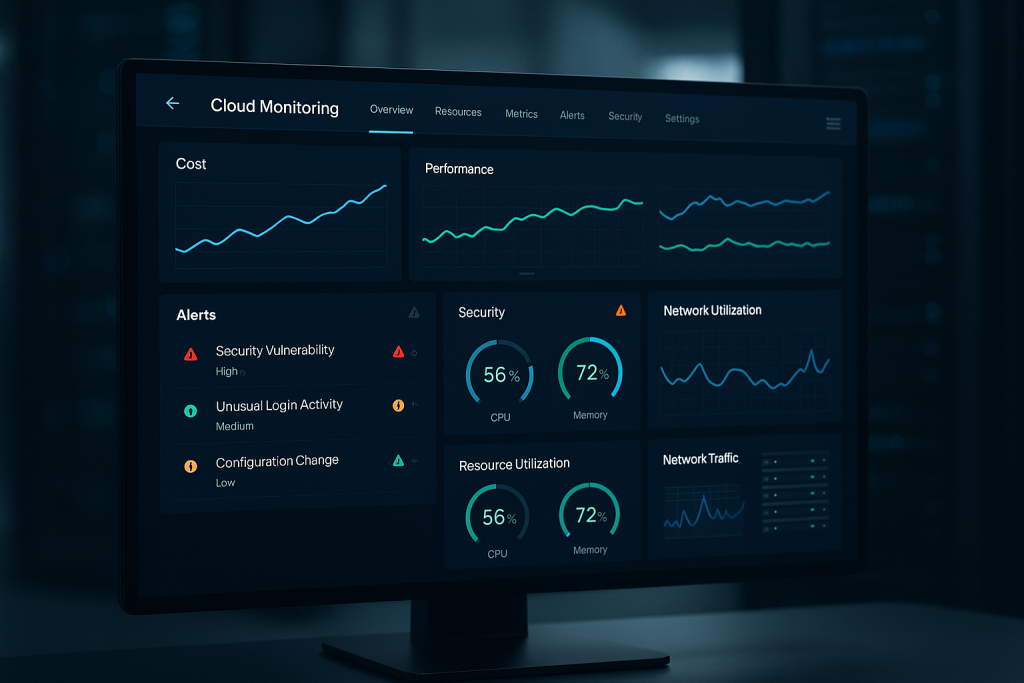
At enterprise scale, monitoring costs can easily reach £10,000-£50,000 monthly, particularly when including security monitoring, compliance reporting, and advanced analytics capabilities.
Log retention policies add another dimension of cost. Regulatory requirements might mandate log retention for several years, but cloud providers charge storage costs for every gigabyte retained. A financial services firm discovered their log retention requirements would cost over £100,000 annually in storage fees alone.
Bandwidth and Network Costs: The Hidden Infrastructure Tax
Businesses often overlook networking expenses, particularly direct connections such as AWS Direct Connect or Azure ExpressRoute, VPN gateway charges for hybrid connectivity, load balancer and content delivery network fees, cross-region traffic costs for disaster recovery setups, premium network tiers for improved performance, DDoS protection services, and private network connectivity between cloud regions.
These costs can be rather eye-watering, particularly for organisations with substantial data requirements or those needing guaranteed performance levels.
Direct connection costs often surprise businesses. AWS Direct Connect, for instance, charges both for the connection itself (ranging from £36 to £2,250 monthly depending on bandwidth) and for data transfer over that connection.
Load balancer costs scale with both the number of load balancers and the data processed. Application Load Balancers might cost £16-£25 per month each, but can process millions of requests, incurring additional per-request charges. High-traffic applications can easily generate thousands of dollars in load balancer costs monthly.
Content Delivery Network (CDN) charges vary dramatically based on geographic distribution and traffic patterns. Serving content to users in Asia-Pacific regions typically costs more than serving to North American users.
Storage Surprises: Beyond the Obvious
Whilst primary storage costs are usually well-understood, several storage-related charges catch businesses rather unprepared. These include frequent access charges for archived data, cross-region replication costs, backup storage that grows beyond initial estimates, database backup retention and point-in-time recovery charges, object storage request charges for applications with high transaction volumes, storage class transition fees, and data lifecycle management automation costs.
The archival trap particularly catches businesses off guard. Moving data to cheaper archival storage classes seems sensible for cost optimisation, but retrieving that data for compliance audits or business analysis can result in substantial retrieval fees.
Database backup costs often exceed expectations because they include not just the backup storage but also the compute resources required for backup operations. Point-in-time recovery capabilities, whilst essential for business continuity, can double or triple database storage costs.
Time Zone and Regional Considerations: Global Complexity
Global businesses face additional complexities that can drive up costs through multi-region deployments for performance and compliance, cross-region data synchronisation charges, support contracts covering multiple time zones, currency fluctuations affecting international billing, regional pricing variations between cloud providers, and local tax implications and billing structures.
Regional pricing variations can be substantial. The same virtual machine instance that costs £100 monthly in US East might cost £130 in Asia-Pacific regions and £115 in Europe. For global deployments, these differences compound significantly.
Support costs scale with geographic coverage. Enterprise support contracts that include 24/7 coverage across multiple time zones typically cost 20-30% more than single-region support. However, global businesses often discover this premium is essential for maintaining service levels across their operations.
The Hidden Cost of Security: Beyond Basic Protection
Cloud security extends far beyond the basic security features included with cloud services. Enterprise-grade security often requires advanced threat detection and response tools, identity and access management solutions, data loss prevention services, security orchestration and automated response platforms, regular security assessments and penetration testing, specialised security consulting and managed services, and compliance monitoring and reporting tools.
Security tool licensing in cloud environments often follows usage-based pricing models. A security information and event management (SIEM) solution might charge per GB of data ingested, which can result in monthly costs of £20,000-£100,000+ for large enterprises generating substantial log volumes.
Identity management costs scale with user count and feature requirements. Advanced identity governance, privileged access management, and multi-factor authentication solutions can easily cost £10-£50 per user monthly at enterprise scale.
Disaster Recovery: The Ultimate Insurance Premium
Business continuity in the cloud requires careful planning and often substantial investment in multi-region deployment architectures, real-time data replication across regions, regular disaster recovery testing and validation, backup storage across multiple availability zones, recovery time objective (RTO) and recovery point objective (RPO) optimisation, and automated failover and failback procedures.
The cost of comprehensive disaster recovery often surprises businesses. Maintaining a warm standby environment that can provide near-instantaneous failover might cost 50-80% of the primary environment’s operational expenses. For mission-critical applications, this “insurance premium” can represent hundreds of thousands of dollars annually.
Development and Testing Environments: The Multiplication Effect
Cloud environments make it easier to create development and testing environments, but this convenience can lead to cost proliferation through multiple environment copies for different development stages, performance testing environments requiring production-scale resources, continuous integration and deployment pipeline costs, sandbox environments for experimentation and training, and data refreshing and environment synchronisation costs.
Strategies for Avoiding Hidden Cost Shock
Comprehensive Discovery and Planning
Conducting thorough discovery workshops before migration, mapping all data flows, integration points, and operational requirements becomes essential. Including representatives from finance, security, compliance, and operations teams is rather important. Getting everyone round the table early doors prevents costly oversights later.
These workshops should cover current infrastructure utilisation patterns, data flow mapping across all systems, integration requirements and dependencies, compliance and regulatory requirements, business continuity and disaster recovery needs, security requirements and current threat landscape, and operational procedures and support requirements.
Detailed Cost Modelling
Building detailed cost models that account for data transfer patterns, peak usage scenarios, and regulatory requirements specific to your industry and operational regions requires moving beyond back-of-the-envelope calculations.
Effective cost models should include base infrastructure costs (compute, storage, networking), data transfer costs for all identified data flows, licensing costs for required software and tools, professional services and consulting expenses, training and certification investments, ongoing operational and support costs, security and compliance premium expenses, and disaster recovery and business continuity investments.
Implementation Best Practices
Implementing robust tagging strategies from the outset enables granular cost tracking and allocation across departments, projects, and environments. Proper housekeeping from day one prevents rather awkward conversations later.
Comprehensive tagging should include business unit or department, project or application identifier, environment type (production, development, testing), cost centre for billing allocation, data classification and sensitivity levels, compliance requirements, and resource owner and contact information.
Establishing clear governance frameworks with spending limits, approval processes, and regular cost reviews prevents budget creep. Think of it as putting guardrails in place before you need them.
Governance frameworks should encompass spending thresholds requiring approval, resource provisioning policies and procedures, cost monitoring and alerting mechanisms, regular cost optimisation reviews, vendor management and contract negotiations, and change management procedures for cost-impacting modifications.
Skill Development and Knowledge Management
Planning for professional development by allocating budget for training, certifications, and potentially higher salaries for cloud-skilled team members recognises that good people cost money, but the alternative costs rather more.
Comprehensive skill development should include technical training for cloud platforms and services, financial management and FinOps training, security and compliance training, vendor-specific certification programmes, cross-training to avoid knowledge silos, knowledge documentation and sharing procedures, and retention strategies for skilled personnel.
Continuous Optimization
Implementing continuous cost optimisation practices rather than treating cost management as a one-time activity recognises that cloud costs are dynamic and require ongoing attention and optimisation.
Ongoing optimisation should include regular cost review meetings with stakeholders, automated cost anomaly detection and alerting, resource utilisation monitoring and optimisation, reserved instance and savings plan optimisation, regular vendor negotiations and contract reviews, technology refresh and modernisation planning, and performance optimisation to reduce resource requirements.
Industry-Specific Considerations
Financial Services
Financial institutions face particular challenges with cloud cost management due to regulatory requirements, security needs, and performance expectations. Common hidden costs include regulatory compliance monitoring and reporting tools, enhanced security measures including privileged access management, high-availability architectures for mission-critical trading systems, real-time data processing and analytics capabilities, audit trail maintenance and compliance reporting, and specialised financial software licensing in cloud environments.
Healthcare
Healthcare organisations must navigate complex regulatory landscapes whilst maintaining patient privacy and data security. Hidden costs often include HIPAA compliance monitoring and reporting, enhanced data encryption and access controls, medical device integration and interoperability solutions, patient data backup and disaster recovery solutions, specialised healthcare software licensing, and medical imaging storage and processing costs.
Manufacturing
Manufacturing companies face unique challenges when integrating operational technology with cloud services. Common surprises include IoT device connectivity and data ingestion costs, real-time manufacturing data processing and analytics, supply chain integration and data exchange costs, quality management system integration, predictive maintenance and monitoring solutions, and regulatory compliance for various markets and jurisdictions.
The Path Forward: Strategic Thinking Required
Successful cloud migration requires acknowledging that initial cost estimates often represent the floor, rather than the ceiling, of cloud spending. Businesses that factor in these hidden costs from the outset position themselves for sustainable cloud adoption rather than post-migration budget surprises that leave CFOs questioning the entire exercise.
The key lies not in avoiding cloud migration. The strategic benefits remain compelling, but in approaching it with comprehensive planning that accounts for the full spectrum of costs. This realistic approach enables better decision-making, appropriate budget allocation, and ultimately, more successful cloud transformations.
Building a Sustainable Cloud Financial Model
Successful cloud adoption requires treating financial management as an ongoing operational discipline rather than a one-time planning exercise. This means establishing cross-functional teams that include finance, operations, and engineering; implementing automated cost monitoring and optimisation tools; creating cost-aware engineering cultures that consider financial impact in technical decisions; regular review and optimisation of cloud spending patterns; and continuous evaluation of new services and pricing models.
The Long-Term Perspective
Whilst hidden costs can be substantial, it’s important to maintain perspective on the long-term benefits of cloud adoption. The scalability, agility, and innovation capabilities that cloud platforms provide often justify the additional complexity and cost. However, realising these benefits requires mature approaches to cloud financial management.
By understanding these hidden costs upfront, businesses can build accurate business cases, secure appropriate budgets, and implement governance structures that prevent cloud spending from spiralling beyond expectations. The cloud journey becomes not just about technology transformation, but about informed financial planning that supports long-term business objectives.
Think of it rather like planning a house move. The removal van is just the beginning. It’s the new curtains, the different-sized furniture, and the unexpected repairs that really add up. Cloud migration follows much the same pattern, and the wise organisation plans accordingly.
The most successful cloud adoptions combine technical excellence with financial discipline, creating sustainable competitive advantages that justify the investment in comprehensive planning and ongoing optimisation.
Planning a cloud migration for your business? Consider engaging with cloud economics specialists early in your planning process to build comprehensive cost models that account for these often-overlooked expenses. As they say, proper preparation prevents poor performance—and rather expensive surprises.