
Passing your cloud certification exam is just the beginning. The harsh reality? 40% of newly certified professionals struggle to translate their theoretical knowledge into practical workplace value. The difference between a “paper-certified” professional and a genuine cloud expert lies not in exam scores, but in demonstrable, real-world capabilities.
This week, we’re bridging the critical gap between certification achievement and practical expertise. Whether you’re preparing for your first exam or looking to leverage existing certifications for career advancement, these strategies will transform you from someone who passed a test into someone who solves real business problems with cloud technology.
The Expertise Gap: Why Certifications Alone Aren’t Enough
The cloud industry faces a fundamental challenge: an abundance of certified professionals who lack practical experience. Hiring managers consistently report that whilst certifications demonstrate commitment and baseline knowledge, they’re seeking candidates who can immediately contribute to complex, real-world projects.
Understanding the Practical Skills Deficit
Theoretical vs Applied Knowledge Cloud certification exams test understanding of services, best practices, and architectural principles. However, they rarely assess the practical skills needed for day-to-day cloud operations: troubleshooting complex issues, optimising performance under constraints, or implementing solutions within organisational constraints.
Vendor Documentation vs Real-World Complexity Certification study materials present idealised scenarios with clear parameters and outcomes. Production environments involve legacy systems, budget constraints, security requirements, and organizational politics that complicate every implementation decision.
Speed of Technology Evolution Cloud platforms evolve rapidly, with new services and features launching continuously. Certification content lags behind these developments, creating gaps between certified knowledge and current platform capabilities.
Strategic Learning: Building Genuine Technical Competency
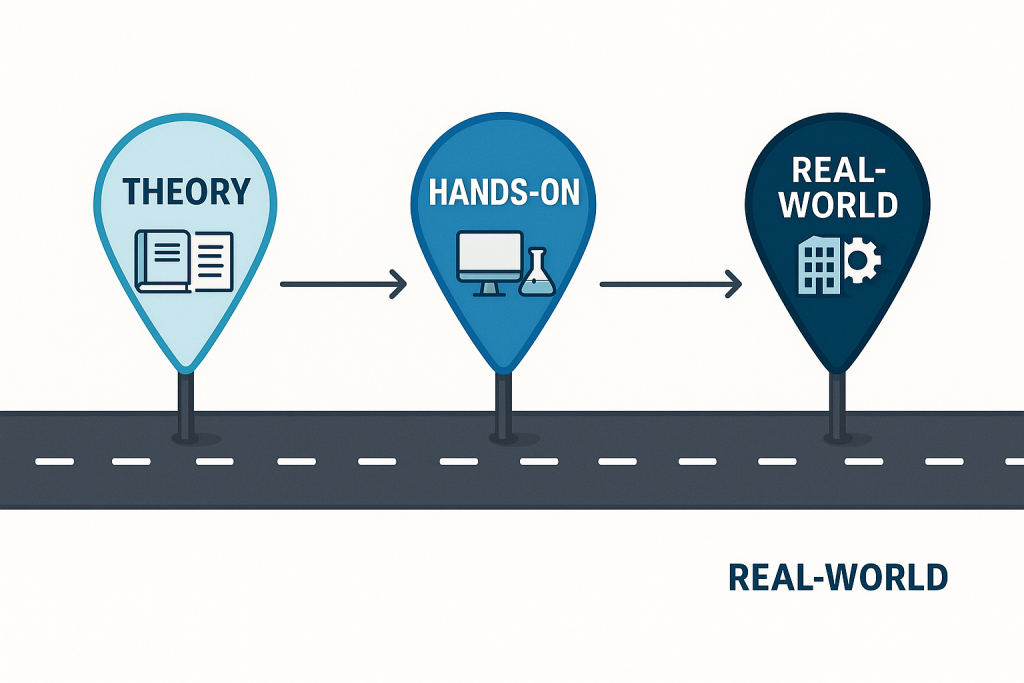
Developing practical cloud expertise requires a systematic approach that combines theoretical understanding with hands-on experience and real-world application.
Hands-On Laboratory Development
Personal Lab Environment Strategy Every cloud professional needs a personal laboratory environment for experimentation and skill development. This isn’t optional, it’s fundamental to building genuine expertise that distinguishes you from paper-certified peers.
AWS Laboratory Setup: AWS Free Tier provides substantial resources for learning and experimentation. The 12-month free tier includes 750 hours of EC2 t2.micro instances, 5GB of S3 storage, and limited access to most AWS services. Beyond free tier limits, maintain a monthly budget of £20-50 for expanded experimentation.
Design your AWS lab to mirror enterprise environments: implement VPC networking with public and private subnets, deploy multi-tier applications, configure monitoring and logging, and practice disaster recovery scenarios. Document every implementation decision and maintain infrastructure as code using AWS CloudFormation or Terraform.
Azure Laboratory Configuration: Azure Free Account offers £150 credit for the first 30 days plus always-free services including App Service, Functions, and limited virtual machine hours. For sustained learning, budget £30-60 monthly for comprehensive experimentation.
Focus your Azure lab on enterprise integration scenarios: implement hybrid connectivity using VPN Gateway, deploy applications using Azure DevOps pipelines, configure Active Directory integration, and practice backup and recovery procedures. Emphasise the Microsoft ecosystem integration that differentiates Azure in enterprise environments.
Google Cloud Platform Laboratory: GCP Free Tier provides $300 credit for new accounts plus always-free usage limits for key services. The sustained use discounts and preemptible instances make GCP cost-effective for experimental workloads.
Structure your GCP lab around data and analytics capabilities: implement BigQuery data warehousing, deploy machine learning models using AI Platform, configure Kubernetes clusters, and practice CI/CD using Cloud Build. Google’s strength in data analytics and AI provides unique learning opportunities.
Project-Based Learning Implementation
Portfolio Project Development Build a portfolio of documented projects that demonstrate practical expertise across different cloud domains. Each project should solve a realistic business problem and showcase multiple cloud services working together.
Web Application Deployment Project Design and deploy a multi-tier web application that demonstrates fundamental cloud architecture principles. Include frontend (static website hosting), backend (serverless functions or containers), database (managed database service), and supporting services (CDN, load balancing, monitoring).
Document the entire process: architecture decisions, security considerations, cost optimisation strategies, and operational procedures. Create infrastructure as code templates and deployment automation. This single project demonstrates competency across multiple certification domains.
Data Analytics Pipeline Project Implement an end-to-end data analytics solution that ingests, processes, and visualises data. Use cloud-native services for data ingestion (streaming or batch), processing (serverless compute or managed analytics), storage (data warehouse or lake), and presentation (dashboard or API).
This project demonstrates expertise in emerging technologies whilst showcasing the analytical capabilities that drive digital transformation initiatives. Document data governance, security, and compliance considerations for enterprise applicability.
Disaster Recovery Implementation Project Design and implement a comprehensive disaster recovery solution for a simulated business application. Include backup strategies, replication mechanisms, failover procedures, and recovery testing. Document RTO (Recovery Time Objective) and RPO (Recovery Point Objective) achievements.
Disaster recovery expertise is highly valued by enterprises and demonstrates advanced understanding of business continuity requirements. This project showcases risk management thinking beyond basic technical implementation.
Professional Credibility: Building Your Technical Brand
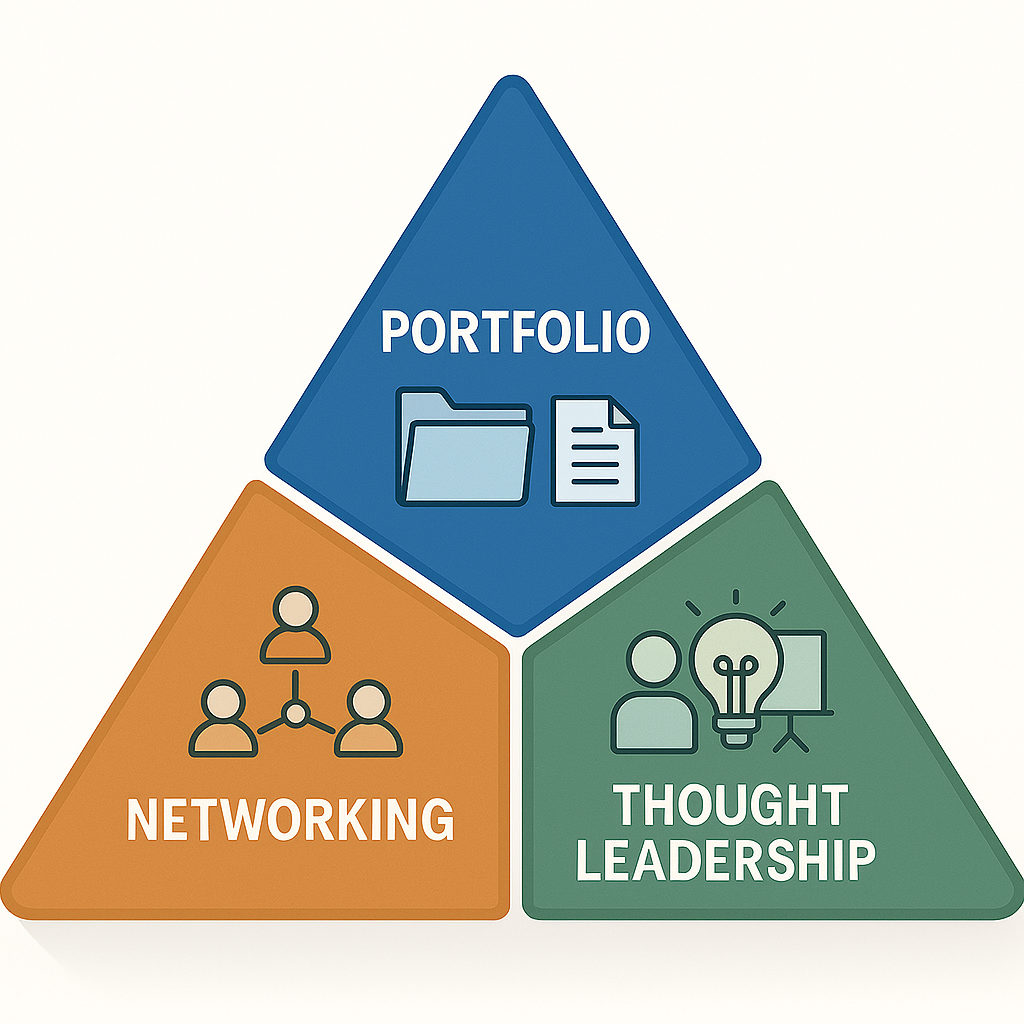
Technical expertise alone isn’t sufficient for career advancement. Building professional credibility requires strategic positioning, consistent demonstration of knowledge, and active participation in the cloud community.
Technical Portfolio Construction
GitHub Repository Strategy Maintain a professional GitHub profile showcasing cloud projects, infrastructure as code templates, automation scripts, and technical documentation. Organise repositories logically with clear README files, comprehensive documentation, and working examples.
Include projects that demonstrate different aspects of cloud expertise: infrastructure provisioning, application deployment, monitoring implementation, security configuration, and cost optimisation. Each repository should tell a story about a specific business problem and your technical solution.
Technical Writing and Documentation Develop a habit of documenting your learning journey, project implementations, and technical insights. High-quality technical writing demonstrates expertise whilst contributing to the community knowledge base.
Start with detailed project documentation that explains not just what you built, but why you made specific decisions. Progress to technical blog posts that share insights, lessons learned, and best practices. Consider platforms like Medium, LinkedIn, or personal blogging platforms for content distribution.
Certification Badge Strategy Display your certifications strategically across professional profiles, but avoid overwhelming potential employers with credential lists. Focus on relevant, current certifications that align with your target roles and career progression.
Include certification badges in email signatures, LinkedIn profiles, and professional portfolio websites, but ensure they complement rather than replace evidence of practical expertise.
Community Engagement and Networking
Professional Community Participation Active participation in cloud communities provides networking opportunities, knowledge sharing, and industry visibility. Join platform-specific communities, local technology meetups, and professional organisations relevant to your specialisation.
Cloud Platform Communities Engage with official platform communities: AWS Community, Azure Community, and Google Cloud Community. Participate in forums, contribute to discussions, and share knowledge through answers and insights.
Local Technology Meetups Attend local cloud and technology meetups to build regional professional networks. London hosts numerous cloud-focused meetups including AWS User Groups, Azure meetups, and general cloud architecture discussions. These events provide opportunities for learning, networking, and potential job opportunities.
Conference Participation Strategy Attend major cloud conferences for learning and networking opportunities. AWS re:Invent, Microsoft Ignite, and Google Cloud Next provide comprehensive learning opportunities and extensive networking possibilities.
Budget for at least one major conference annually as a professional development investment. The networking opportunities, learning sessions, and industry insights justify the cost as career advancement investments.
Interview Preparation: Demonstrating Real Expertise
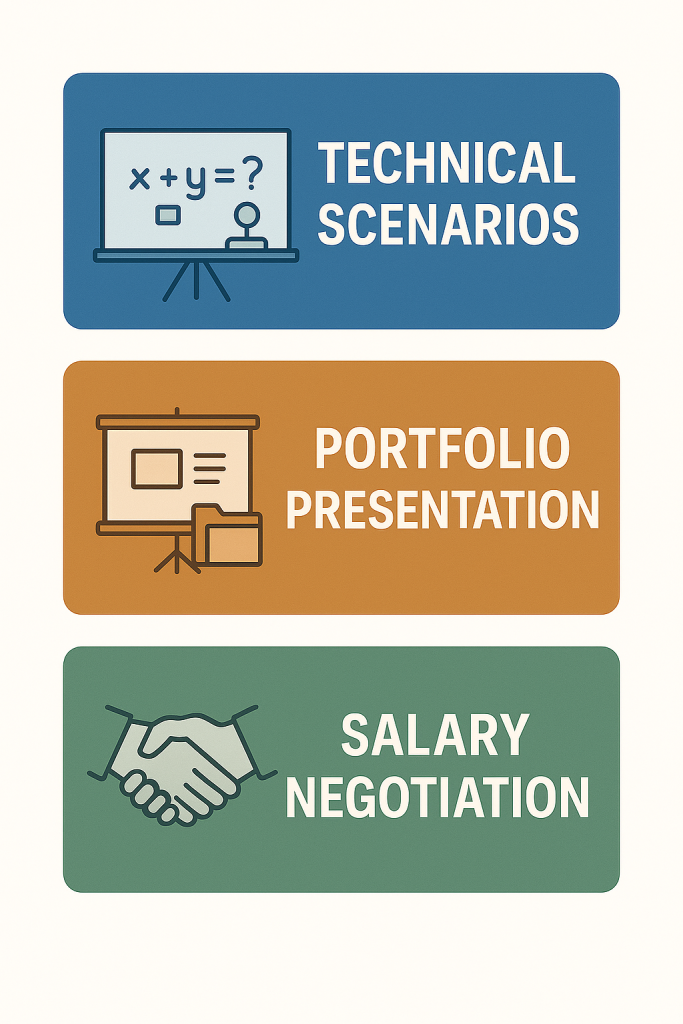
Successfully leveraging your certifications requires exceptional interview performance that demonstrates practical expertise beyond theoretical knowledge.
Technical Interview Preparation
Scenario-Based Problem Solving Technical interviews increasingly focus on real-world scenarios requiring practical problem-solving skills. Prepare for architecture discussions, troubleshooting scenarios, and design challenges that test applied knowledge.
Practice explaining complex technical concepts in business terms. Interviewers want to understand not just what you would implement, but why you chose specific approaches and how they align with business objectives.
Hands-On Technical Demonstrations Some organisations require practical demonstrations of technical skills through coding challenges, architecture whiteboarding, or live problem-solving exercises. Prepare by practicing common scenarios in your laboratory environment.
Develop comfort with explaining your thinking process aloud whilst solving technical problems. The ability to communicate technical reasoning clearly often proves more valuable than perfect solutions.
Portfolio Presentation Strategy Prepare a compelling presentation of your project portfolio that tells a coherent story about your technical journey and capabilities. Focus on business impact, lessons learned, and how your experiences prepare you for the target role.
Include metrics and outcomes where possible: performance improvements achieved, cost savings realised, or operational efficiencies gained. Quantifiable results demonstrate business value beyond technical achievement.
Salary Negotiation and Career Positioning
Market Rate Research and Benchmarking Research current salary ranges for your certification level, experience, and geographic location using multiple sources: Glassdoor, Indeed Salary Guide, PayScale, and specialised technology salary surveys.
Consider total compensation packages including base salary, bonuses, equity, benefits, and professional development opportunities. Cloud professionals often have significant leverage in negotiations due to high demand and skills shortages.
Value Proposition Development Develop a clear value proposition that articulates how your certification and practical experience will contribute to organizational success. Move beyond listing credentials to explaining how you’ll solve specific business challenges.
Prepare specific examples of problems you’ve solved, improvements you’ve implemented, or risks you’ve mitigated. These stories demonstrate practical value that justifies premium compensation.
Career Progression Planning Position your current role as a step toward longer-term career objectives. Discuss growth opportunities, additional responsibility areas, and how the organization can benefit from your continued development.
Express interest in emerging technologies, leadership opportunities, and cross-functional collaboration that extends beyond pure technical contribution. This demonstrates strategic thinking and long-term value potential.
Continuous Learning: Staying Current in a Rapidly Evolving Field
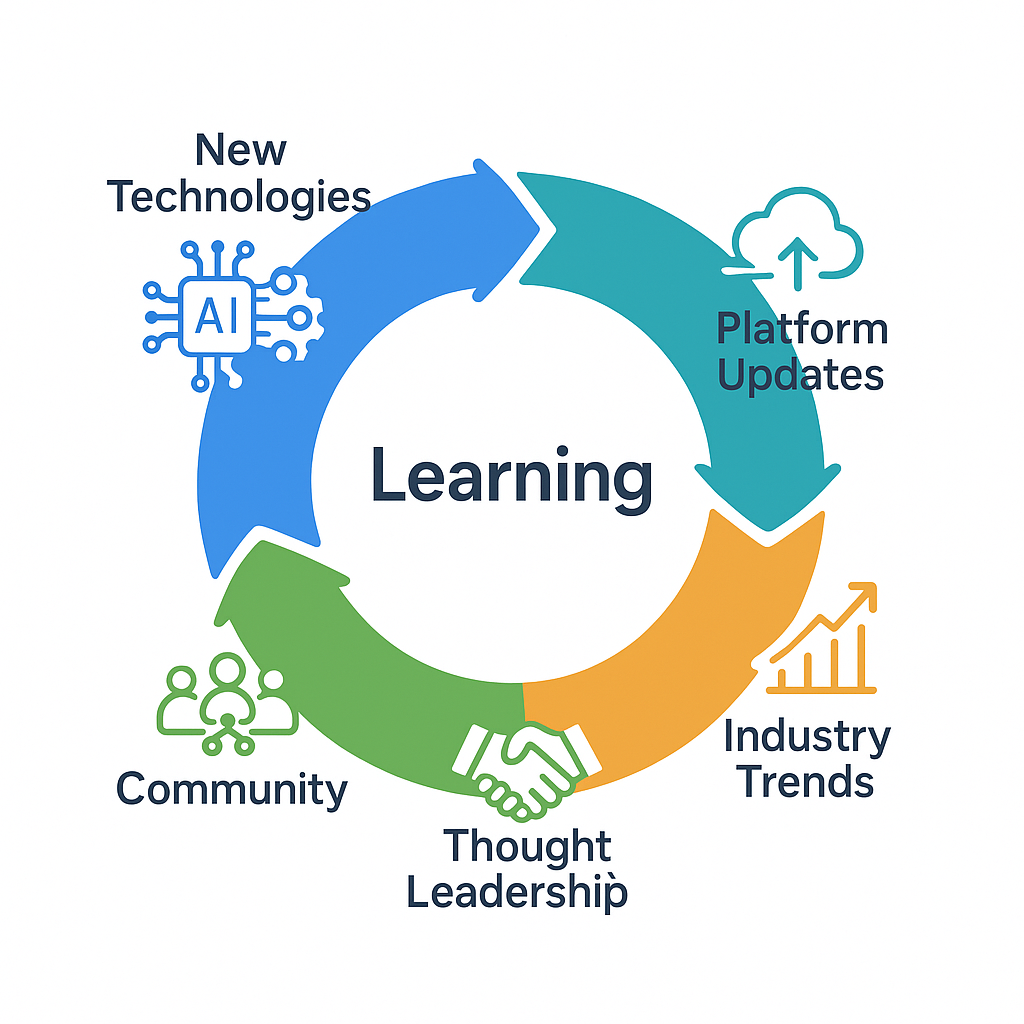
Cloud technology evolves rapidly, making continuous learning essential for maintaining relevance and competitive advantage.
Platform Evolution Tracking
Service Updates and New Features Major cloud platforms release new services and features continuously. Develop systematic approaches for staying current with platform evolution without becoming overwhelmed by the pace of change.
Subscribe to official platform blogs: AWS News, Azure Updates, and Google Cloud Blog. Focus on updates relevant to your specialisation whilst maintaining awareness of broader platform evolution.
Certification Maintenance and Updates Cloud certifications require regular renewal and maintenance to remain current. Plan recertification activities strategically, using renewal requirements as opportunities for skill expansion rather than mere compliance exercises.
Many platforms offer continuing education credits for various learning activities: conference attendance, training completion, or community contribution. Track these credits systematically to maintain certifications efficiently.
Emerging Technology Integration
Artificial Intelligence and Machine Learning AI and ML capabilities are becoming integral to all cloud platforms. Develop foundational understanding of machine learning concepts, data science principles, and AI service offerings across your primary platform.
Start with managed AI services that require minimal machine learning expertise: image recognition, natural language processing, or predictive analytics. Progress to more sophisticated implementations as your understanding develops.
Edge Computing and IoT Integration Edge computing represents a significant expansion of cloud computing paradigms. Understand edge deployment models, latency considerations, and hybrid architectures that combine cloud and edge capabilities.
Experiment with IoT platforms and edge computing services offered by your primary cloud provider. These technologies will become increasingly important as 5G networks enable new application categories.
Serverless Computing Evolution Serverless computing continues evolving beyond simple function-as-a-service implementations. Understand serverless containers, event-driven architectures, and serverless databases that enable comprehensive application development without infrastructure management.
Build expertise in serverless design patterns, performance optimization, and cost management strategies. Serverless represents a fundamental shift in application architecture that affects all cloud disciplines.
Building Enterprise-Grade Experience
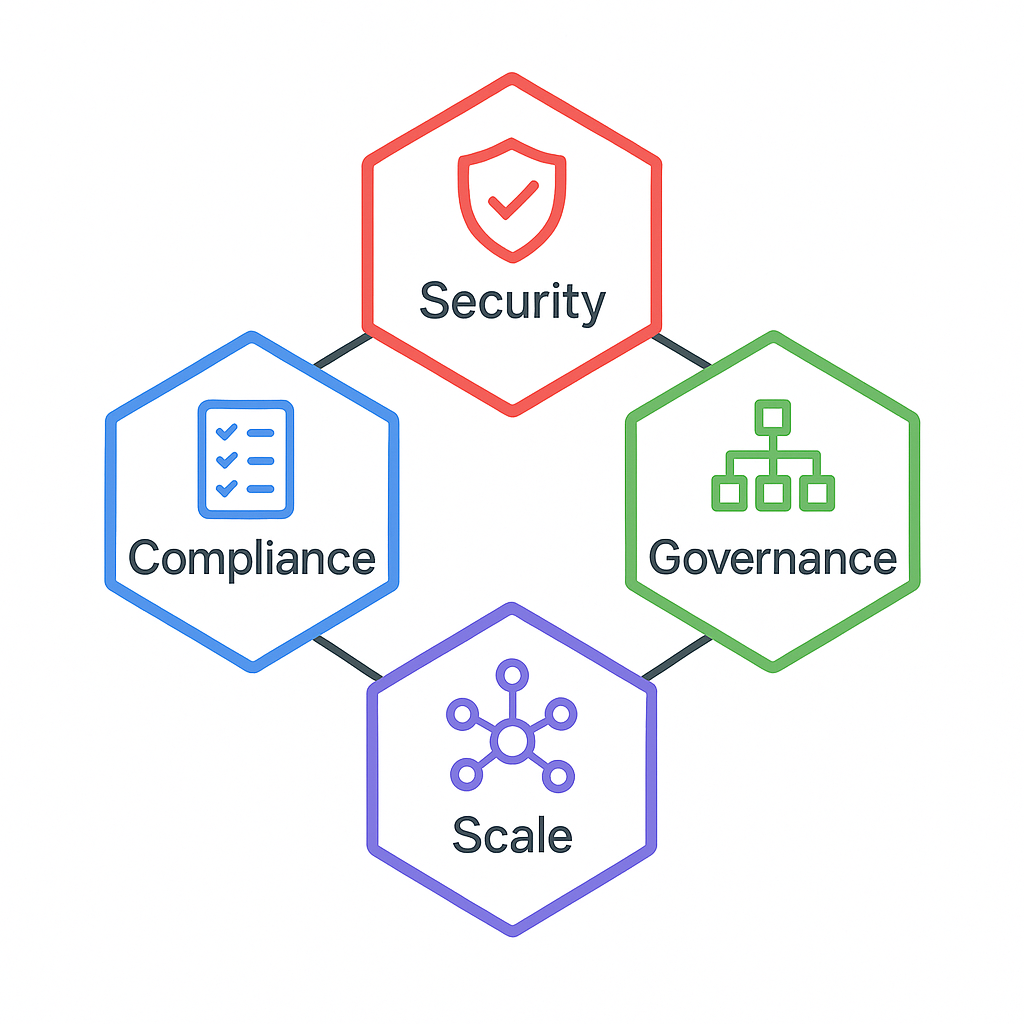
Enterprise environments present complexities rarely addressed in certification study materials. Building enterprise-grade expertise requires understanding organizational constraints, compliance requirements, and governance frameworks.
Security and Compliance Implementation
Regulatory Framework Understanding Different industries face varying regulatory requirements that significantly impact cloud implementations. Develop understanding of relevant frameworks: GDPR for data protection, PCI DSS for payment processing, HIPAA for healthcare, or SOX for financial reporting.
Security certifications provide valuable specialization opportunities whilst addressing universal enterprise requirements. Every organization needs security expertise, making this specialization broadly applicable.
Identity and Access Management Mastery IAM represents one of the most critical and complex aspects of enterprise cloud implementations. Develop deep understanding of identity federation, role-based access control, privileged access management, and compliance auditing.
Practice implementing complex IAM scenarios in your laboratory environment: cross-account access, temporary credential management, service-to-service authentication, and audit logging. These skills are essential for enterprise role success.
Governance and Cost Management
Cloud Financial Management (FinOps) Organizations increasingly require sophisticated cloud cost management as spending scales. Develop expertise in cost allocation, budget management, optimization strategies, and financial reporting for cloud resources.
FinOps Certified Practitioner certification provides structured learning for cloud financial management. This emerging specialization commands significant premiums whilst addressing universal organizational needs.
Resource Governance and Policy Implementation Enterprise environments require comprehensive governance frameworks for resource management, security enforcement, and compliance maintenance. Understand policy-as-code implementations, automated compliance checking, and governance reporting.
Practice implementing governance policies in your laboratory environment using platform-specific tools: AWS Organizations, Azure Policy, or Google Cloud Resource Manager. These capabilities are essential for senior cloud roles.
Practical Project Implementation Guide
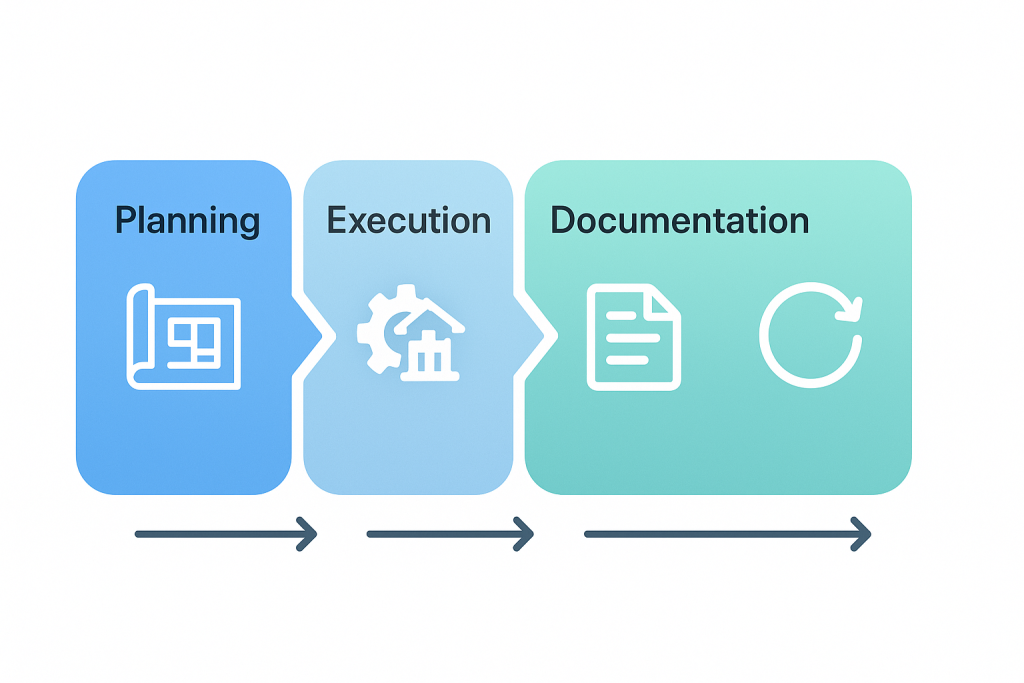
Structured project implementation provides the practical experience that transforms certification knowledge into demonstrable expertise.
Project Planning and Architecture
Requirements Analysis and Solution Design Begin each project with comprehensive requirements analysis that considers functional needs, non-functional requirements, constraints, and success criteria. This business-focused approach mirrors real-world project implementation.
Practice translating business requirements into technical specifications, making architectural decisions based on multiple criteria: performance, security, cost, maintainability, and organizational constraints.
Infrastructure Design and Documentation Create detailed infrastructure designs using standard architectural diagrams and documentation practices. Use tools like draw.io, Lucidchart, or AWS Architecture Icons for professional diagram creation.
Document design decisions, trade-offs considered, and rationale for chosen approaches. This documentation demonstrates strategic thinking beyond basic technical implementation.
Implementation and Testing
Infrastructure as Code Development Implement all infrastructure using code-based provisioning tools: Terraform, AWS CloudFormation, Azure Resource Manager, or Google Cloud Deployment Manager.
Infrastructure as code provides version control, repeatability, and documentation benefits whilst demonstrating modern operational practices. Include code quality practices: version control, code review, and automated testing.
Monitoring and Observability Implementation Implement comprehensive monitoring, logging, and alerting for all projects. Use platform-native monitoring services whilst understanding integration with third-party tools and enterprise monitoring solutions.
Practice implementing observability strategies that provide actionable insights into application performance, resource utilization, and business metrics. These capabilities are essential for production environment success.
Documentation and Knowledge Sharing
Comprehensive Project Documentation Create detailed project documentation that explains not just implementation details, but business context, decision rationale, and lessons learned. This documentation style demonstrates enterprise-ready communication skills.
Include operational runbooks, troubleshooting guides, and maintenance procedures. These documents show understanding of operational requirements beyond initial implementation.
Knowledge Transfer and Training Materials Develop training materials that could teach others to understand and maintain your implementations. This demonstrates mastery-level understanding and readiness for senior or leadership roles.
Consider creating video walkthroughs, hands-on workshops, or interactive tutorials that showcase your projects whilst contributing to community knowledge sharing.
Career Acceleration Strategies
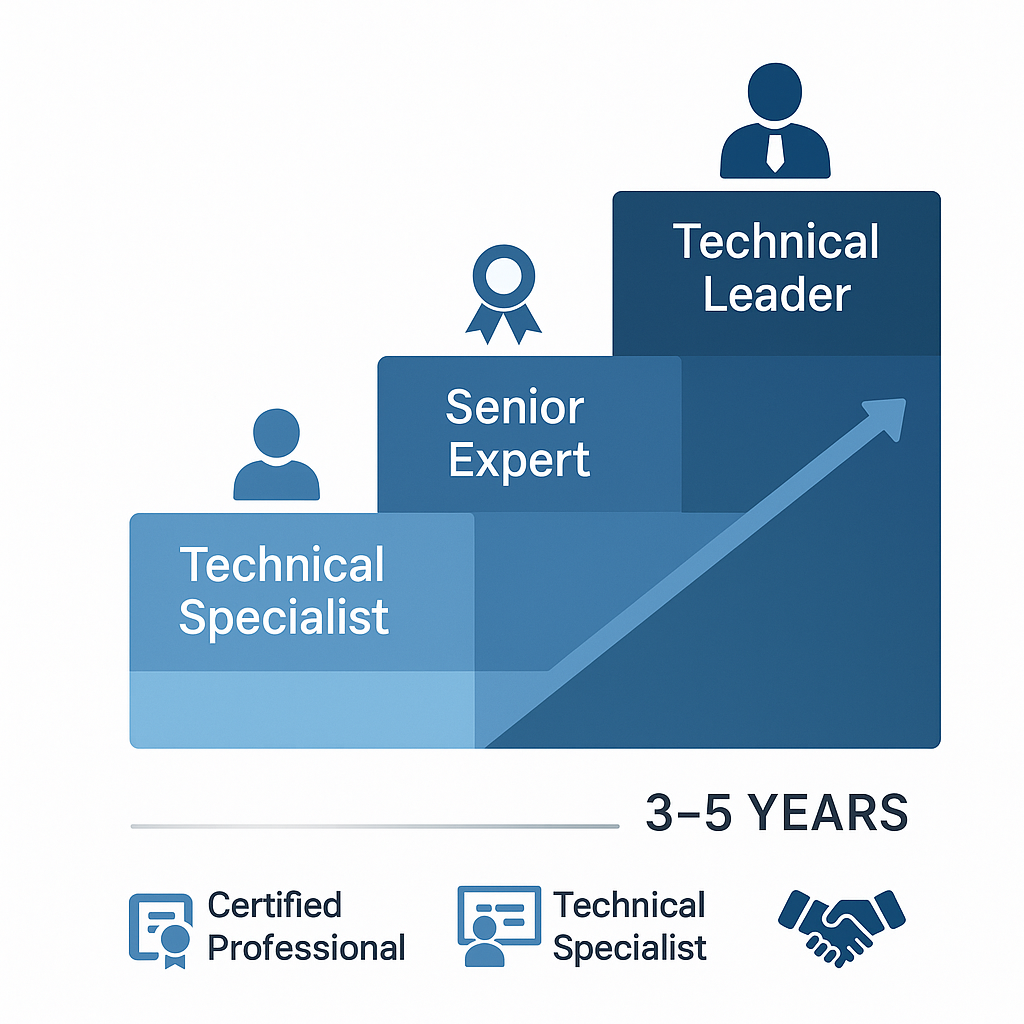
Strategic career positioning requires more than technical competency. The highest-achieving cloud professionals combine technical expertise with business acumen, communication skills, and strategic thinking.
Professional Development Beyond Technical Skills
Business Acumen Development Develop understanding of business strategy, financial management, and organizational dynamics that affect technology decisions. Technical experts who understand business context provide significantly more value than pure technical specialists.
Consider business-focused learning: MBA fundamentals courses, industry-specific knowledge, or financial management training. This knowledge enables contribution to strategic discussions and decision-making processes.
Communication and Leadership Skills Technical leadership requires exceptional communication skills for translating complex technical concepts into business language, leading technical teams, and influencing organizational decisions.
Practice public speaking through technology meetups, internal presentations, or conference speaking opportunities. Written communication skills develop through technical blogging, documentation creation, and professional correspondence.
Strategic Career Positioning
Thought Leadership Development Establish yourself as a knowledgeable voice in cloud technology through consistent content creation, community participation, and knowledge sharing. Thought leadership creates career opportunities and professional recognition.
Start with commenting thoughtfully on LinkedIn posts, answering questions in professional forums, and sharing insights from your practical experience. Progress to original content creation and speaking opportunities.
Mentoring and Teaching Opportunities Mentoring others demonstrates expertise whilst building professional networks and contributing to community development. Teaching forces deep understanding whilst establishing credibility and industry relationships.
Consider formal mentoring programs, informal guidance for junior colleagues, or volunteer teaching opportunities in professional development programs.
Measuring Success: Metrics That Matter
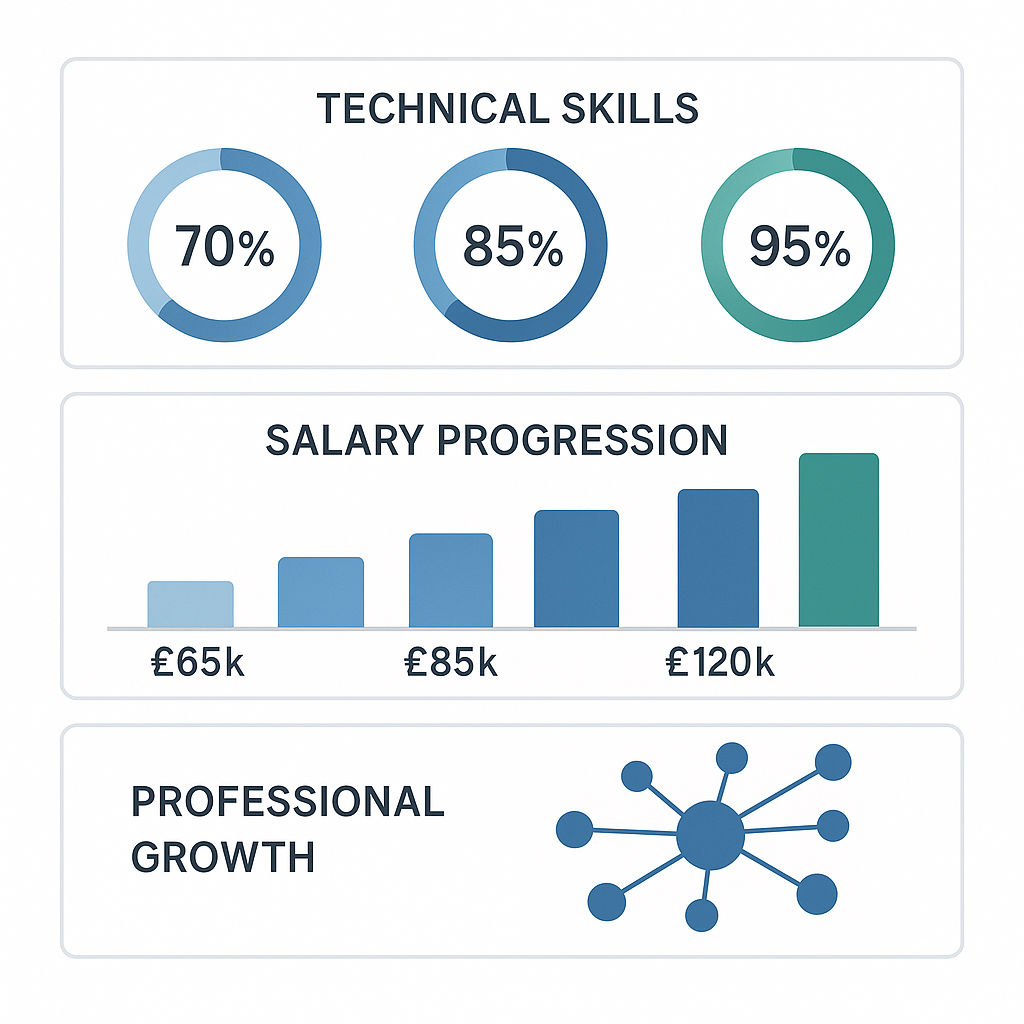
Track your progress systematically using metrics that correlate with career advancement and professional success.
Technical Competency Metrics
Project Portfolio Growth Maintain a growing portfolio of documented projects that demonstrate increasing complexity and business value. Track the progression from simple implementations to comprehensive solutions addressing real business challenges.
Community Recognition Monitor community engagement metrics: GitHub repository stars, blog post engagement, conference speaking invitations, or professional recommendation quality. These indicators reflect growing professional recognition.
Certification Advancement Track certification progression strategically, focusing on credentials that align with career goals rather than credential accumulation. Measure the business impact and career advancement resulting from certification achievements.
Career Progression Indicators
Compensation Growth Monitor total compensation growth including base salary, bonuses, equity, and professional development opportunities. Cloud professionals should expect consistent compensation increases reflecting growing expertise and market demand.
Responsibility Expansion Track increasing responsibility in technical complexity, team leadership, project scope, and business impact. Career advancement involves expanding influence beyond pure technical contribution.
Industry Recognition Monitor professional recognition through job opportunities, consulting requests, speaking invitations, or media mentions. Industry recognition often precedes significant career advancement opportunities.
Strategic Recommendations for Immediate Implementation
For Recently Certified Professionals
Laboratory Environment Priority Establish a comprehensive laboratory environment immediately following certification achievement. This practical experience foundation enables confident application of theoretical knowledge whilst building demonstrable expertise.
Documentation Habit Development Begin documenting every implementation, experiment, and learning experience comprehensively. This documentation becomes your professional portfolio whilst developing communication skills essential for career advancement.
Community Engagement Strategy Start participating in professional communities related to your certification area. Begin with passive participation (reading, learning) and progress to active contribution (answering questions, sharing insights).
For Experienced Professionals
Portfolio Project Prioritization Focus on building a selective portfolio of high-quality projects that demonstrate expertise rather than collecting numerous simple implementations. Quality demonstrates mastery better than quantity.
Strategic Networking Investment Invest systematically in professional relationship building through industry events, online communities, and professional organizations. Senior career opportunities often result from professional relationships rather than application processes.
Thought Leadership Development Begin establishing yourself as a knowledgeable voice in your specialization area through consistent content creation and knowledge sharing. Thought leadership creates career opportunities and professional differentiation.
Building Long-Term Career Resilience
The cloud industry will continue evolving rapidly, making adaptability more important than specific technical knowledge. Build career resilience through learning systems, professional networks, and strategic thinking capabilities that enable success regardless of technological changes.
Continuous Learning Systems Develop sustainable learning habits that accommodate busy professional schedules whilst maintaining current knowledge and skills. Microlearning, community participation, and project-based learning provide ongoing development without overwhelming time commitments.
Professional Network Investment Build diverse professional networks that include technical peers, business leaders, industry analysts, and cross-functional colleagues. Strong networks provide career opportunities, learning resources, and strategic insights.
Strategic Thinking Development Develop strategic thinking capabilities that enable contribution to business planning, technology roadmap development, and organizational decision-making. Strategic thinking separates technical experts from technical leaders.
Next Week Preview: We’ll explore the business side of cloud expertise – consulting opportunities, freelancing strategies, and building technology businesses around your cloud knowledge.
The transition from certification to expertise requires systematic effort, strategic thinking, and sustained commitment. Focus on building genuine capabilities that solve real business problems rather than accumulating credentials or following trends.
The key insight: Expertise comes from applying knowledge to solve meaningful problems consistently over time. Your certifications are credentials, your portfolio of practical solutions and business impact demonstrates genuine expertise.
Useful Resources for Practical Implementation: