
In the rapidly evolving cloud landscape, Google Cloud Platform (GCP) has emerged as a significant player alongside AWS and Azure. As organisations consider multi-cloud strategies, understanding what GCP offers, particularly through its free tier becomes increasingly valuable for IT professionals exploring this platform.
Getting Started with GCP’s Free Tier
Google Cloud Platform’s free tier consists of two distinct offerings: a 90-day trial with £300 credit and an “Always Free” tier with specific service limitations. This dual approach provides both a sandbox environment for initial exploration and a sustainable way to maintain certain workloads at no cost.
The registration process requires a credit card for verification purposes. A standard practice across cloud providers to prevent abuse. However, Google emphasises that they won’t charge you without explicit authorisation once the trial ends. This provides reassurance during initial setup, though setting calendar reminders for the trial expiration remains a prudent measure for any organisation exploring the platform.
What You Can Actually Build: Practical Free Tier Use Cases
After exploring GCP’s free offerings for several weeks, I’ve identified several practical scenarios that remain completely within the free tier constraints:
1. Development and Testing Environments
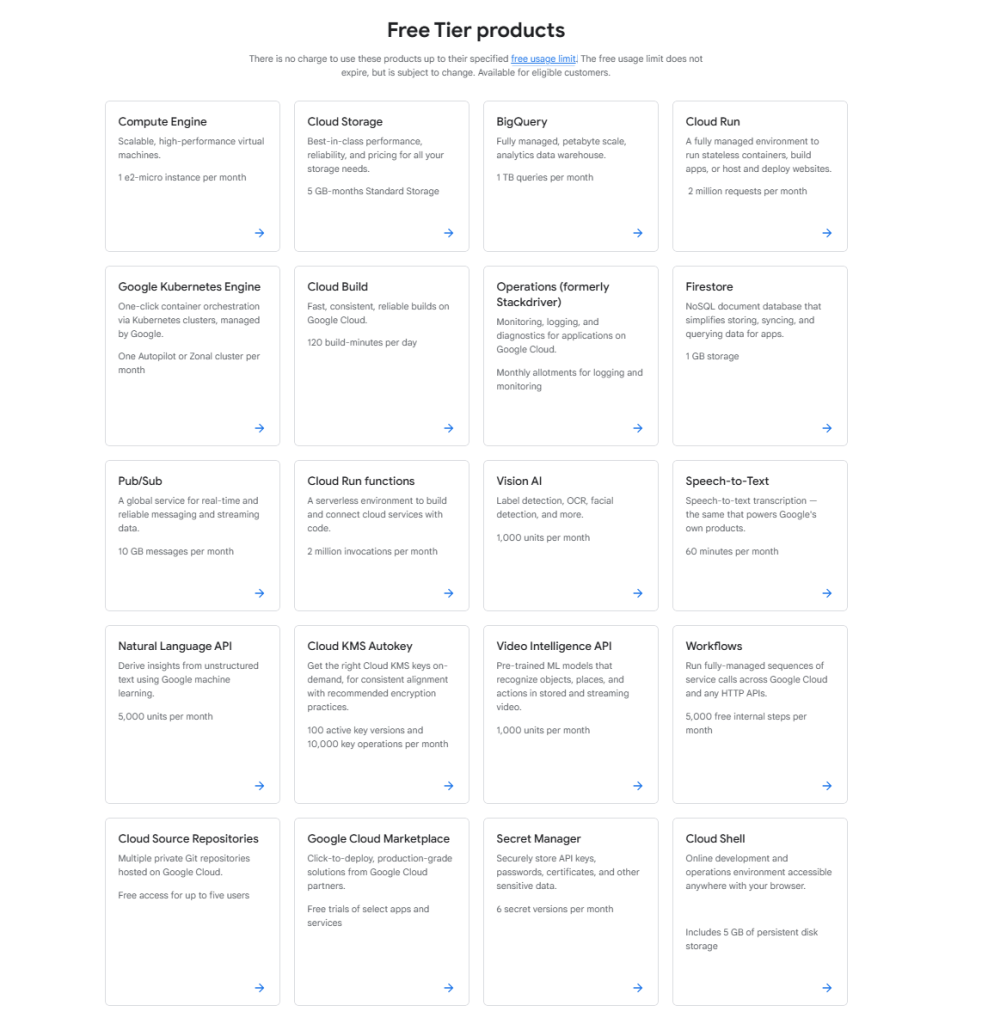
The free tier comfortably supports a small development environment with:
- A lightweight e2-micro VM instance (2 shared vCPUs, 1 GB memory) running continuously
- 30 GB of standard persistent disk storage
- 5 GB of regional Cloud Storage
- Small NoSQL database with Firestore (1 GB storage, 50K reads, 20K writes daily)
- Cloud Shell with 5 GB of persistent disk storage for development
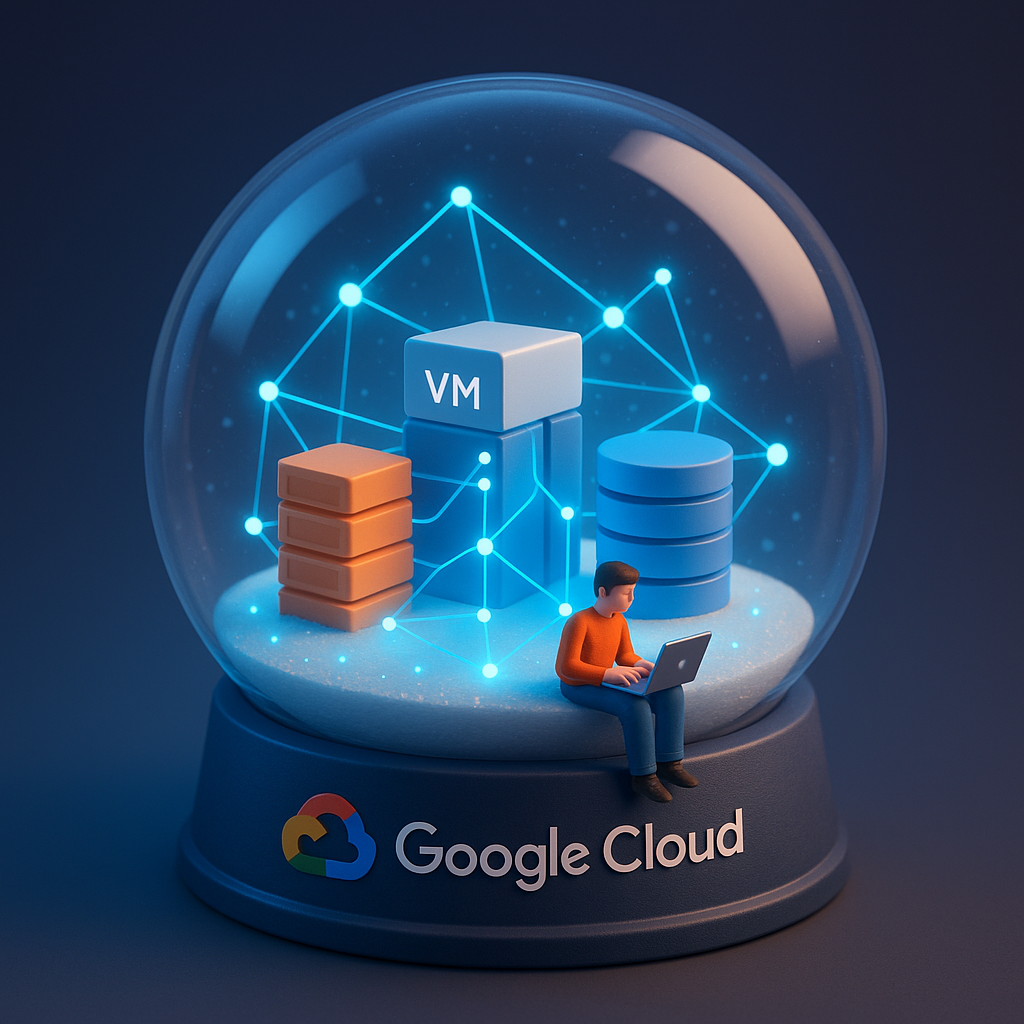
For a developer or small team looking to experiment with GCP architecture, this provides adequate resources for application prototyping, though with performance limitations expected from the constrained compute resources.
2. Small Web Applications
The free tier adequately supports:
- Static website hosting via Cloud Storage
- Serverless functions (2 million invocations monthly via Cloud Functions)
- Cloud Run for containerized applications (2 million requests monthly)
- Small app engine deployments (28 instance hours daily)
- Free trials of select apps from Google Cloud Marketplace
This combination makes GCP viable for hosting personal projects, portfolio sites, or lightweight internal tools without incurring charges.
3. Data Analytics Experiments
For those exploring data solutions:
- BigQuery offers 1 TB of querying monthly
- 10 GB free Cloud Storage for data lakes
- Pub/Sub provides 10 GB of messaging
- Operations (formerly Stackdriver) for logging and monitoring
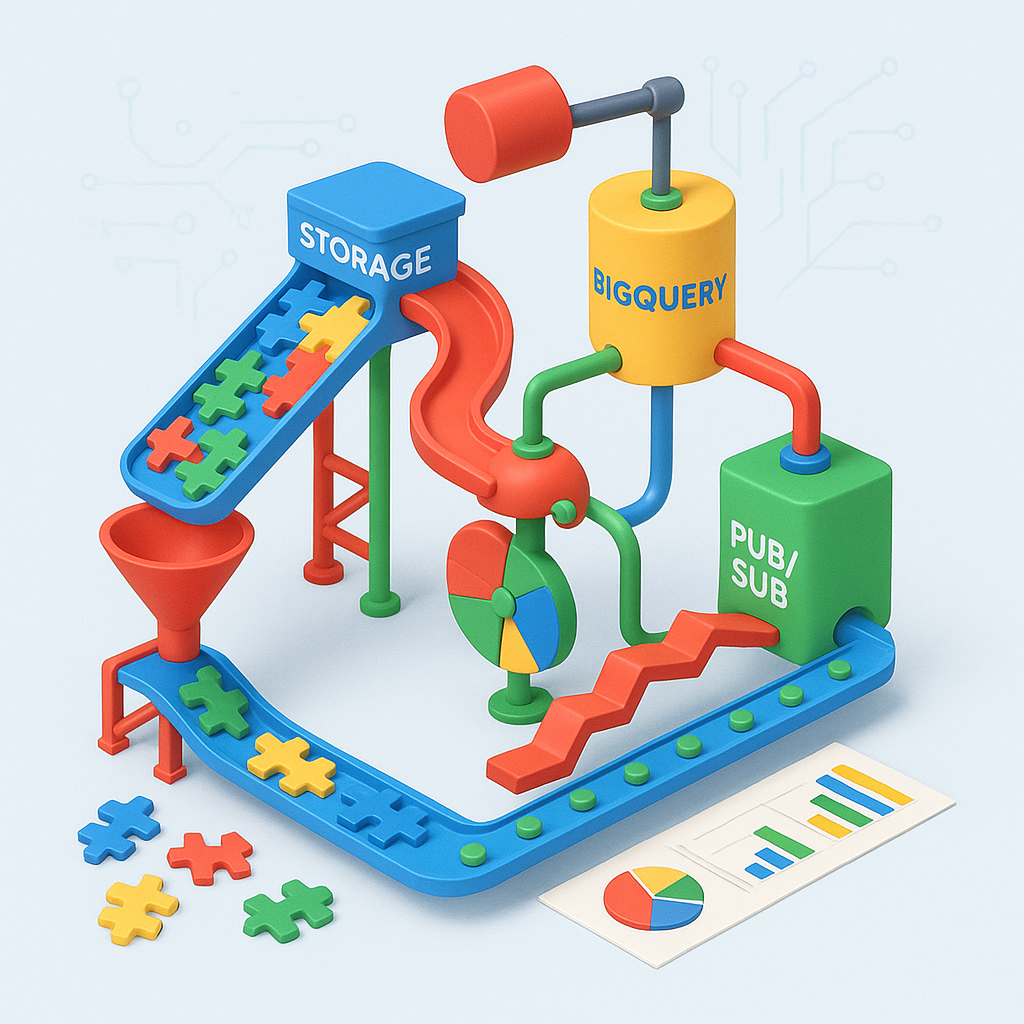
These allocations permit meaningful experimentation with data pipelines, though certainly not production-scale analytics.
4. AI and Machine Learning Experimentation
The free tier offers surprising capabilities for AI/ML exploration:
- Vision AI: 1,000 units per month for image analysis and object detection
- Speech-to-Text: 60 minutes of audio transcription monthly
- Natural Language API: 5,000 units per month for text analysis
- Video Intelligence API: 1,000 units per month for video content analysis
These allocations enable meaningful prototyping of AI-enhanced applications and learning about Google’s ML capabilities without cost barriers.
5. Development and CI/CD Tools
For developers exploring DevOps practices:
- Cloud Source Repositories: Free private Git hosting for up to five users
- Cloud Build: 120 build-minutes per day for continuous integration
- Workflows: 5,000 free internal steps per month for service orchestration
- Secret Manager: 6 secret versions per month for secure credential storage
These tools enable small teams to implement proper CI/CD pipelines and development practices at no cost.
The Limitations: Where the Free Tier Falls Short
Understanding the constraints is equally important when evaluating GCP’s free tier:
1. Compute Performance
The e2-micro VM instances, while free, offer limited computing power. During testing, these instances struggled with:
- Concurrent processing tasks
- Memory-intensive applications
- Compilation and build processes
For comparison, the free tier VM possesses roughly one-tenth the power of a modest production server, making it suitable only for lightweight workloads or proof-of-concept implementations.
2. Regional Restrictions
Many “Always Free” resources are limited to specific regions (often US regions). This creates potential latency issues for users in other geographies and limits disaster recovery options. During testing from the UK, this resulted in noticeable performance disparities compared to using local regions.
3. Service Coverage Gaps
Several key enterprise services have no free tier allocation:
- Cloud SQL (managed database instances)
- Virtual Private Cloud (VPC) service controls
- Most specialised AI/ML services beyond the basic offerings
- Premium support options
GKE offers limited free use (one Autopilot or Zonal cluster per month), but with significant constraints compared to paid usage.
This means comprehensive enterprise architecture patterns cannot be fully replicated without incurring costs.
Strategic Approaches to Maximise Value
Based on hands-on experience, these strategies help extract maximum value from GCP’s free offerings:
1. Embrace Serverless Where Possible
Serverless options (Cloud Functions, Cloud Run) generally offer more generous free allocations than persistent infrastructure. Architecting solutions to use event-driven, ephemeral resources aligns well with free tier maximisation and reflects modern architectural best practices.
2. Implement Rigorous Resource Scheduling
For services charged by runtime (like Compute Engine VMs), implementing scheduled shutdowns during inactive periods preserves free tier allocations. Simple shutdown scripts or the GCP scheduler can automate this process.
3. Leverage GCP’s Free Learning Resources
While not part of the free tier itself, Google offers extensive training materials through Google Cloud Skills Boost, including hands-on labs that provide temporary project environments without consuming your free tier allocations.
Monitoring and Cost Control
Even within the free tier, implementing proper monitoring remains essential:
- Set Budget Alerts: Configure notifications at £0 to receive warnings before any charges occur
- Regular Dashboard Reviews: The GCP billing dashboard clearly separates free usage from potential charges
- Resource Quotas: Review and understand quota limits to prevent unexpected scaling that could exceed free boundaries
Comparing with Other Cloud Providers
GCP’s free tier offers distinct advantages and disadvantages compared to competitors:
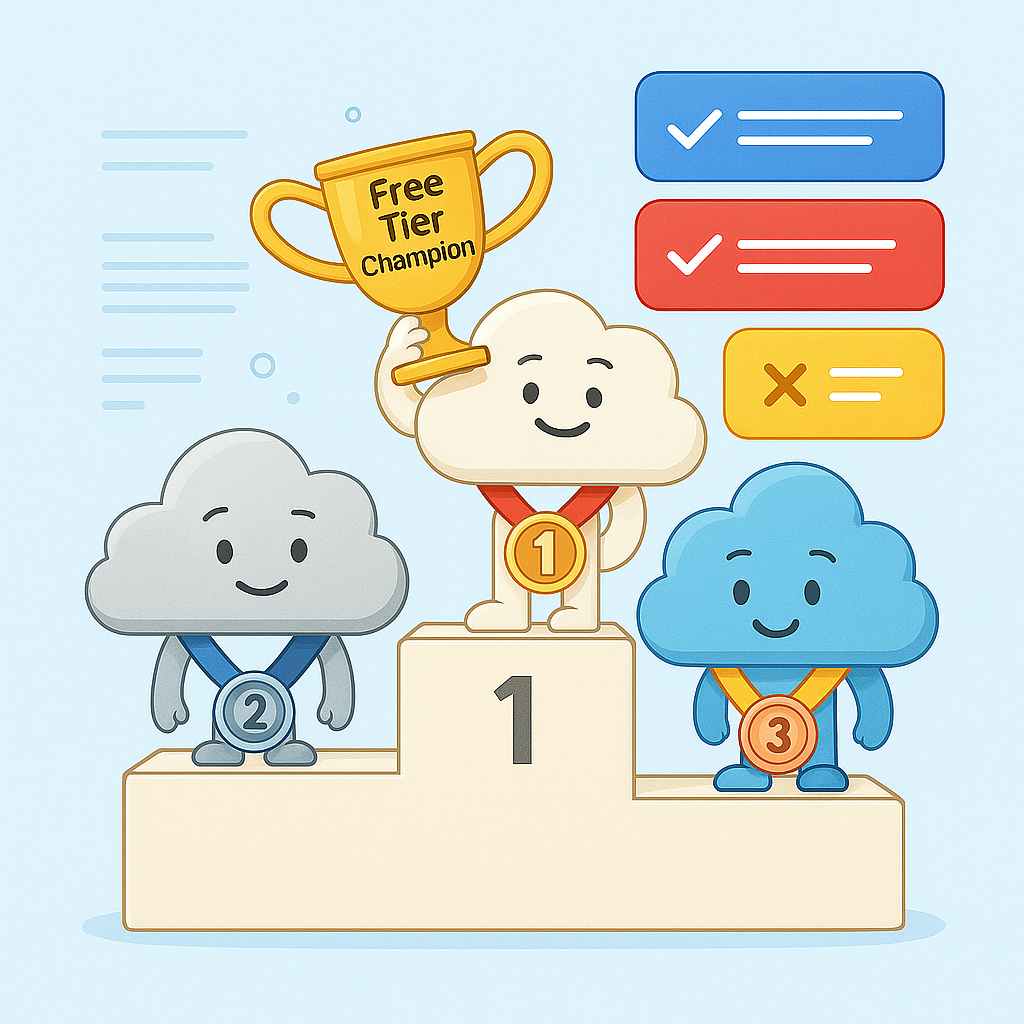
Advantages:
- The £300 initial credit exceeds Azure’s £150 and matches AWS’s offering
- Compute Engine’s e2-micro instance runs continuously (unlike AWS’s 12-month limit)
- BigQuery’s 1 TB processing allowance is generous compared to competitors
- AI/ML service allocations provide meaningful experimentation capacity
Disadvantages:
- Limited database options compared to Azure’s Cosmos DB free tier
- More regional restrictions than AWS’s free tier
- Fewer managed service options in the always-free category
Conclusion: Is GCP’s Free Tier Worth Your Time?
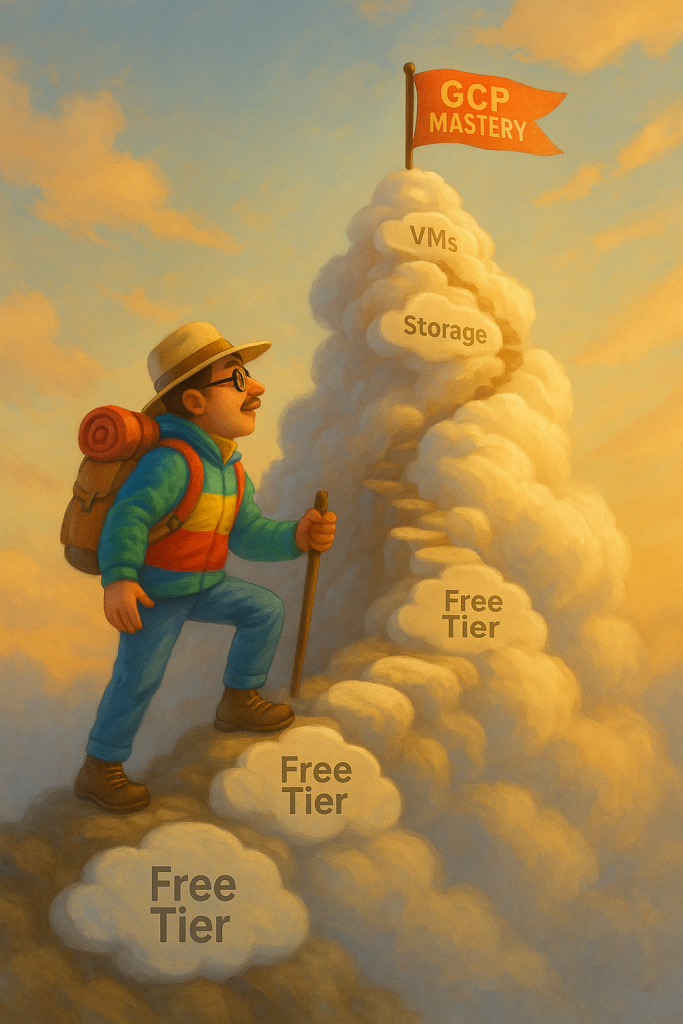
For IT professionals exploring multi-cloud strategies or those considering GCP adoption, the free tier provides adequate resources to understand the platform’s core capabilities and architectural patterns. It enables meaningful learning without financial commitment, particularly for:
- Architectural evaluation and comparison with other cloud platforms
- Skills development and certification preparation
- Small-scale proofs of concept
- Permanent hosting of minimal personal projects
However, it cannot support comprehensive enterprise workloads or production-grade systems that require high availability, performance, or compliance capabilities.
As we navigate increasingly complex cloud environments, understanding the capabilities and limitations of each provider’s free offerings becomes an essential skill for IT professionals making strategic infrastructure decisions. GCP’s free tier represents a balanced offering that facilitates learning and experimentation while establishing clear boundaries for production use cases.