
Part 3 of The Cloud Professional’s Industry Playbook series
Manufacturing represents one of the most exciting transformation stories in cloud computing today. With 69% of UK firms having adopted cloud-based computing systems and the UK showing remarkable 20% growth in digital transformation adoption from 2024 to 2029, the demand for cloud professionals who understand both cutting-edge technology and industrial operations has never been higher.
The sector offers unique career opportunities that traditional IT environments cannot match. Working on systems that directly impact physical production, solving real-world engineering challenges, and contributing to the UK’s industrial competitiveness. From smart factories processing terabytes of sensor data in real-time to predictive maintenance systems that prevent million-pound equipment failures, manufacturing cloud roles combine technical sophistication with tangible business impact.
Manufacturing’s digital transformation accelerated dramatically during the pandemic, as companies discovered cloud technologies could provide resilience, agility, and cost savings that traditional infrastructure couldn’t match. Today, 70% of manufacturers are considering or planning to adopt cloud-based Product Lifecycle Management (cPLM) systems, whilst Industry 4.0 initiatives drive demand for professionals who can bridge operational technology (OT) and information technology (IT) domains.
The Manufacturing Cloud Career Landscape
Manufacturing cloud roles encompass a broader spectrum of specialisations than most professionals realise. Beyond traditional cloud engineering positions, the sector demands specialists who understand industrial systems, real-time processing, edge computing, and the unique requirements of physical production environments.
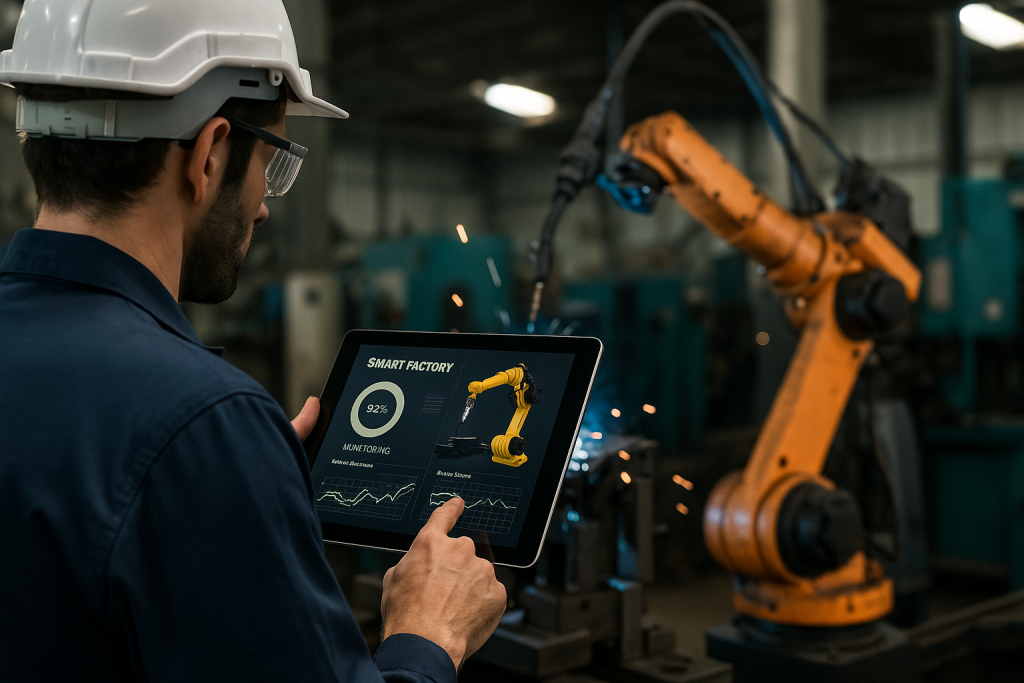
Industrial IoT Cloud Engineers earn between £45,000-£65,000 annually, focusing on connecting factory equipment, sensors, and production systems to cloud platforms whilst maintaining real-time performance requirements. These professionals bridge the gap between traditional IT systems and operational technology, requiring understanding of industrial protocols alongside cloud architectures.
Smart Factory Cloud Architects command £55,000-£85,000, designing cloud infrastructures that support automated manufacturing systems, robotic production lines, and real-time quality control systems. The role requires understanding both cloud scalability and the deterministic performance requirements of manufacturing operations.
Predictive Maintenance Cloud Specialists represent an emerging specialisation, earning £50,000-£75,000 while building cloud platforms that analyse machine sensor data to predict equipment failures before they occur. This role combines cloud engineering with understanding of mechanical systems, vibration analysis, and industrial maintenance practices.
Manufacturing DevOps Engineers focus on continuous integration and deployment for industrial software systems, earning £45,000-£70,000 while managing the unique challenges of deploying software updates to production systems that cannot tolerate downtime.
Supply Chain Cloud Engineers design and maintain cloud systems that optimise manufacturing supply chains, earning £50,000-£80,000 while working on inventory management, demand forecasting, and logistics optimisation systems that directly impact manufacturing efficiency.
Edge Computing Specialists command premium salaries of £60,000-£90,000+ for implementing cloud technologies at the factory edge, where microsecond response times and autonomous operation are critical for production safety and efficiency.
Essential Skills and Knowledge Areas
Manufacturing cloud professionals require unique skill combinations that extend beyond standard cloud competency. Technical expertise must be paired with understanding of industrial systems, production processes, and the physical constraints of manufacturing environments.
Core Technical Skills
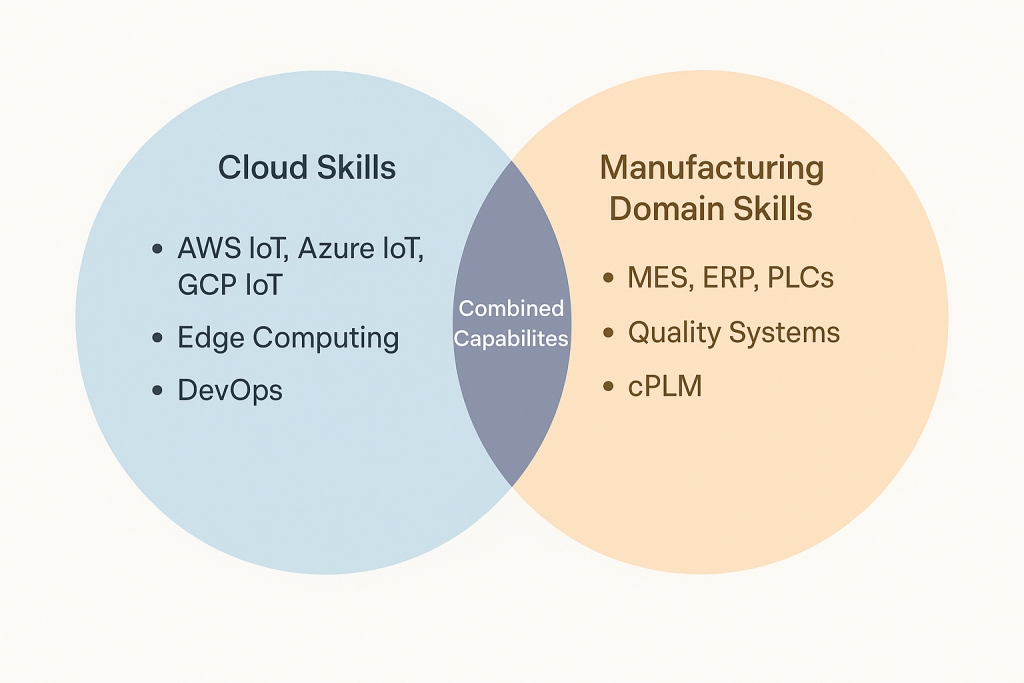
Cloud platform expertise takes on specialised dimensions in manufacturing, where real-time processing, deterministic performance, and edge computing requirements exceed those of typical enterprise applications. AWS IoT services, Azure IoT Edge, and Google Cloud’s industrial IoT solutions require deep understanding of their manufacturing-specific configurations and industrial protocol support.
Edge computing becomes critical when dealing with manufacturing systems that require microsecond response times for safety systems, real-time quality control, and automated production line coordination. Understanding how to deploy and manage cloud services at the edge whilst maintaining connectivity to central cloud platforms distinguishes manufacturing cloud professionals from their enterprise counterparts.
Industrial communication protocols including OPC-UA, MQTT, and Modbus require cloud professionals to understand how traditional manufacturing systems communicate and how to integrate these protocols with modern cloud architectures whilst maintaining real-time performance and reliability.
Manufacturing Domain Knowledge
Production systems represent the backbone of manufacturing operations, and cloud professionals must understand how Manufacturing Execution Systems (MES), Enterprise Resource Planning (ERP), and Product Lifecycle Management (PLM) systems integrate with cloud services whilst maintaining production continuity.
Quality management systems dictate many technology requirements in manufacturing environments. Understanding Statistical Process Control (SPC), Six Sigma methodologies, and quality assurance protocols helps design cloud systems that support rather than hinder manufacturing quality objectives.
Supply chain management requires cloud architectures that can process complex demand forecasting, inventory optimisation, and logistics coordination whilst integrating with supplier systems and providing real-time visibility across global manufacturing networks.
Industry 4.0 Technologies
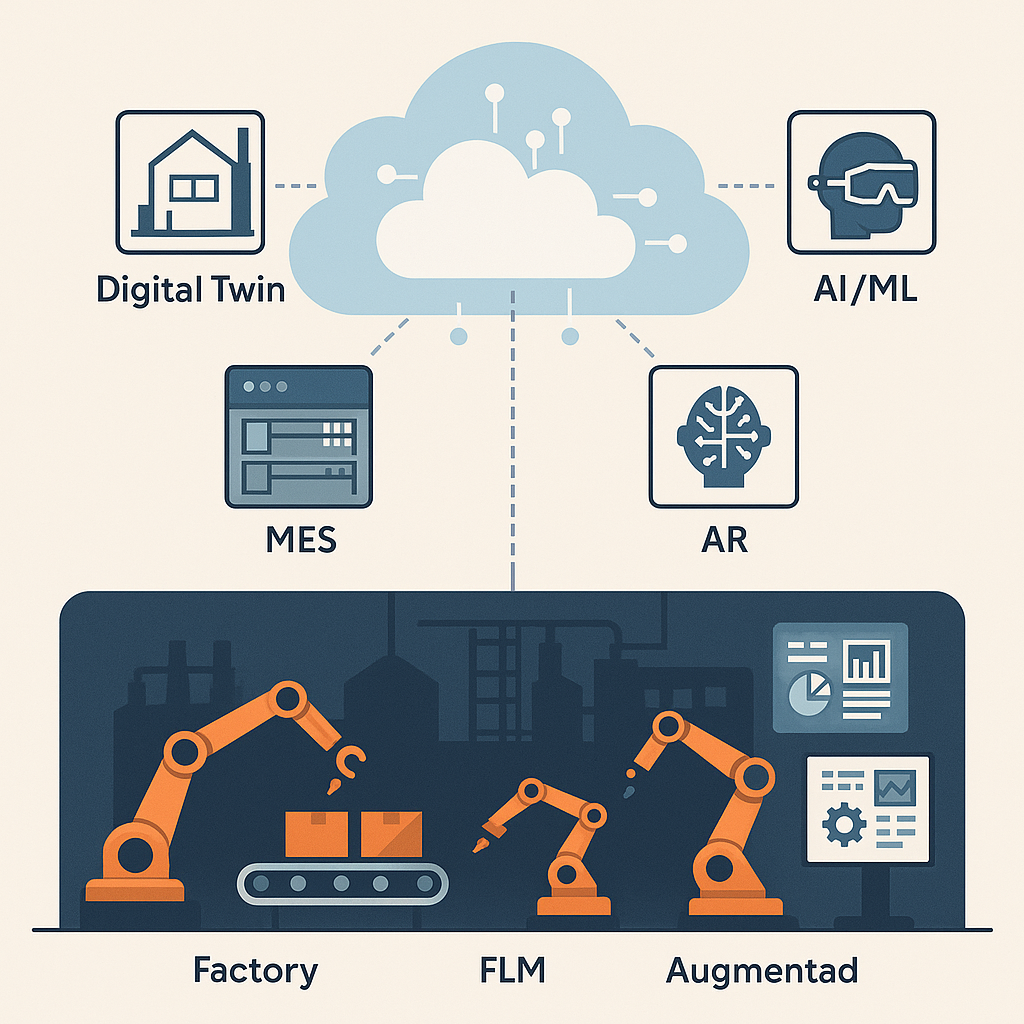
Artificial Intelligence and Machine Learning applications in manufacturing focus on predictive maintenance, quality prediction, and process optimisation. Understanding how to implement AI/ML models that can operate in real-time production environments whilst providing explainable results for quality audits creates significant career opportunities.
Digital twins represent virtual replicas of physical manufacturing systems that enable simulation, optimisation, and predictive analysis. Cloud professionals who understand how to build and maintain digital twin platforms that can process real-time sensor data whilst providing simulation capabilities are increasingly in demand.
Augmented Reality (AR) and Virtual Reality (VR) applications in manufacturing require cloud backends that can deliver real-time rendering and spatial computing whilst supporting worker training, maintenance guidance, and quality inspection applications.
Certification Pathways and Professional Development
Manufacturing cloud careers benefit from strategic certification combinations that demonstrate both technical competency and manufacturing domain knowledge. The sector values professionals who understand both cutting-edge cloud technologies and the operational realities of industrial environments.
Foundation Certifications
Start with core cloud platform certifications, AWS Solutions Architect, Azure Solutions Architect, or Google Cloud Professional Cloud Architect. These establish credibility and demonstrate fundamental cloud competency that manufacturing employers expect as a baseline requirement.
IoT certifications like Azure IoT Developer provide essential knowledge for connecting industrial systems to cloud platforms whilst understanding the unique requirements of manufacturing environments.
Manufacturing-Specific Certifications
Industry 4.0 Professional Certification demonstrates understanding of smart manufacturing principles, digital transformation strategies, and the integration of IoT, AI, and cloud technologies in industrial settings.
MIT’s Professional Certificate Program in Industry 4.0 provides comprehensive education in smart manufacturing, IoT integration, and digital transformation strategies specifically designed for manufacturing professionals.
Automation certifications from organisations like the Smart Automation Certification Alliance (SACA) demonstrate understanding of industrial automation systems and their integration with cloud technologies.
Advanced Specialisations
Edge computing certifications help professionals understand how to deploy cloud services in manufacturing environments where connectivity may be intermittent and response times are critical for production safety and efficiency.
Cybersecurity certifications focused on industrial systems, such as those covering Industrial Control Systems (ICS) security, become increasingly important as manufacturing systems become more connected and cyber threats targeting industrial infrastructure grow.
Lean Manufacturing and Six Sigma certifications help cloud professionals understand how technology decisions impact manufacturing efficiency, quality, and continuous improvement initiatives.
Continuous Learning Strategy
Manufacturing technology evolves rapidly, with new industrial IoT devices, edge computing capabilities, and AI applications requiring ongoing education. Successful professionals establish learning routines that include manufacturing technology trends, industrial automation developments, and emerging cloud capabilities.
Professional associations like the Institution of Engineering and Technology (IET) and Institute of Mechanical Engineers (IMechE) provide networking opportunities, continuing education, and industry insights essential for career advancement in manufacturing technology roles.
Salary Expectations and Market Demand
Manufacturing cloud salaries typically match or exceed general cloud positions, with additional premiums for professionals who understand both cloud technologies and manufacturing operations. Cloud computing enables manufacturers to enhance operational efficiency, with studies showing 16% increases in Overall Equipment Effectiveness (OEE) and 39% reductions in unplanned IT downtime.
Entry-Level Positions (0-2 years experience)
- Manufacturing Cloud Support Specialist: £35,000-£45,000
- Junior IoT Engineer: £38,000-£48,000
- Automation Systems Trainee: £32,000-£42,000
Mid-Level Positions (3-7 years experience)
- Manufacturing Cloud Engineer: £50,000-£70,000
- Industrial IoT Engineer: £45,000-£65,000
- Automation Engineer: £45,000-£55,000
Senior-Level Positions (8+ years experience)
- Senior Manufacturing Cloud Architect: £70,000-£100,000+
- Lead Industrial IoT Specialist: £65,000-£95,000
- Manufacturing Technology Director: £80,000-£120,000+
Factors Affecting Compensation
Industry sector significantly impacts salary levels. Aerospace and defence manufacturers like Rolls-Royce, BAE Systems, and Airbus typically offer higher compensation than traditional manufacturing sectors, reflecting the complexity and critical nature of their systems.
Automotive manufacturers including Jaguar Land Rover, Nissan, and Toyota offer competitive packages alongside opportunities to work on cutting-edge connected vehicle technologies and automated production systems.
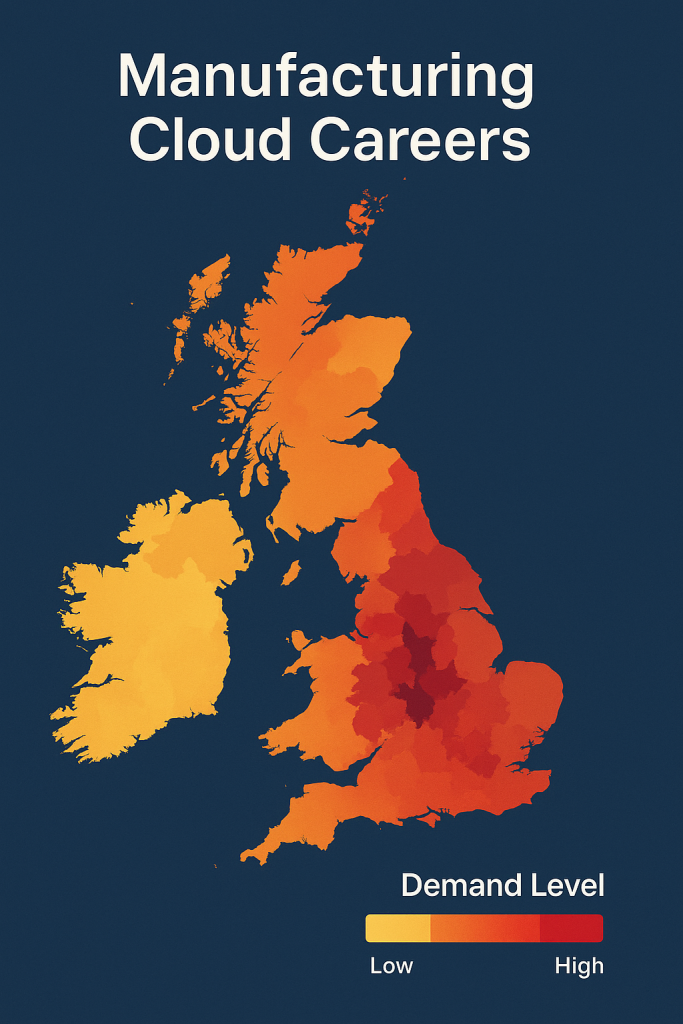
Geographic location remains important, with manufacturing centres in the Midlands, North West, and Scotland offering competitive salaries whilst often providing lower living costs than London-based technology roles.
Skills specialisation consistently commands salary premiums. Professionals with expertise in predictive maintenance, digital twin technologies, or industrial cybersecurity earn 15-25% more than those with only general cloud skills, reflecting the critical importance of these capabilities and the shortage of qualified professionals.
Transition Strategies for Current Cloud Professionals
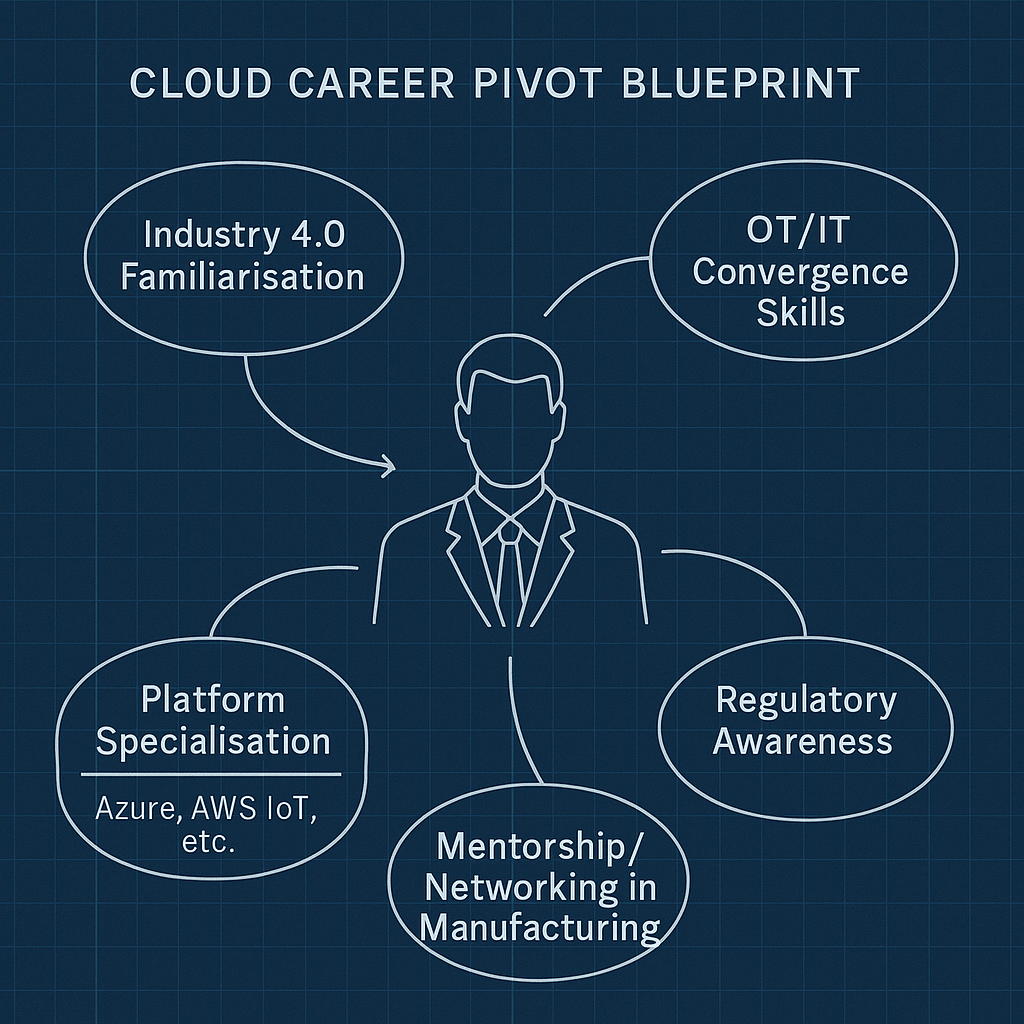
Moving into manufacturing cloud work requires understanding both the technology and industrial context that drives manufacturing operations. Existing cloud skills provide strong foundations, but success requires adding manufacturing domain knowledge and understanding of operational technology environments.
Gradual Transition Approach
Begin by gaining manufacturing technology knowledge through online courses, industry certifications, or volunteer work with manufacturing technology meetups. Understanding Industry 4.0 principles, predictive maintenance concepts, and smart factory technologies provides context for technical decisions.
Seek opportunities to work on manufacturing-adjacent projects within current roles, perhaps supporting clients who serve manufacturing companies or working on IoT projects involving sensor data and real-time processing.
Consider contract or consulting work with manufacturing companies to gain direct experience whilst maintaining current employment stability. Many manufacturers prefer hiring experienced cloud professionals and training them on manufacturing requirements rather than attempting the reverse.
Direct Transition Strategy
Some professionals prefer immediate immersion in manufacturing environments. This approach requires thorough preparation but can accelerate career development significantly.
Target entry-level manufacturing cloud positions that value transferable skills whilst providing manufacturing domain training. Many manufacturers prefer hiring experienced cloud professionals and training them on industrial requirements rather than hiring manufacturing professionals and teaching them cloud technologies.
Building Manufacturing Networks
Manufacturing operates as a relationship-driven industry where professional networks significantly impact career opportunities. Attend Industry 4.0 conferences, manufacturing technology exhibitions, and professional development events.
LinkedIn engagement with manufacturing technology content and professionals helps establish industry presence and demonstrate genuine interest in manufacturing challenges. Joining groups like “Industry 4.0 Professionals” or “Smart Manufacturing” provides networking opportunities.
Consider attending industry events like Manufacturing & Engineering Week, Smart Factory Expo, or Advanced Engineering to understand industry trends and meet potential employers.
Key Employers and Career Paths
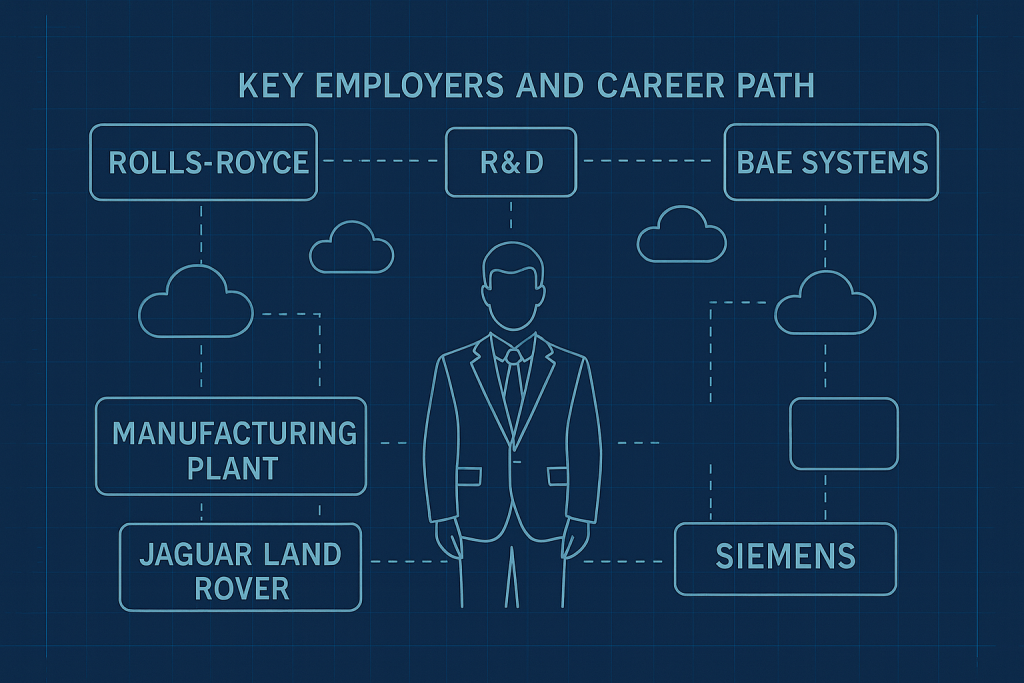
Manufacturing cloud opportunities exist across diverse organisation types, each offering different career experiences, technical challenges, and advancement paths.
Aerospace and Defence Manufacturers
Rolls-Royce, BAE Systems, Airbus, and other aerospace companies offer exposure to cutting-edge technologies, complex systems integration, and substantial R&D investments. These organisations provide excellent technical challenges, structured career progression, and competitive compensation packages.
Aerospace manufacturers typically require security clearances and offer opportunities to work on advanced technologies like autonomous systems, advanced materials, and next-generation propulsion systems that leverage cloud computing for design, simulation, and production optimisation.
Automotive Manufacturers
Jaguar Land Rover leads in connected vehicle technologies with significant cloud investments, including a $15 million partnership with CloudCar for next-generation cloud services platforms. Nissan and Toyota offer opportunities to work on autonomous vehicle technologies, electric vehicle production, and smart factory implementations.
Automotive manufacturers provide exposure to high-volume production systems, quality management technologies, and supply chain optimisation platforms that process millions of transactions daily whilst maintaining automotive quality standards.
Industrial Equipment Manufacturers
Companies like CNH Industrial, JCB, and Caterpillar UK offer opportunities to work on industrial IoT systems, remote equipment monitoring, and predictive maintenance platforms that serve global markets.
These roles often involve building cloud systems that operate in challenging environments, supporting equipment in remote locations whilst providing real-time monitoring and diagnostic capabilities.
Technology Vendors Serving Manufacturing
Companies like Siemens, Schneider Electric, and Rockwell Automation require cloud professionals who understand both cloud platforms and manufacturing customer requirements. These roles involve supporting manufacturing customers whilst influencing product development to better serve industrial use cases.
Technology vendor roles typically provide exposure to multiple manufacturing sectors and companies, offering broad experience whilst contributing to the development of next-generation manufacturing technologies.
Manufacturing Software Companies
Specialist manufacturing software companies focusing on MES, PLM, and industrial analytics require cloud professionals who can scale their platforms to serve global manufacturing customers whilst understanding the unique requirements of industrial environments.
Future Prospects and Emerging Opportunities
Manufacturing cloud careers benefit from several positive trends that suggest strong long-term prospects and expanding opportunities across traditional manufacturing and emerging industrial sectors.
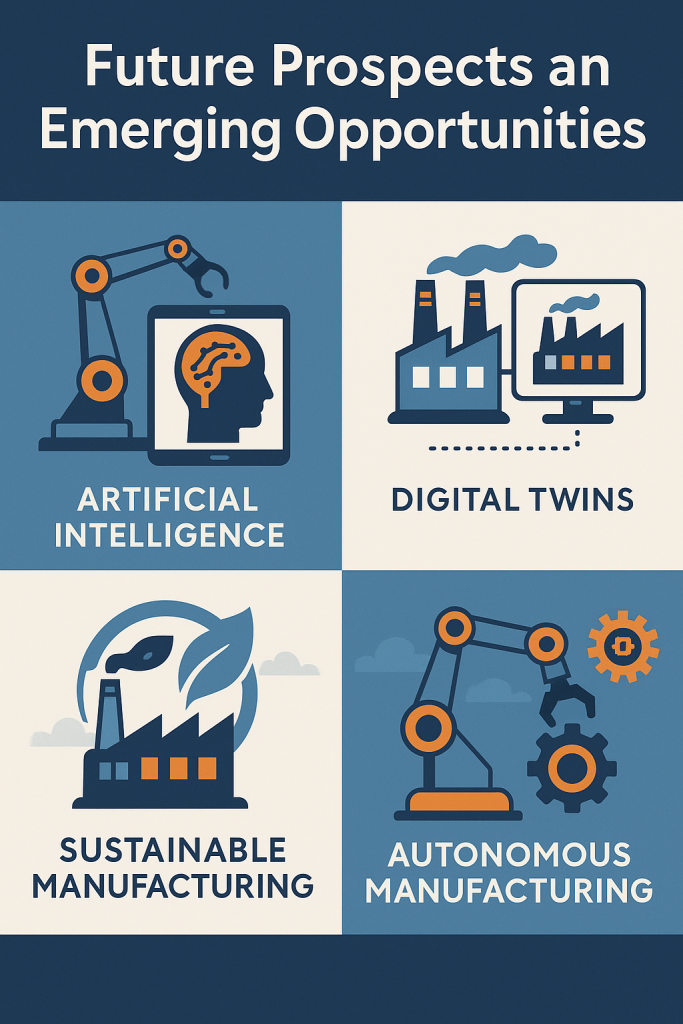
Artificial Intelligence and Industrial Machine Learning
Manufacturing AI applications are expanding rapidly, creating demand for cloud professionals who understand AI/ML platforms within industrial contexts. These roles combine traditional cloud skills with understanding of industrial data science, predictive maintenance algorithms, and quality prediction systems.
Computer vision applications for quality inspection, robotic guidance, and safety monitoring require cloud architectures that can process video streams in real-time whilst providing accurate, explainable results for quality audits and regulatory compliance.
Natural language processing applications enable voice-activated manufacturing systems, automated documentation generation, and intelligent maintenance scheduling that requires cloud professionals who understand both AI technologies and manufacturing workflows.
Digital Twins and Simulation Platforms
Digital twin technologies create virtual replicas of manufacturing systems that enable simulation, optimisation, and predictive analysis. Cloud professionals who can build and maintain these complex systems that combine real-time sensor data with physics-based simulation models find increasing opportunities.
Simulation platforms for product design, production planning, and supply chain optimisation require cloud architectures that can handle complex computational workloads whilst providing interactive user experiences for engineering teams.
Sustainable Manufacturing and Circular Economy
Environmental monitoring and sustainability reporting systems require cloud platforms that can track energy consumption, material usage, and waste generation across global manufacturing operations whilst providing real-time visibility and optimisation recommendations.
Circular economy initiatives create demand for cloud systems that can track product lifecycles, enable remanufacturing operations, and optimise resource utilisation across complex supply networks.
Autonomous Manufacturing Systems
Lights-out manufacturing and autonomous production systems require cloud platforms that can coordinate complex robotic systems, provide real-time decision making, and maintain operations with minimal human intervention.
Collaborative robotics (cobot) systems require cloud backends that can coordinate human-robot collaboration, provide safety monitoring, and enable flexible reconfiguration of production systems to meet changing demand patterns.
Getting Started: Your Next Steps
Manufacturing cloud careers offer exceptional opportunities for professionals willing to invest in sector-specific knowledge and navigate the unique challenges of industrial environments. The combination of technical challenges, meaningful work, and strong career prospects makes manufacturing cloud an attractive specialisation.
Immediate Actions
Research manufacturing companies in your area to understand local opportunities and requirements. Many manufacturers publish digital transformation strategies that reveal their cloud adoption plans and skill needs.
Begin Industry 4.0 education through online courses, professional training programmes, or manufacturing technology meetups. Understanding smart factory principles, predictive maintenance concepts, and industrial IoT provides immediate value and demonstrates genuine sector interest.
Connect with manufacturing technology professionals through LinkedIn, professional associations, and local networking events to understand industry dynamics and career opportunities.
Medium-Term Development
Pursue relevant certifications that combine cloud expertise with manufacturing domain knowledge. The investment in dual credentials pays dividends through expanded opportunities and specialisation premiums.
Seek opportunities to apply cloud skills in manufacturing contexts, whether through volunteer work, side projects, or transitional roles that provide industrial exposure.
Long-Term Career Planning
Consider specialisation areas that align with personal interests and emerging manufacturing technology trends. Early investment in emerging technologies like digital twins, industrial AI, or autonomous manufacturing could provide significant career advantages.
Develop manufacturing domain expertise through continuing education, professional development, and practical experience. The most successful manufacturing cloud professionals understand both technology and industrial operations.
Manufacturing cloud careers represent more than job opportunities. They offer chances to apply technical skills in ways that directly impact the UK’s industrial competitiveness and economic future. For cloud professionals seeking intellectually challenging work alongside tangible business impact and strong career prospects, manufacturing provides an ideal environment to build expertise whilst contributing to the technological transformation of one of the UK’s most important economic sectors.
The sector’s continued evolution ensures that manufacturing cloud professionals will remain in high demand, with expanding opportunities for specialisation and advancement. The key lies in understanding that success requires commitment to both technical excellence and manufacturing domain expertise, a combination that creates exceptional value for both professionals and the manufacturing companies they serve.