

Professional Development Friday: Part 1 of our Infrastructure as Code Mastery Series
The cloud industry has reached an inflection point that most professionals haven’t fully recognised yet. Whilst everyone discusses artificial intelligence and the latest platform announcements, a quieter revolution is reshaping how organisations build, deploy, and manage their infrastructure. Infrastructure as Code (IaC) has evolved from an advanced practice used by Netflix and Google into the baseline expectation for cloud professionals across every industry.
The timing couldn’t be more critical for career development. With median DevOps salaries reaching $185,000 and the Infrastructure as Code market projected to reach $9.40 billion by 2034, professionals who master these skills now are positioning themselves for sustained career growth in a market experiencing explosive demand.
This isn’t speculation, it’s market reality backed by concrete data that reveals both immediate opportunities and long-term career security.
The Numbers Don’t Lie: Salary Impact and Job Market Reality

The compensation premiums for Infrastructure as Code expertise tell a compelling story about market demand. Current salary data reveals that professionals with Terraform skills command positions ranging from $67,000 to $190,000 annually, with senior practitioners and specialised roles consistently achieving the upper ranges.
More revealing than absolute numbers is the market concentration. Terraform skills appear in 1,969 permanent job vacancies in the UK alone over six months, representing 3.21% of all IT positions. This concentration indicates fundamental industry transformation rather than niche specialisation, organisations across every sector are restructuring their technical teams around Infrastructure as Code capabilities.
The geographic distribution spans globally, creating career mobility that extends beyond local markets. Over 4,000 remote Terraform positions are actively seeking candidates in the United States, whilst European markets show similar demand patterns. This global reach means that IaC skills provide professional portability that few other technical specialisations can match.
Perhaps most significantly, 77% of these roles offer remote work options, addressing the lifestyle preferences that define modern professional expectations. The combination of high compensation, global opportunities, and flexible working arrangements creates a career proposition that’s difficult to ignore.
Beyond Basic Cloud Skills: Why IaC Represents Career Evolution
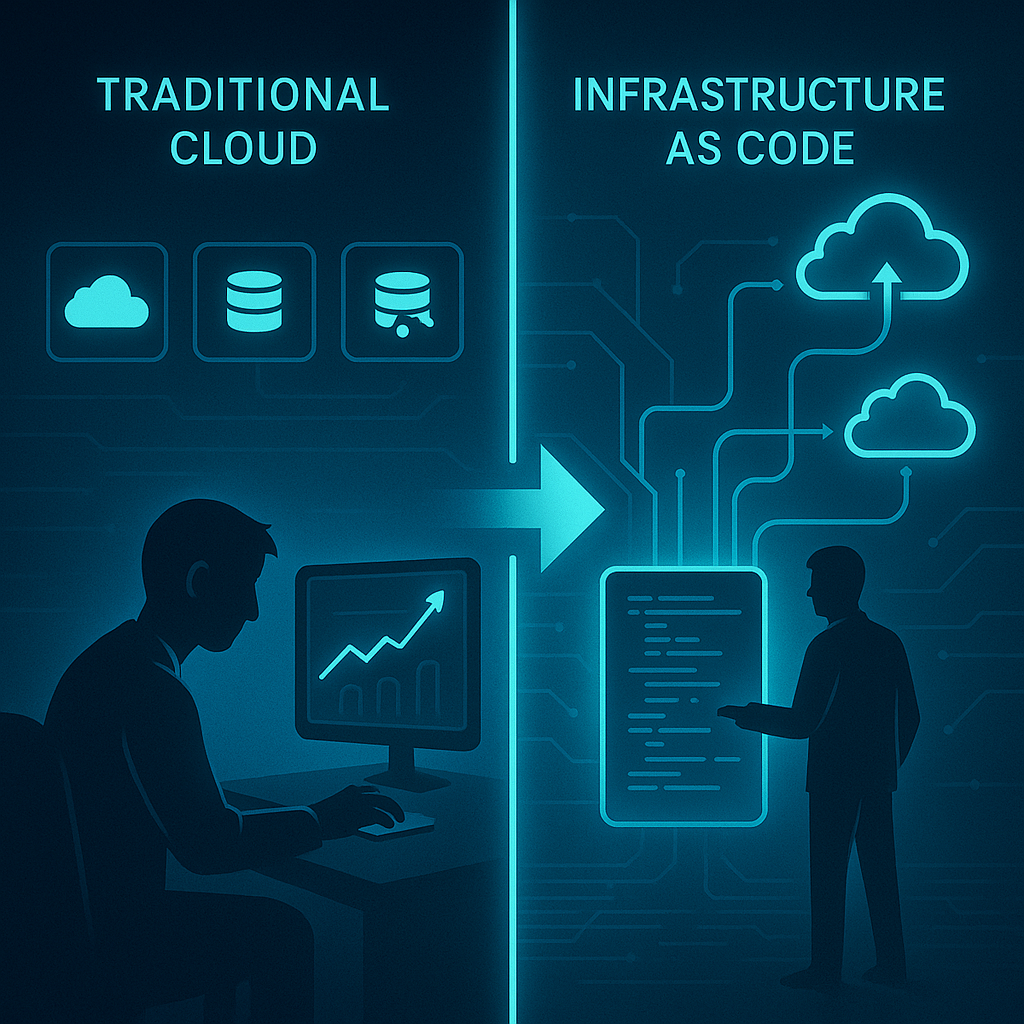
Traditional cloud skills, knowing how to configure virtual machines, set up databases, or manage networking through web consoles, no longer differentiate professionals in competitive job markets. These capabilities have become commoditised as cloud platforms mature and interfaces simplify. Infrastructure as Code represents the next evolution: automating and scaling these capabilities through repeatable, testable processes.
The operational improvements that organisations achieve through IaC adoption translate directly to career value. Companies implementing Infrastructure as Code practices deploy code 208 times more frequently and restore services 2,604 times faster than those using traditional approaches. When a single professional can automate infrastructure provisioning that previously required entire teams, when deployment cycles shrink from weeks to minutes, that individual becomes strategically valuable rather than operationally necessary.
This transformation affects how organisations structure technical teams and compensation. Rather than hiring multiple specialists for different cloud platforms, companies increasingly seek professionals who can design infrastructure patterns that work across environments. Terraform frequently pairs with AWS in 59.78% of job postings, Docker in 38.80%, and Kubernetes in 14.32%, revealing that IaC expertise amplifies the value of complementary skills rather than replacing them.
The Terraform Advantage: Why This Tool Specifically Matters
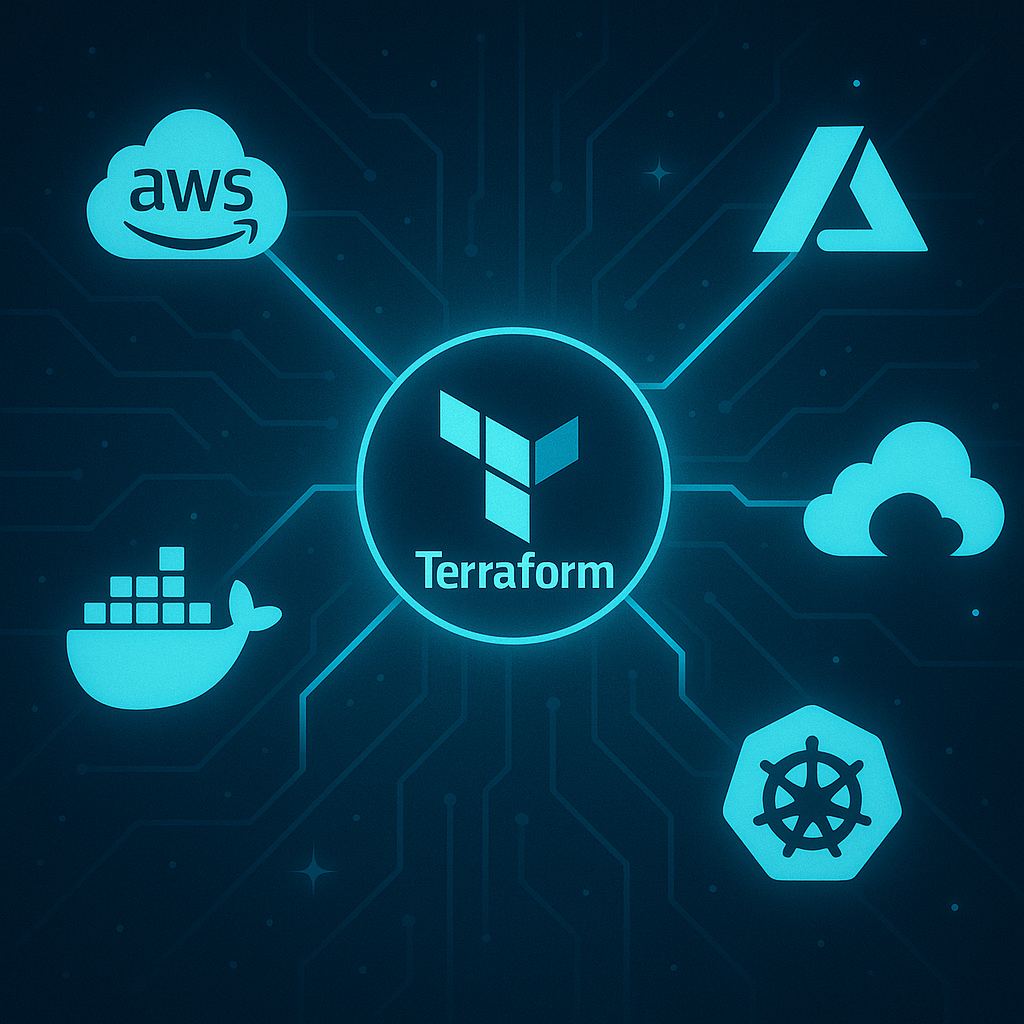
Among Infrastructure as Code tools, Terraform has achieved remarkable market penetration that creates network effects benefiting professionals who master the platform. With 33.56% market share and adoption by 38,754+ companies globally, Terraform has become the de facto standard for infrastructure automation.
This dominance provides professional insurance that extends beyond technical capability. Skills transfer seamlessly between organisations regardless of their specific cloud strategy, whilst the extensive ecosystem of modules and community knowledge accelerates problem-solving and implementation. When career transitions occur, whether voluntary or involuntary, Terraform expertise provides immediate value in new environments.
The multi-cloud capabilities distinguish Terraform from platform-specific alternatives like AWS CloudFormation or Azure Resource Manager templates. Businesses now use an average of 2.6 public clouds, making vendor-agnostic skills increasingly valuable. Professionals who understand how to manage infrastructure across providers position themselves for architectural roles that command premium compensation.
Perhaps most importantly, Terraform’s technical approach aligns with broader industry trends towards declarative systems, immutable infrastructure, and GitOps workflows. Learning Terraform develops thinking patterns that apply across the modern infrastructure landscape, providing career benefits that extend beyond the tool itself.
Real-World Impact: How Organizations Transform with IaC

The career value of Infrastructure as Code expertise becomes clear through examining how leading organisations implement these practices. Netflix uses IaC to manage microservices infrastructure that supports their global streaming platform, enabling on-demand resource creation that scales with viewer demand. This operational capability requires professionals who understand both technical implementation and business requirements—roles that command executive-level compensation.
GitHub leverages Terraform to create self-service capabilities for development teams, eliminating centralised gatekeeping whilst maintaining security standards. These implementations require professionals who can design infrastructure APIs, create reusable patterns, and build systems that other engineers consume. The shift from supporting applications to enabling other professionals represents a fundamental career evolution.
Deutsche Bank’s implementation demonstrates enterprise-scale transformation: they created 200+ cloud landing zones for 3,000+ developers using Terraform, representing organisational change rather than simple tool adoption. The professionals leading these initiatives combine deep technical expertise with understanding of compliance, security, and organisational dynamics—skill combinations that create clear paths to technical leadership positions.
The Learning Opportunity: Why Timing Matters

Market timing creates advantages for professionals willing to invest in developing Infrastructure as Code expertise now. 88% of HashiCorp certification holders report that credentials make them more desirable to employers, indicating that supply hasn’t yet met demand in the talent market.
This supply-demand imbalance creates opportunities that early adopters can capitalise on before market saturation occurs. Current hiring patterns suggest that organisations are willing to pay premium compensation for proven IaC expertise whilst investing in training for promising candidates who demonstrate foundation knowledge and learning commitment.
The technical learning curve, whilst requiring sustained effort, remains achievable for motivated professionals. Unlike some emerging technologies that demand years of specialisation, Infrastructure as Code builds on existing cloud knowledge whilst adding automation and architectural thinking. The progression from basic competency to market-valuable expertise typically spans months rather than years, making the investment accessible for career transition.
Setting Expectations: What’s Coming in This Series
This series will transform theoretical understanding into practical capability through hands-on implementation. Each subsequent post builds on previous concepts whilst introducing new challenges that mirror real-world complexity. Rather than isolated tutorials, the content forms a cohesive learning journey that prepares readers for immediate professional application.
Next week’s post, “Terraform Fundamentals: Core Concepts for Cloud Professionals,” introduces the essential concepts through a practical example that readers can deploy and modify. The focus remains on understanding principles rather than memorising syntax, developing the thinking patterns that enable confident problem-solving in unfamiliar situations.
Following posts progress through multi-environment management, module development, automation integration, and enterprise patterns. Each includes working code, architectural decisions, and career insights that connect technical skills to professional advancement. The series concludes with strategic guidance for leveraging IaC expertise into leadership positions and specialised career paths.
Taking Action: Your Immediate Next Steps
Career transformation requires action beyond reading and research. Before next week’s technical content, complete these preparatory steps that maximise learning efficiency:
Create your learning environment by setting up free-tier accounts with AWS, Azure, or Google Cloud Platform. Install Terraform locally or configure a cloud-based development environment that supports hands-on practice. These preparations ensure readiness for immediate implementation when technical content arrives.
Assess your current positioning by reviewing job descriptions in your target market that require Infrastructure as Code skills. Identify the specific requirements, compensation ranges, and complementary skills that appear frequently. This market research provides context for learning priorities and career planning.
Establish success metrics by documenting your current technical capabilities and career goals. Define specific outcomes that demonstrate progress: certification targets, salary expectations, role transitions, or project accomplishments. Clear objectives maintain motivation throughout the learning process whilst providing measurable evidence of advancement.
The Infrastructure as Code revolution continues accelerating, creating sustained opportunities for professionals positioned correctly. The choice isn’t whether to develop these skills, it’s how quickly to begin and how strategically to approach the learning process.
Market conditions favour action over analysis. The data supports investment in Infrastructure as Code expertise, the learning pathway is well-defined, and the career benefits are both immediate and sustained. Next week, we transform this strategic understanding into practical capability through hands-on Terraform implementation.
Useful Links
- HashiCorp Learn Terraform – Official learning path from beginner to advanced
- DevOps Job Market Report H1 2025 – Current salary data and hiring trends
- Infrastructure as Code Market Analysis – Comprehensive market research and growth projections
- UK Terraform Salary Benchmarking – Regional compensation data and co-occurring skills
- US Remote Terraform Jobs – Current job opportunities and requirements
- HashiCorp Certification Information – Official certification paths and requirements
- Terraform Market Share Analysis – Competitive positioning and adoption data
- Infrastructure as Code Principles – Foundational concepts and implementation strategies
- Cloud Computing Market Trends – Broader industry context and growth drivers
- ZipRecruiter Terraform Jobs – Live job postings and salary ranges