
The hybrid cloud revolution has reached a tipping point. With over 90% of IT leaders planning to revamp their cloud strategies in the next two years, organisations worldwide are discovering that the question isn’t whether to adopt hybrid cloud architectures, but how to implement them effectively.
What makes 2025 particularly compelling is the convergence of several technological forces. The hybrid cloud market is projected to reach $171.9 billion by 2025, growing at a CAGR of 21.7%, driven by AI integration, edge computing demands, and the pressing need for organisations to balance security with scalability.
But here’s the reality check: building a truly seamless hybrid cloud architecture requires more than simply connecting your data centre to AWS or Azure. It demands a fundamental shift in how you think about infrastructure, data governance, and operational excellence.
The New Hybrid Cloud Landscape
Beyond Simple Cloud Connectivity
Most applications can be easily migrated, but some applications must remain on premises to take advantage of the low latency and local data processing of the on-premises environment, to avoid high data transfer costs, or for regulatory compliance. This reality has pushed hybrid cloud architectures far beyond their original scope.
Modern hybrid cloud environments now encompass:
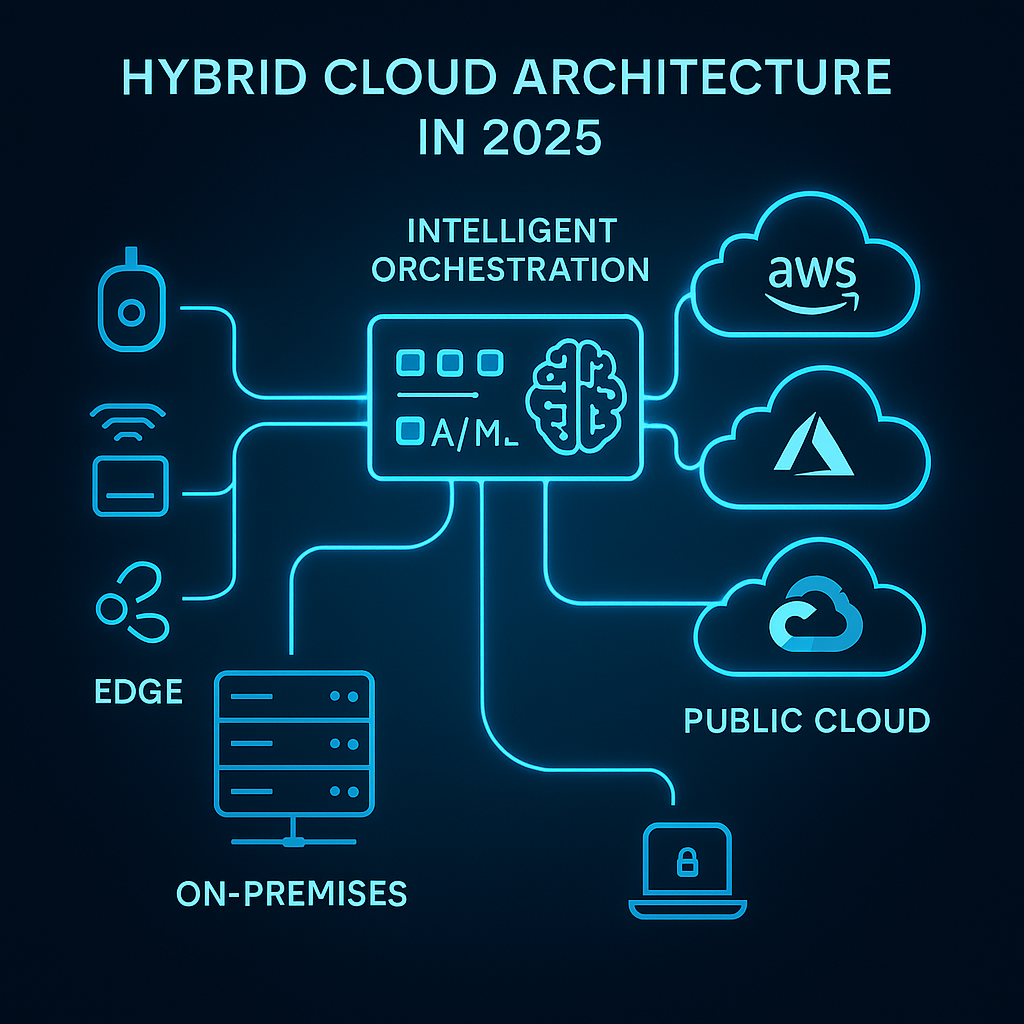
Intelligent Orchestration Layers: A management layer that oversees the distribution of resources across the hybrid environment, ensuring workloads are efficiently moved between public and private clouds based on predefined rules or real-time demands
AI-Enhanced Decision Making: 83% of enterprises use or experiment with generative AI (GenAI), driving demand for scalable hybrid environments, fundamentally changing how workloads are distributed and managed
Edge Computing Integration: The hybrid cloud-edge model is the dominant architecture, implemented by 36% of organisations, bringing computation closer to data sources for improved performance
The Container Revolution
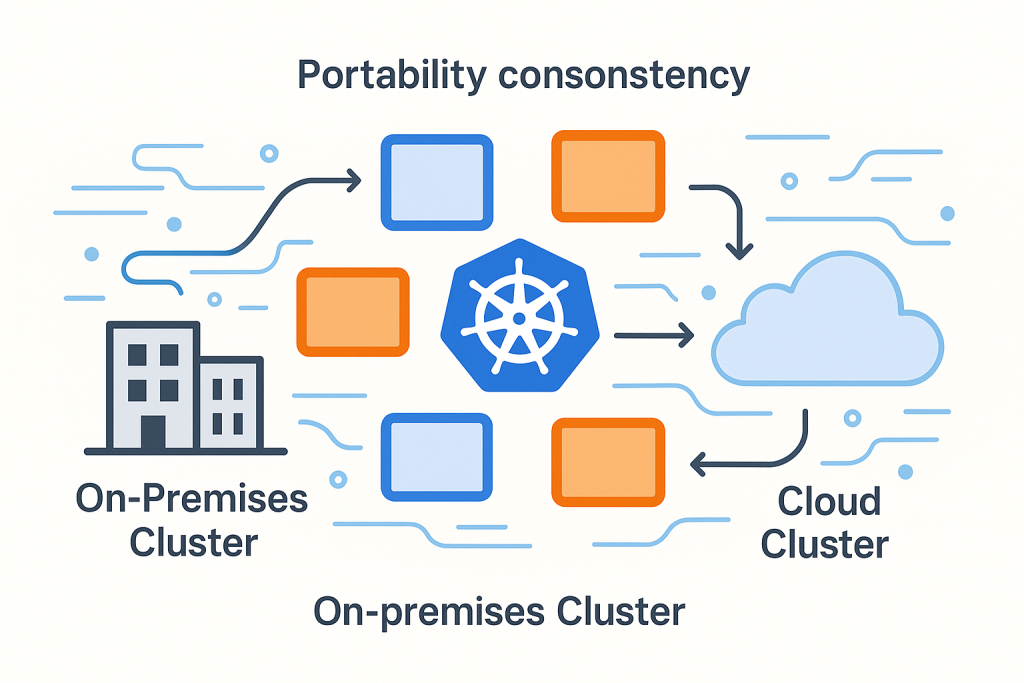
Perhaps no technology has been more transformative for hybrid cloud architectures than containerisation. Kubernetes’ container-based approach guarantees application portability across diverse environments, from on-premises to the cloud.
Consider this: Most enterprises already run multiple Kubernetes clusters, and use multiple clouds. This isn’t just a trend – it’s become the operational reality for organisations seeking true hybrid cloud flexibility.
The benefits are compelling:
- Workload Portability: Applications can move seamlessly between environments without modification
- Consistent Management: GKE runs Certified Kubernetes, enabling workload portability to other Kubernetes platforms across clouds and on-premises
- Automated Scaling: Automatic scaling of resources based on demand enables DevOps teams to effectively manage workloads within hybrid clouds
Architecture Patterns That Actually Work
Distributed vs Redundant Approaches
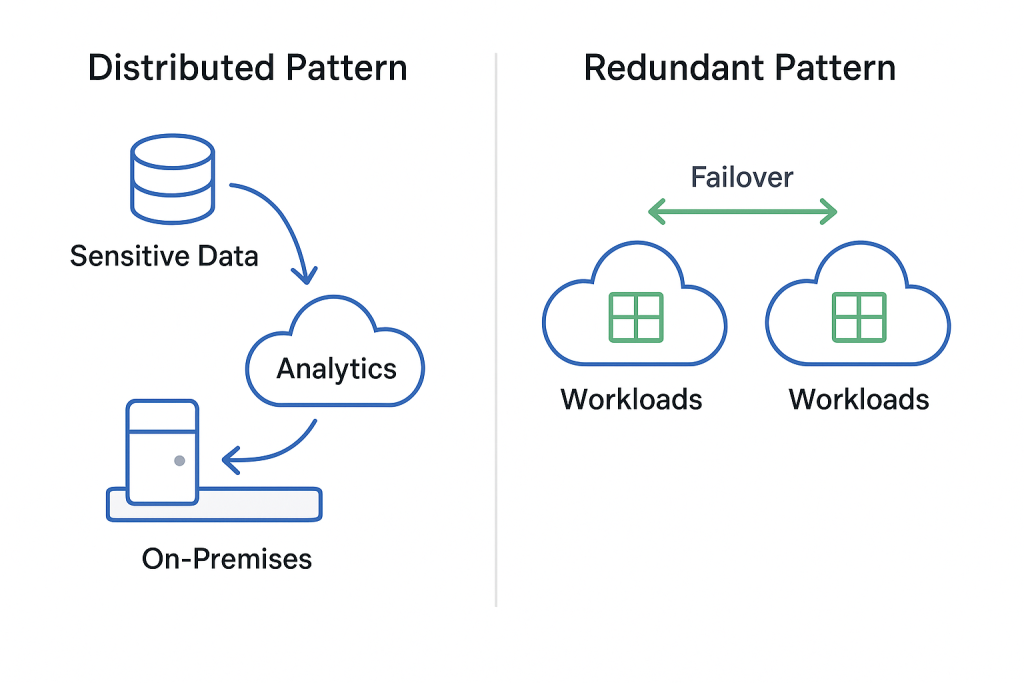
When designing hybrid architectures, understanding the fundamental patterns is crucial. There are two main categories of hybrid and multicloud architecture patterns: Distributed architecture patterns and Redundant architecture patterns.
Distributed patterns excel when you need to:
- Optimise workloads based on data sensitivity (keeping financial data on-premises whilst running analytics in the cloud)
- Leverage specialised cloud services (utilising Google Cloud’s AI capabilities whilst maintaining core infrastructure on AWS)
- Meet regulatory requirements (processing EU data within European data centres whilst scaling globally)
Redundant patterns shine for:
- Disaster recovery scenarios
- High-availability requirements
- Risk distribution across multiple failure domains
The Edge-Cloud Continuum
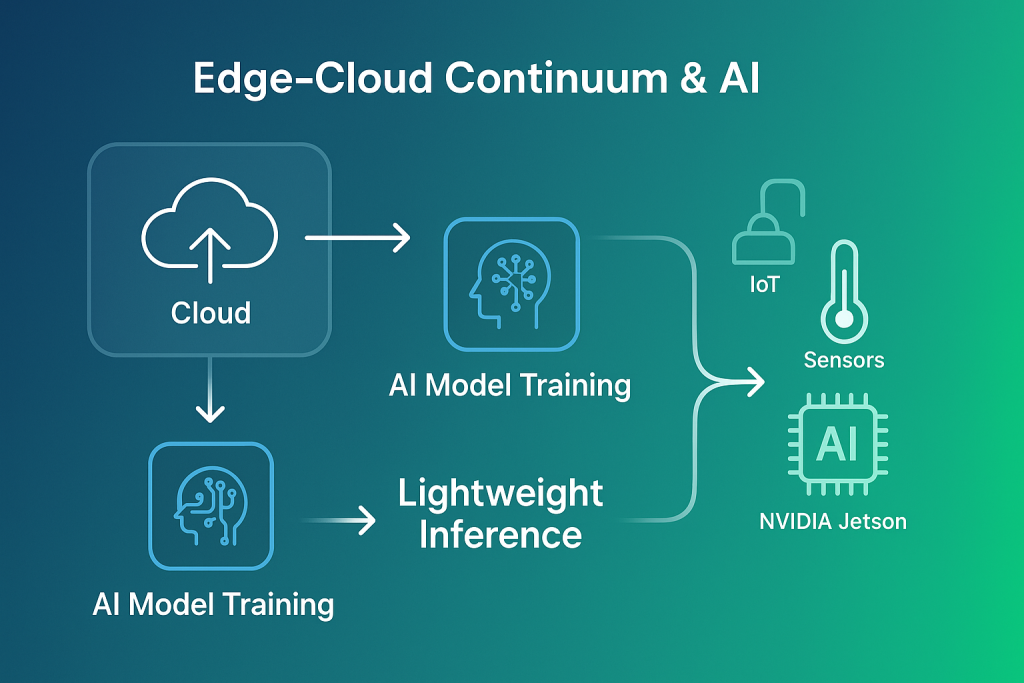
The future of AI lies in the seamless integration of edge and cloud computing. In 2025, AI workloads will dynamically shift between the edge and the cloud, leveraging each search’s unique strengths.
This isn’t theoretical anymore. AI-specific edge chips, such as NVIDIA’s Jetson series, bring unprecedented compute power to the edge, enabling sophisticated AI inference on smaller, energy-efficient devices.
Practical implementation might involve:
- Training complex machine learning models in the cloud’s vast computational resources
- Deploying lightweight inference models at the edge for real-time decision making
- Using hybrid orchestration to automatically balance workloads based on latency requirements and cost constraints
Security and Governance: The Foundation of Trust
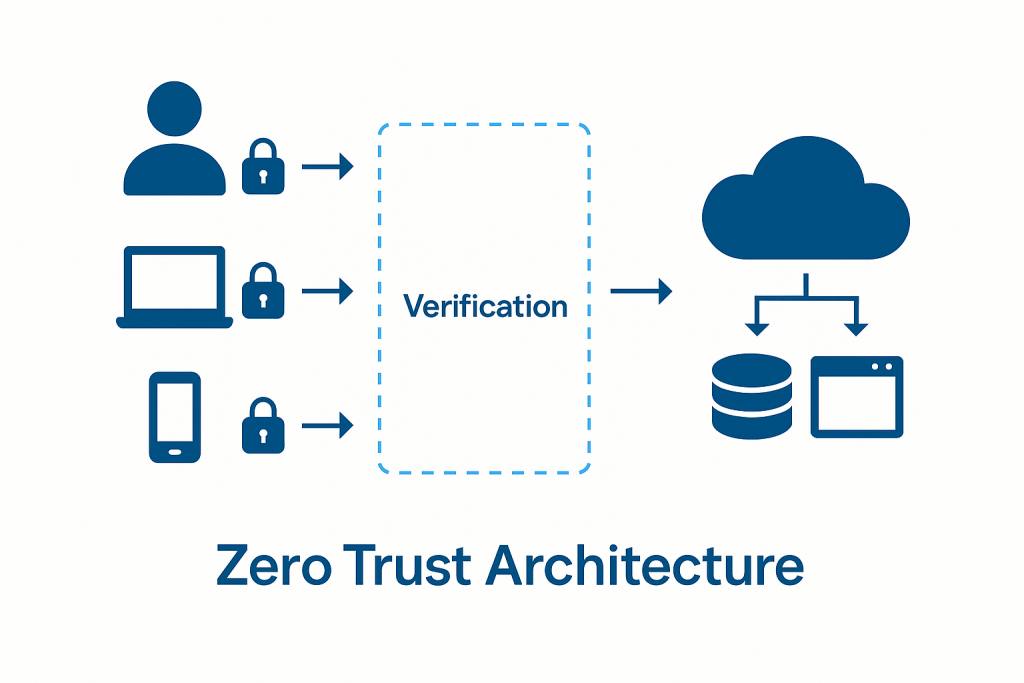
Zero-Trust by Design
Key trends in security include adopting zero trust architectures to verify all users and devices, integrating AI and machine learning for real-time threat detection and response. This isn’t just about implementing new tools – it’s about fundamentally rethinking security in distributed environments.
The practical implications are significant:
Identity Verification: Implementing zero-trust architecture minimises vulnerabilities by verifying every access request
Continuous Monitoring: Organisations should adopt multi-layered security measures, using cloud-native services for threat detection
Unified Frameworks: Consolidating preventive and detective measures through unified security frameworks like cloud-native application protection platforms
Data Governance in Practice
AI-powered tools and data fabric solutions are among the resources IT leaders can tap to develop more holistic hybrid cloud data governance strategies. But what does this look like in practice?
Consider a multinational financial services company. They might:
- Store customer transaction data in on-premises systems for regulatory compliance
- Process anonymised analytics in public cloud for cost efficiency
- Use AI-powered classification to automatically identify and route sensitive data
- Implement real-time monitoring across all environments to ensure policy compliance
The key is establishing what experts call a hybrid organisational approach: a central data governance team to lead the program, gathering requirements from decentralised teams, setting policies and guidelines, purchasing and providing data management tools.
API Management: The Nervous System of Hybrid Cloud
Modern API Governance
Adopting these five best practices for API governance ensures your organisation stays ahead in 2025’s dynamic digital landscape: centralising governance, prioritising security, standardising lifecycle management, fostering collaboration, and leveraging analytics.
This matters because APIs have become the critical integration points in hybrid environments. Network latency can become an issue when APIs need to communicate across disparate cloud environments, potentially impacting application performance.
Security-First API Design
Modern advancements like OAuth 2.1 provide enhanced security for API authentication. You should also adopt granular permissions by issuing API keys with specific scopes to limit access.
The practical approach involves:
- Implementing short-lived tokens to reduce credential compromise risk
- Using TLS encryption for all data transmission
- Establishing comprehensive logging and monitoring across all API interactions
- Creating automated compliance checking for regulations like GDPR and HIPAA
Cost Optimisation: Making Every Pound Count
The FinOps Revolution
Deloitte predicts US$21 billion may be saved by companies implementing FinOps tools and practices in 2025 alone. More impressively, some may even cut cloud costs as much as 40%.
The FinOps market is valued at $5.5 billion in 2025, growing at a CAGR of 34.8%, with FinOps becoming a strategic imperative rather than just cost-saving initiative.
Practical Cost Optimisation Strategies
AI-Driven Optimisation: AI-driven cost optimisation has evolved from basic monitoring to predictive analytics and automated actions, with organisations using these tools reporting savings
Multi-Cloud Cost Management: 78% of organisations prefer multi-cloud and hybrid cloud environments to avoid vendor lock-in, but this requires sophisticated cost allocation and monitoring
Workload-Centric Approaches: Adopt workload-centric approach placing workloads in most cost-effective environments
Consider implementing these specific tactics:
- Reserved Instance Optimisation: AWS offers up to 72% discounts, whilst Azure provides up to 80% savings with existing licences through Azure Hybrid Benefit
- Spot Instance Utilisation: Google Cloud offers up to 91% discounts on Spot VMs for appropriate workloads
- Intelligent Scaling: Implement auto-scaling policies that respond to actual demand rather than peak projections
Emerging Technologies Reshaping Hybrid Cloud
Quantum Computing Integration
Quantum computing is beginning to find real-world applications. In 2025, it will step out of the lab and into mainstream business through cloud services. Industry giants like IBM, Google, Microsoft, and Amazon are democratising access to this technology.
While quantum computing won’t replace traditional infrastructure, it’s creating new hybrid scenarios where quantum cloud services handle specific computational tasks whilst classical systems manage everyday operations.
Serverless and Edge Convergence
A Statista report has predicted the serverless computing market to be at $21.1 billion in 2025. The convergence of serverless computing with edge deployment is creating powerful new architectural possibilities.
This enables patterns like:
- Serverless functions handling event processing at the edge
- Traditional applications running in centralised cloud environments
- AI models distributing inference across edge nodes whilst training centrally
Implementation Roadmap for 2025
Phase 1: Assessment and Planning
Start with a thorough evaluation of current state and requirements. A well-defined hybrid cloud strategy requires analysing business goals, workload requirements, and resource allocations to ensure optimal implementation.
Key questions to address:
- Which applications require low latency or local data processing?
- What regulatory compliance requirements must be maintained?
- Where are the biggest opportunities for cost optimisation?
- Which workloads would benefit from cloud elasticity?
Phase 2: Foundation Building
Container Strategy: Cloud-native and container-based architectures enable applications to be more modular, scalable, and portable across cloud environments
Security Framework: Organisations must protect data across cloud environments with unified security frameworks that include encryption, access controls, and continuous monitoring
Governance Structure: Creating a robust governance framework is fundamental to managing a hybrid cloud environment effectively
Phase 3: Advanced Integration
AI and Automation: You can use automation and AI to identify areas of improvement and create a more effective and high-performance cloud architecture
Advanced Monitoring: End-to-end observability enables teams to understand the interactions between applications, infrastructure, and user experience, making troubleshooting more efficient
Cost Optimisation: Establish cross-functional FinOps practice bringing together finance, engineering, and business teams
Overcoming Common Implementation Challenges
Complexity Management
Latency issues can arise when data and applications span multiple environments, affecting overall system responsiveness. The solution lies in careful architectural planning and the right tooling.
Practical mitigation strategies:
- Implement caching layers at appropriate points in your architecture
- Use content delivery networks for global data distribution
- Design applications with asynchronous communication patterns where possible
- Monitor performance metrics continuously and adjust placement accordingly
Skills and Expertise Gaps
Container-related expertise remains a bottleneck for many organisations. However, we anticipate a shift toward democratising cloud-native knowledge through Platform Engineering Teams and enhanced marketplaces.
Consider these approaches:
- Establish dedicated platform engineering teams
- Invest in comprehensive training programmes
- Leverage managed services to reduce operational complexity
- Build centres of excellence for hybrid cloud practices
Looking Forward: The Next Evolution
Sustainability Integration
Cloud providers and businesses will implement green initiatives, such as using renewable energy sources for data centres and optimising resource usage to reduce carbon footprints. 60% of enterprises consider sustainability a key factor in cloud provider selection by 2025.
This trend is creating new architectural considerations where environmental impact becomes a factor in workload placement decisions alongside performance and cost.
The Democratisation of Advanced Technologies
Industry giants like IBM, Google, Microsoft, and Amazon are democratising access to quantum computing, whilst AI capabilities continue to become more accessible through cloud services.
The implications for hybrid cloud architecture are profound. Organisations will increasingly design systems that can dynamically incorporate advanced computational capabilities without requiring massive infrastructure investments.
Key Takeaways for Practitioners
Building effective hybrid cloud architectures in 2025 requires balancing multiple considerations:
Start with Strategy: Organisations must determine which applications to host in public clouds versus private infrastructure and establish guidelines for transitions
Embrace Automation: AI and automation incorporated in hybrid cloud tools support better monitoring, management, governance and security
Invest in Skills: The technology is only as good as the teams implementing it. Focus on building platform engineering capabilities and establishing centres of excellence.
Think Long-term: Continuous evaluation and improvement are essential to refining a hybrid cloud strategy
The organisations that succeed in 2025 won’t be those with the most advanced technology, but those that can effectively orchestrate the complex interplay between on-premises infrastructure, public cloud services, edge computing, and emerging technologies whilst maintaining operational excellence and financial discipline.
The hybrid cloud future is here. The question is: are you ready to embrace its full potential?
Useful Links for Further Reading
- AWS Prescriptive Guidance: Best Practices for Hybrid Cloud Architecture
- Google Cloud: Hybrid and Multicloud Architecture Patterns
- Microsoft Azure API Management Overview
- Kubernetes Official Documentation
- Red Hat: Containers and Kubernetes in Hybrid Cloud Strategy
- TechTarget: Hybrid Cloud Connectivity Best Practices
- Kentik: Understanding Hybrid Cloud Networking
- Cloud4C: Best Practices for Hybrid Cloud Governance