
Your cloud expertise isn’t just a path to employment, it’s a gateway to entrepreneurial opportunities that can generate substantial additional income or even replace your full-time salary entirely. With UK businesses spending over £15 billion annually on cloud services and facing critical skills shortages, certified professionals with practical experience can command premium rates for consulting, implementation, and advisory services.
This week, we’re exploring how to transform your cloud knowledge into profitable business opportunities. Whether you’re seeking additional income streams, planning an eventual transition to independent consulting, or building a technology services business, these strategies will help you monetize your expertise whilst building long-term wealth and professional freedom.
The Independent Cloud Professional Landscape
The consulting and freelance market for cloud professionals has exploded alongside enterprise cloud adoption. Organizations need expertise for migration projects, optimization initiatives, compliance implementations, and ongoing operational support, but many cannot justify hiring full-time specialists for project-based work.
Market Demand Analysis
Project-Based Consulting Demand UK enterprises typically require 3-18 month cloud transformation projects involving migration planning, architecture design, implementation oversight, and team training. These projects demand senior expertise but don’t justify permanent headcount, creating substantial opportunities for independent professionals.
Skills Shortage Impact The persistent cloud skills shortage means qualified consultants can command premium rates. Daily rates for experienced AWS architects range £800-£1,500, whilst Azure enterprise specialists achieve £700-£1,200 daily. Google Cloud specialists, due to relative scarcity, often command the highest premiums at £900-£1,600 daily.
Recurring Service Opportunities Beyond project work, organizations need ongoing cloud optimization, security monitoring, compliance maintenance, and strategic planning services. These recurring engagements provide predictable revenue streams whilst building long-term client relationships.
Business Model Options: Finding Your Profitable Path
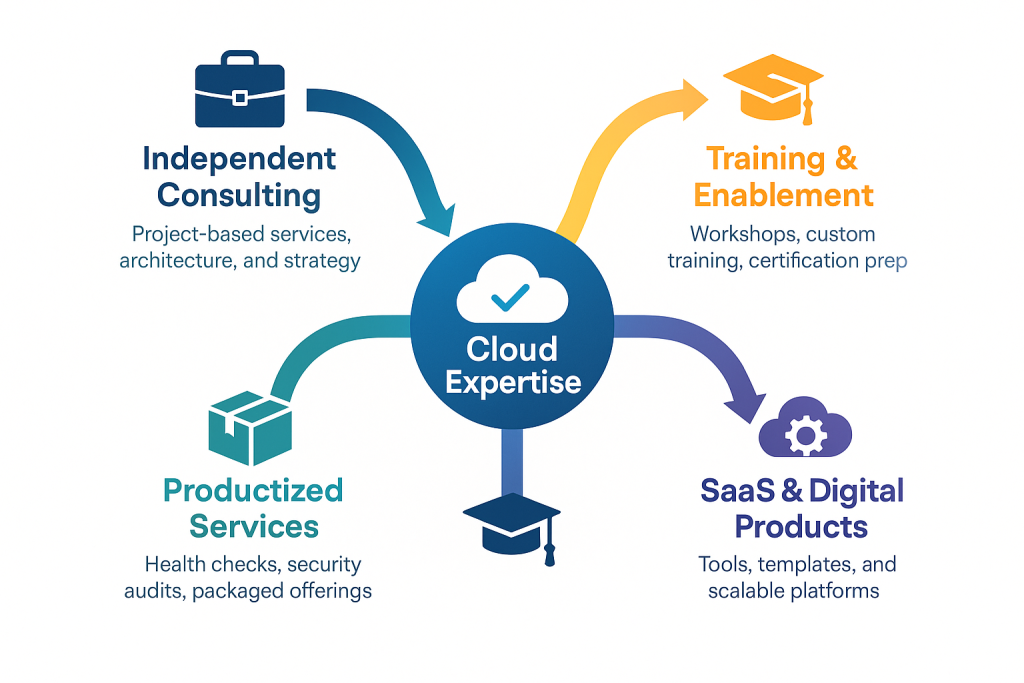
Multiple business models enable cloud professionals to monetize their expertise, each with distinct advantages, requirements, and scaling potential.
Independent Consulting Services
Traditional Time-Based Consulting The most accessible entry point involves offering expertise on an hourly or daily rate basis. This model requires minimal upfront investment whilst providing immediate income generation opportunities.
Architecture and Design Services Organizations planning cloud migrations or modernization initiatives need architectural guidance, technology selection, and implementation roadmaps. These high-value services can generate £15,000-£75,000 project fees depending on scope and complexity.
Position yourself as a strategic advisor rather than a technical implementer. Focus on business outcomes, risk mitigation, and long-term sustainability rather than purely technical considerations. This positioning justifies premium rates whilst differentiating you from commodity implementation services.
Migration and Implementation Support Cloud migration projects represent substantial revenue opportunities, typically ranging £25,000-£200,000 depending on organizational size and complexity. These projects often span 6-18 months, providing sustained revenue streams.
Develop standardized methodologies, documentation templates, and project management approaches that enable efficient delivery whilst ensuring consistent quality. This systematization allows you to handle larger projects and justify premium pricing through demonstrated expertise.
Productized Service Offerings
Cloud Health Assessments Package your expertise into standardized service offerings that provide predictable deliverables and pricing. Cloud health assessments, security audits, and optimization reviews can be delivered efficiently whilst commanding £5,000-£25,000 fees.
Develop comprehensive assessment frameworks covering architecture review, security analysis, cost optimization, performance evaluation, and compliance verification. Create professional reporting templates that deliver clear recommendations and implementation priorities.
Training and Enablement Programs Organizations investing in cloud initiatives need internal team training and capability development. Custom training programs addressing specific organizational needs command premium rates whilst building long-term relationships.
Design modular training curricula covering foundational concepts, platform-specific skills, and advanced specializations. Include hands-on workshops, mentoring programs, and certification preparation support for comprehensive capability development.
Digital Product Development
Online Course Creation Transform your expertise into scalable digital products through comprehensive online courses. Platforms like Udemy, Teachable, and Thinkific enable course creation with global reach potential.
Successful cloud courses can generate £2,000-£15,000 monthly passive income whilst establishing thought leadership and creating lead generation for consulting services. Focus on practical, project-based learning that demonstrates real-world application.
Technical Content and Resources Develop premium technical resources including architecture templates, automation scripts, best practice guides, and implementation frameworks. These products can generate ongoing revenue whilst showcasing expertise.
Consider subscription models for ongoing content delivery, premium community access, or regular industry analysis and recommendations.
Software as a Service (SaaS) Development
Cloud Management Tools Identify operational challenges faced by cloud professionals and develop software solutions that address specific pain points. Cloud cost optimization, security monitoring, or compliance management tools represent significant market opportunities.
Industry-Specific Solutions Combine cloud expertise with industry knowledge to develop specialized solutions for healthcare, finance, manufacturing, or other sectors with specific requirements and compliance needs.
Getting Started: From Idea to First Client
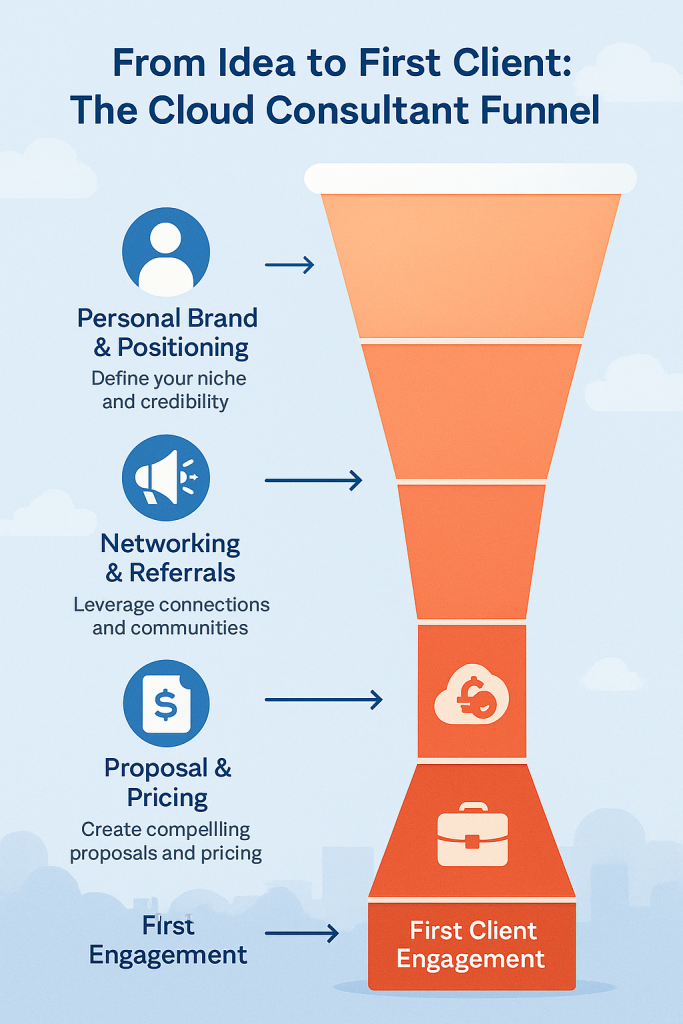
Successfully transitioning from employed professional to independent consultant requires systematic approach to business development, client acquisition, and service delivery.
Business Foundation and Legal Structure
Business Registration and Structure Establish proper business structure for tax efficiency and liability protection. Most UK consultants operate as limited companies for tax advantages, though sole trader status works for initial experimentation.
Consult with an accountant experienced in consulting businesses to optimize tax structure, understand IR35 implications, and establish proper bookkeeping systems. Professional advice prevents costly mistakes whilst ensuring compliance.
Professional Insurance and Risk Management Obtain appropriate professional indemnity insurance, public liability coverage, and cyber liability protection. Cloud consulting involves significant business risk, making comprehensive insurance essential for credibility and protection.
Financial Management Systems Implement robust financial management including invoicing systems, expense tracking, tax planning, and cash flow management. Consider platforms like Xero, QuickBooks, or FreeAgent for comprehensive business management.
Brand Development and Market Positioning
Professional Brand Creation Develop a compelling professional brand that communicates your expertise, experience, and unique value proposition. This includes professional website development, LinkedIn optimization, and consistent messaging across all platforms.
Thought Leadership Development Establish credibility through consistent content creation, speaking opportunities, and industry participation. Regular blog posts, LinkedIn articles, and conference presentations build recognition whilst demonstrating expertise.
Portfolio and Case Study Development Document successful projects, implementations, and business outcomes to demonstrate proven capability. Even employment-based experience can be anonymized and presented as professional portfolio content.
Client Acquisition Strategies
Network Activation and Relationship Building Leverage existing professional relationships for initial opportunities. Former colleagues, industry contacts, and professional community members often provide first consulting engagements or referrals.
Content Marketing and Inbound Lead Generation Create valuable content that attracts potential clients whilst demonstrating expertise. Technical blogs, industry analysis, and practical guides generate inbound inquiries from organizations seeking help.
Strategic Partnership Development Build relationships with complementary service providers including recruitment agencies, larger consulting firms, and technology vendors. These partnerships can provide steady referral streams and collaboration opportunities.
Pricing Strategies: Maximizing Your Value
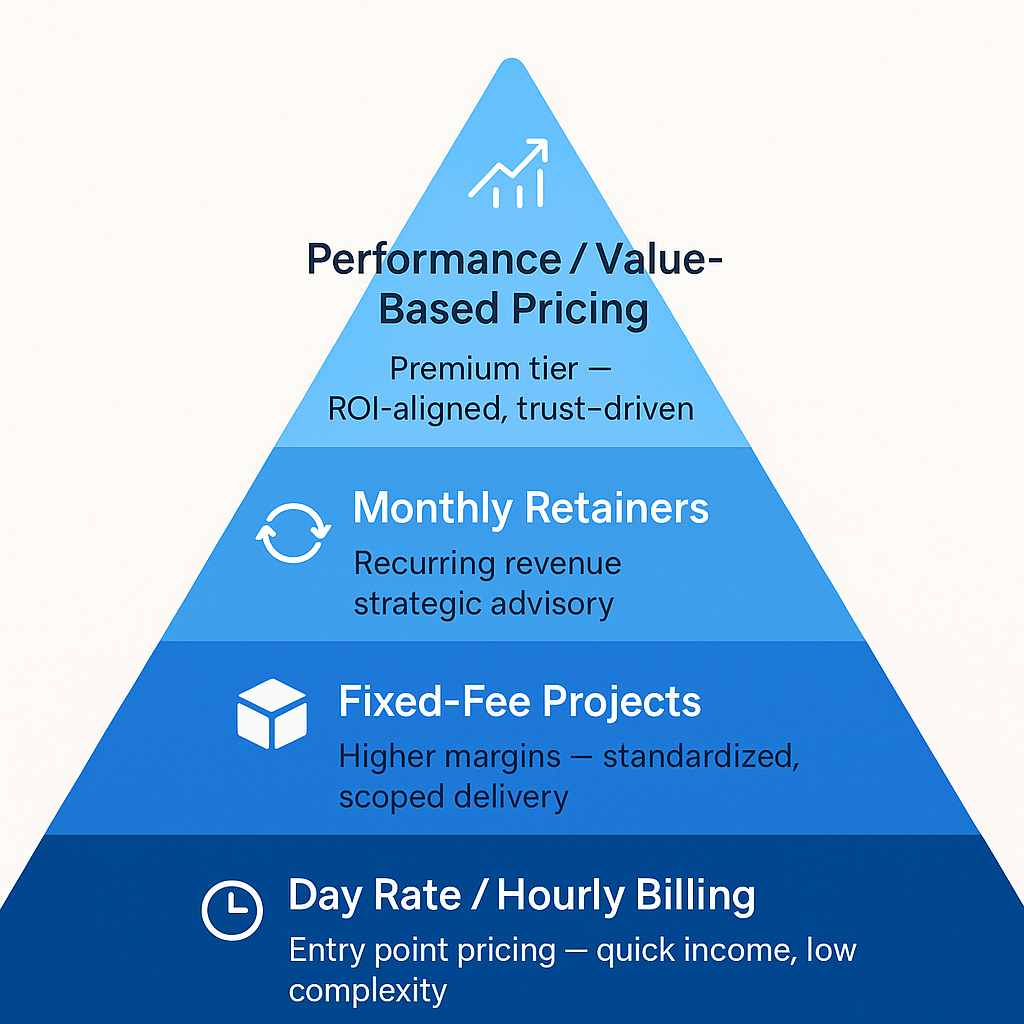
Appropriate pricing strategy significantly impacts profitability and business sustainability. Understanding value-based pricing principles enables premium positioning whilst ensuring competitive advantage.
Rate Setting and Value Communication
Market Rate Research and Positioning Research current market rates for your specialization and experience level using platforms like ITJobsWatch, Glassdoor, and professional networks. Position your rates at market or above based on demonstrated expertise and results.
Day Rate vs Project Pricing Day rates provide predictable income and easier pricing, typically ranging £600-£1,500 for cloud specialists. Project pricing enables higher margins but requires accurate scoping and risk management.
Consider hybrid approaches: day rates for discovery and design phases, fixed pricing for well-defined implementation work, and ongoing support retainers for maintenance activities.
Value-Based Pricing Implementation Price services based on business value delivered rather than time invested. A cloud migration that reduces operational costs by £100,000 annually justifies significantly higher fees than one focused purely on technical modernization.
Develop business case frameworks that quantify value including cost savings, revenue enablement, risk reduction, and operational efficiency improvements. Present pricing in context of return on investment rather than pure cost.
Advanced Pricing Models
Retainer and Recurring Revenue Establish retainer relationships for ongoing advisory services, optimization support, or strategic planning activities. Monthly retainers of £3,000-£15,000 provide predictable revenue whilst building deeper client relationships.
Performance-Based Pricing Link compensation to achieved outcomes including cost reductions, performance improvements, or compliance achievements. This model aligns consultant and client interests whilst enabling premium pricing for exceptional results.
Training and Certification Programs Develop comprehensive training offerings with tiered pricing structures. Basic awareness training might command £500-£1,500 per day, whilst intensive certification preparation programs can achieve £3,000-£8,000 per participant.
Client Relationship Management and Delivery Excellence
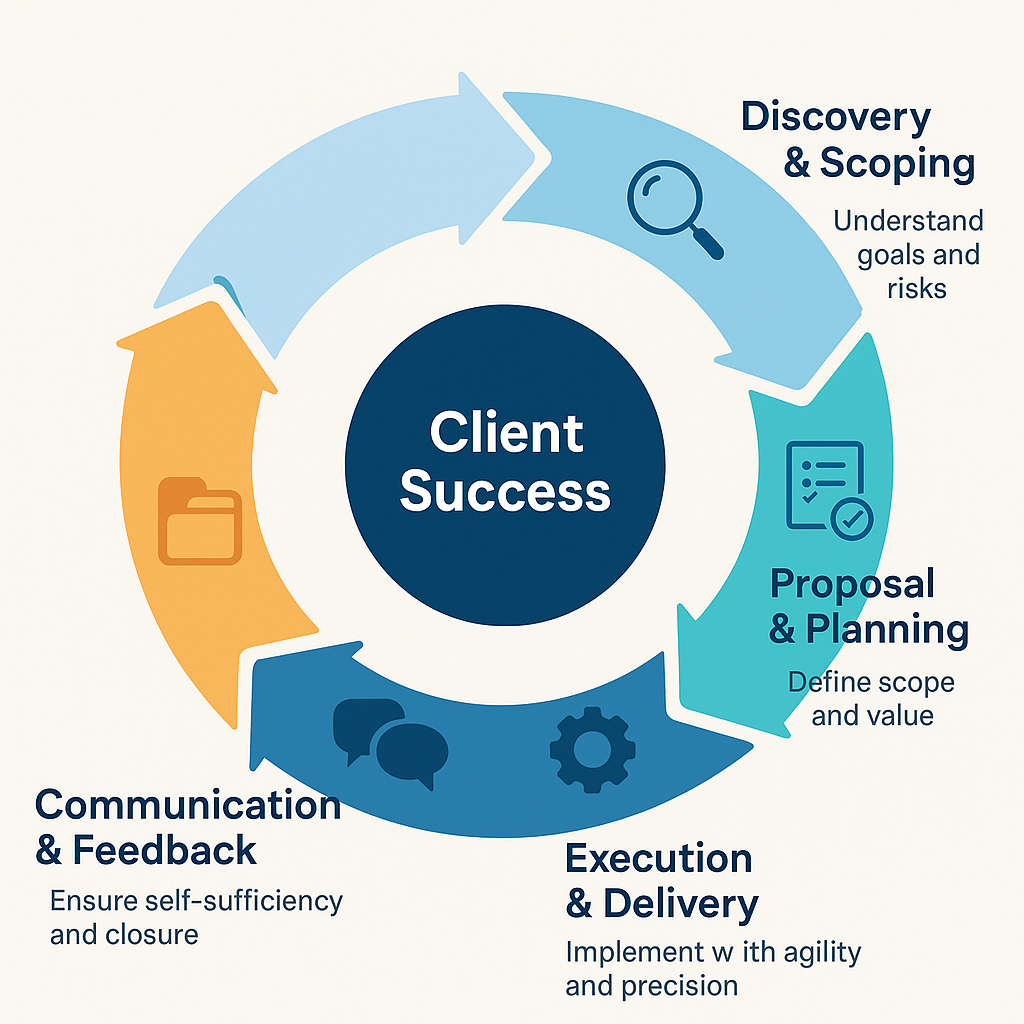
Successful consulting businesses depend on exceptional client relationships, consistent delivery quality, and systematic project management approaches.
Discovery and Scoping Excellence
Comprehensive Requirements Analysis Invest substantial effort in understanding client business objectives, technical constraints, organizational culture, and success criteria. Thorough discovery prevents scope creep whilst ensuring solution alignment with business needs.
Develop standardized discovery methodologies including stakeholder interviews, technical assessments, business process analysis, and risk evaluation frameworks. This systematic approach ensures comprehensive understanding whilst demonstrating professionalism.
Proposal Development and Presentation Create compelling proposals that clearly articulate business value, technical approach, project timeline, and investment requirements. Focus on business outcomes rather than technical features to resonate with decision-makers.
Include detailed project plans, risk mitigation strategies, and success metrics to demonstrate thorough planning and professional capability. Well-structured proposals differentiate serious consultants from casual freelancers.
Project Delivery and Quality Management
Agile Project Management Implementation Implement agile project management methodologies that provide regular client communication, iterative delivery, and adaptive planning. This approach reduces project risk whilst maintaining client engagement and satisfaction.
Communication and Stakeholder Management Establish regular communication cadences including weekly progress updates, monthly steering committee meetings, and milestone demonstrations. Proactive communication prevents surprises whilst building confidence and trust.
Documentation and Knowledge Transfer Provide comprehensive project documentation including architecture diagrams, configuration guides, operational procedures, and training materials. Thorough documentation ensures client self-sufficiency whilst demonstrating professional thoroughness.
Scaling Your Consulting Business
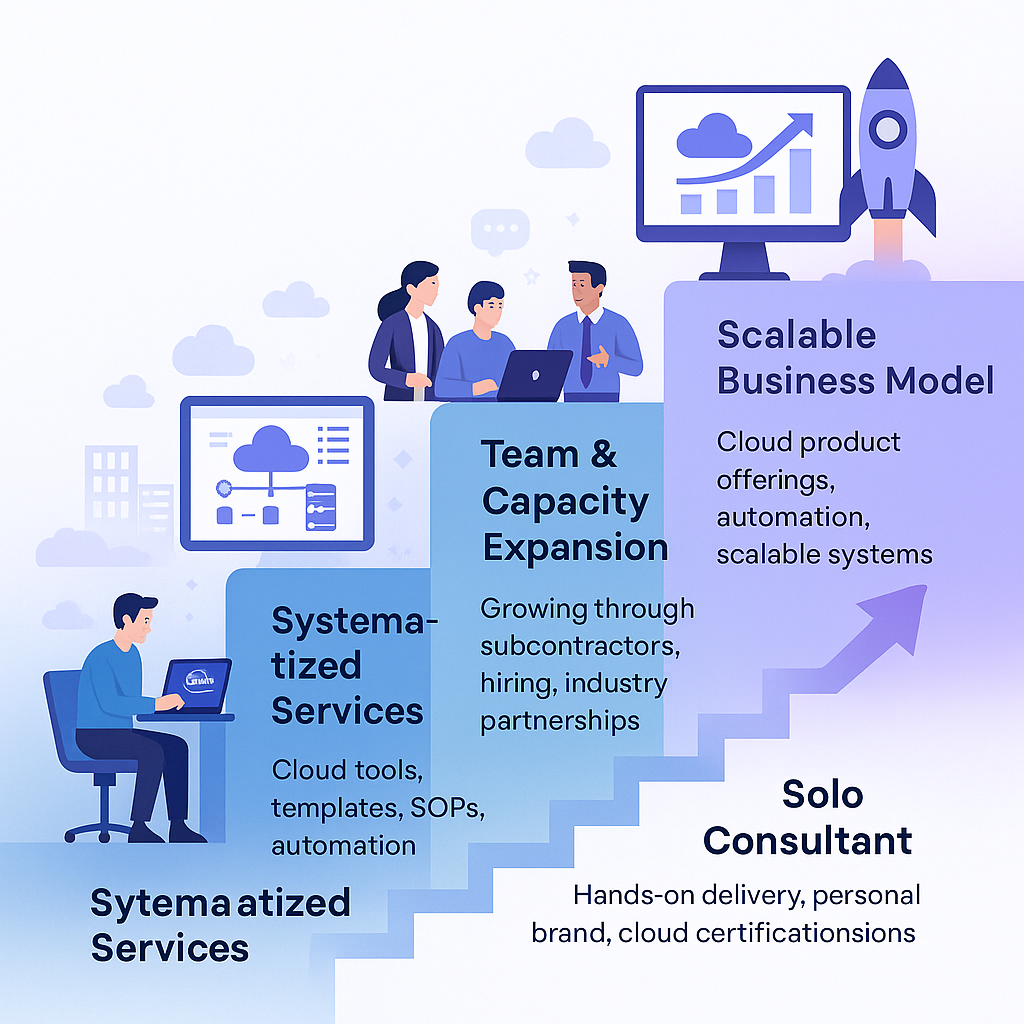
Growing from individual consultant to scalable business requires systematic approaches to capacity expansion, service productization, and operational systematization.
Team Building and Capacity Expansion
Strategic Hiring and Skill Development Identify complementary skills needed for business expansion including additional technical specializations, project management capabilities, or business development expertise. Hire strategically to expand service offerings rather than simply adding capacity.
Subcontractor Network Development Build relationships with trusted subcontractors who can provide additional capacity during peak periods or specialized expertise for specific projects. This approach enables business growth without permanent overhead commitment.
Partnership and Collaboration Models Develop strategic partnerships with other consultants or consulting firms to tackle larger projects or provide comprehensive capabilities. These partnerships can accelerate growth whilst reducing business development costs.
Service Productization and Systematization
Methodology Development and Intellectual Property Develop proprietary methodologies, frameworks, and tools that differentiate your services whilst enabling efficient delivery. Intellectual property creates competitive advantages and justifies premium pricing.
Standard Operating Procedures Implementation Create comprehensive standard operating procedures for all business activities including sales, project delivery, client management, and administrative functions. Systematization enables consistent quality whilst supporting business scaling.
Technology Platform Development Implement technology platforms that support business operations including customer relationship management, project management, time tracking, and financial management systems. These platforms enable efficient operations whilst providing business intelligence.
Specialized Business Opportunities
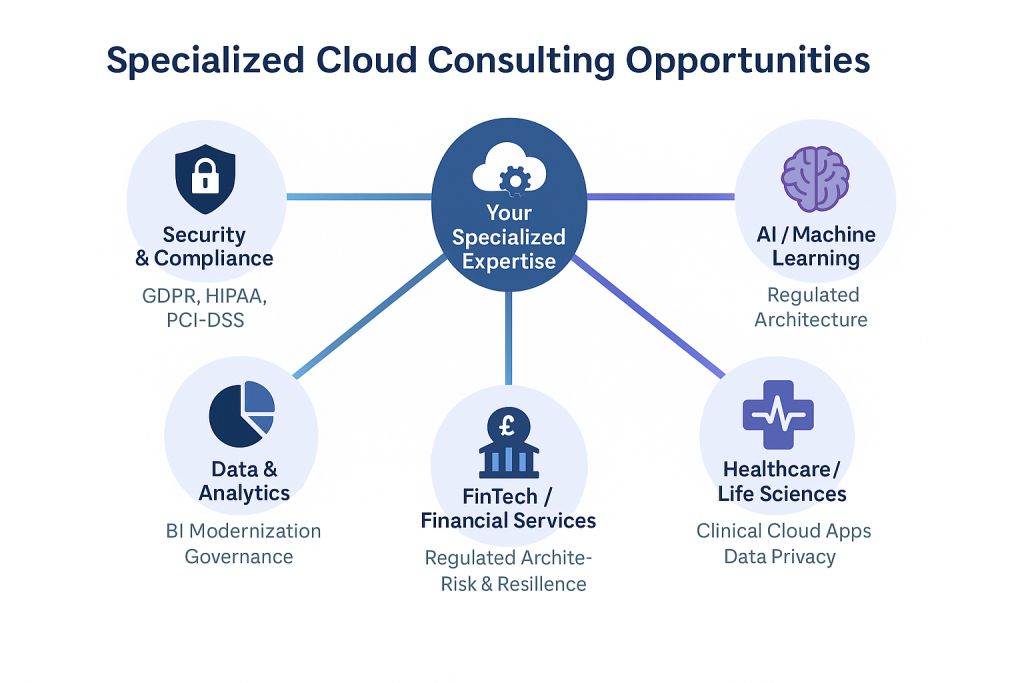
Specialized expertise in high-demand areas can command significant premiums whilst providing competitive differentiation and market positioning advantages.
Security and Compliance Consulting
Regulatory Compliance Specialization Organizations in regulated industries require specialized expertise for cloud compliance implementation. GDPR, PCI DSS, HIPAA, and SOX compliance consulting commands premium rates whilst providing ongoing revenue opportunities.
Develop deep expertise in specific regulatory frameworks and their cloud implementation requirements. This specialization creates substantial barriers to entry whilst justifying premium pricing.
Security Architecture and Implementation Cloud security consulting represents one of the highest-value specializations with daily rates often exceeding £1,200 for experienced practitioners. Organizations prioritize security expertise due to risk implications and skills scarcity.
Penetration Testing and Security Assessment Specialized security testing services for cloud environments command substantial premiums whilst providing project-based revenue opportunities. Combine technical expertise with business risk communication for maximum value.
Data and Analytics Consulting
Data Strategy and Governance Organizations implementing data analytics initiatives need strategic guidance for platform selection, architecture design, governance implementation, and team development. These strategic engagements often exceed £50,000 project values.
Machine Learning and AI Implementation AI and machine learning consulting represents rapidly growing market segment with substantial premium potential. Combine cloud platform expertise with data science capabilities for unique positioning.
Business Intelligence and Analytics Traditional business intelligence modernization projects provide substantial consulting opportunities as organizations migrate from legacy systems to cloud-native analytics platforms.
Industry-Specific Specializations
Financial Services Cloud Consulting Financial services organizations have specific requirements for cloud implementation including regulatory compliance, risk management, and operational resilience. This specialization commands significant premiums due to complexity and compliance requirements.
Healthcare Technology Consulting Healthcare organizations implementing cloud solutions need specialized expertise for HIPAA compliance, clinical system integration, and patient data protection. This niche provides substantial opportunities with premium pricing potential.
Manufacturing and IoT Integration Manufacturing organizations implementing Industry 4.0 initiatives require cloud expertise combined with operational technology knowledge. This emerging specialization offers significant growth potential.
Advanced Business Development Strategies
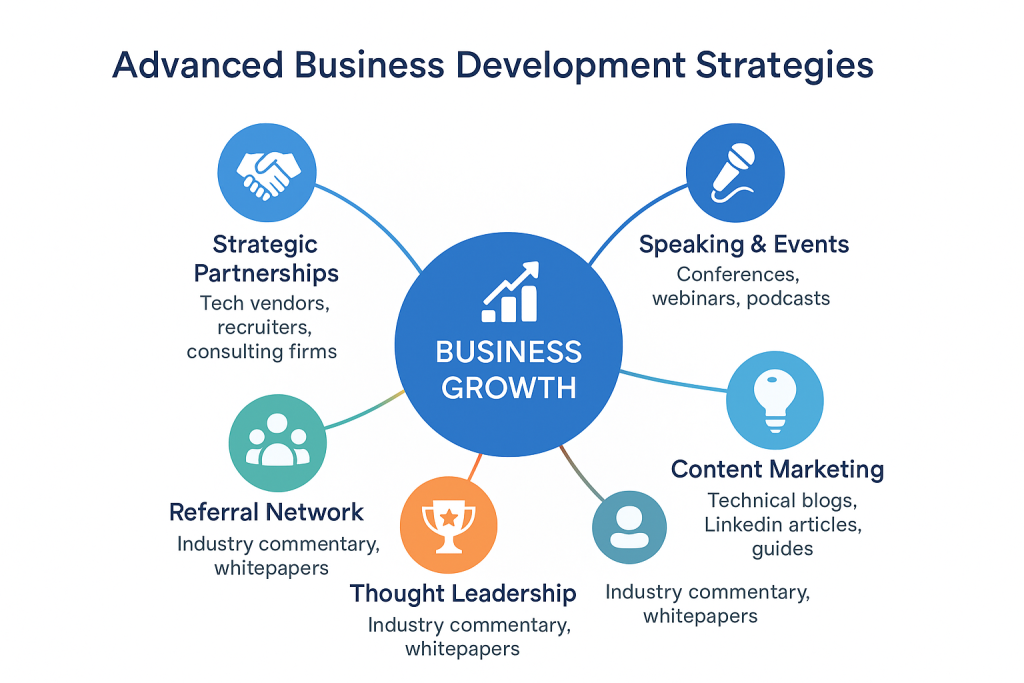
Sophisticated business development approaches enable sustainable growth whilst building industry reputation and thought leadership positioning.
Strategic Partnership Development
Technology Vendor Partnerships Develop relationships with cloud platform vendors, software companies, and technology resellers who can provide referral opportunities and collaborative project possibilities. These partnerships often provide steady lead generation.
Professional Services Alliances Build alliances with larger consulting firms, system integrators, and recruitment agencies who need specialized cloud expertise for client projects. These relationships can provide substantial project opportunities without business development overhead.
Industry Association Participation Active participation in industry associations, professional organizations, and trade groups provides networking opportunities whilst building industry credibility and recognition.
Content Marketing and Thought Leadership
Industry Analysis and Commentary Develop regular industry analysis, trend commentary, and market insights that position you as a knowledgeable industry voice. This content generates inbound leads whilst building professional reputation.
Case Study Development and Sharing Document successful client implementations (with appropriate anonymization) as case studies that demonstrate capability and business impact. These stories provide powerful sales tools whilst contributing to industry knowledge.
Speaking and Conference Participation Regular speaking at industry conferences, meetups, and professional events builds recognition whilst demonstrating expertise to potential clients and partners.
Financial Management and Business Growth
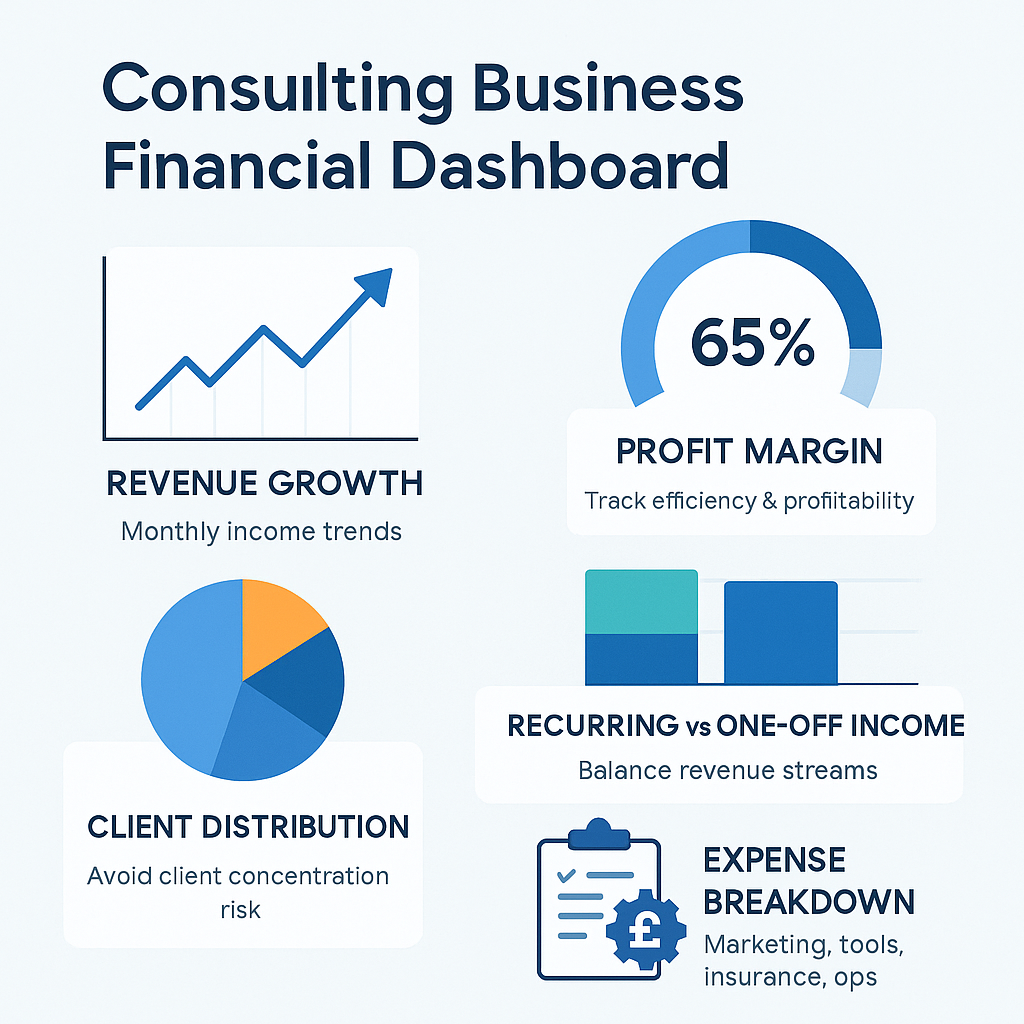
Successful consulting businesses require sophisticated financial management including pricing optimization, cash flow planning, tax strategy, and growth investment decisions.
Revenue Management and Optimization
Pricing Strategy Evolution Continuously evaluate and adjust pricing strategies based on market conditions, demand levels, and value demonstration capabilities. Successful consultants typically increase rates 10-20% annually as experience and reputation develop.
Revenue Diversification Strategies Develop multiple revenue streams including consulting services, training delivery, product sales, and passive income sources. Diversification reduces business risk whilst enabling growth acceleration.
Client Portfolio Management Maintain balanced client portfolio that avoids over-dependence on single clients whilst ensuring consistent revenue flow. Ideal consulting businesses maintain no single client representing more than 30-40% of total revenue.
Growth Investment and Scaling Decisions
Technology Infrastructure Investment Invest in technology platforms that support business operations and client delivery including project management systems, collaboration tools, and automation platforms. These investments enable scaling whilst improving efficiency.
Professional Development and Capability Expansion Continue investing in professional development including advanced certifications, specialized training, and industry knowledge expansion. These investments enable service expansion and premium positioning.
Marketing and Business Development Investment Allocate 10-15% of revenue to marketing and business development activities including content creation, conference participation, and partnership development. These investments drive sustainable growth.
Risk Management and Business Sustainability
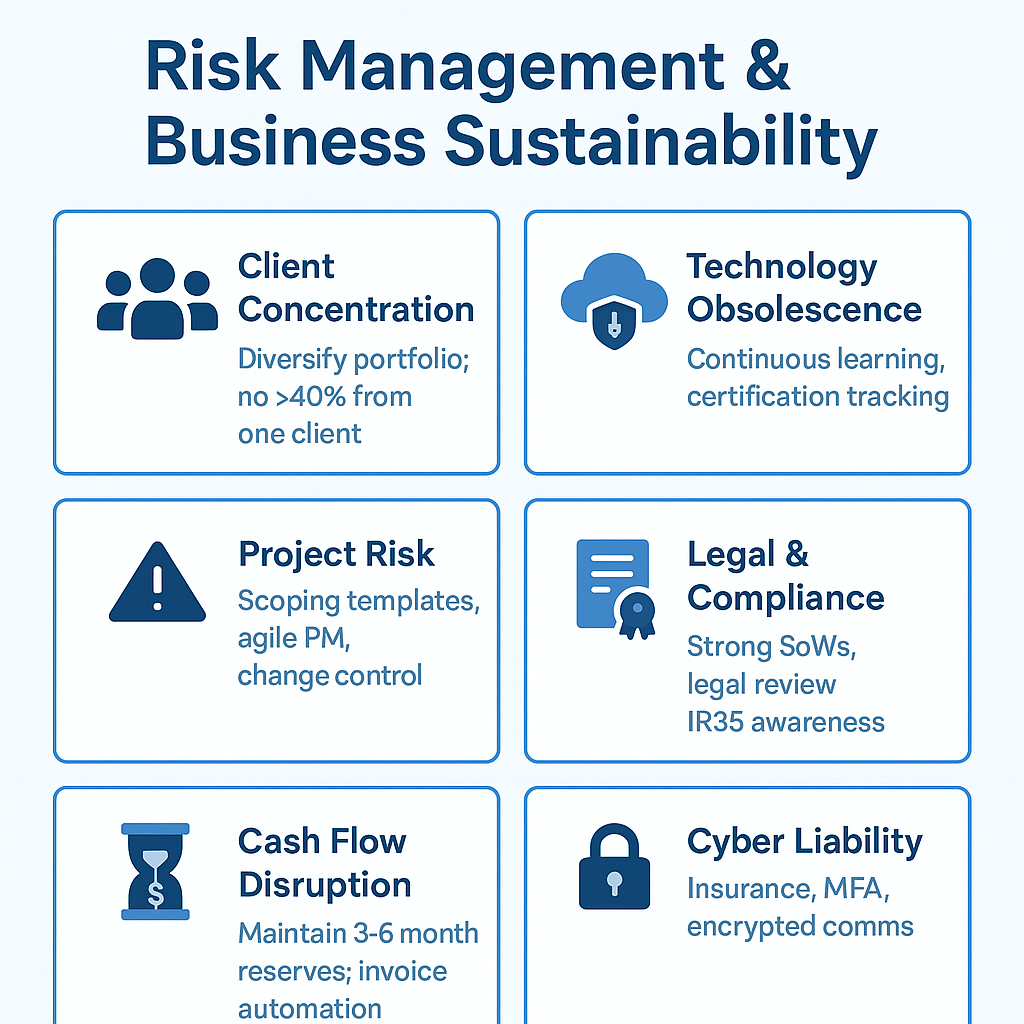
Independent consulting involves various business risks that require systematic identification, assessment, and mitigation strategies.
Operational Risk Management
Client Concentration Risk Avoid over-dependence on single clients or industry sectors that could impact business sustainability. Maintain diverse client portfolio across different industries and project types.
Technology and Skills Obsolescence Continuously update technical skills and industry knowledge to maintain relevance and competitive advantage. Allocate time and budget for ongoing learning and capability development.
Project Delivery Risk Implement robust project management methodologies, clear scope definition, and regular client communication to minimize delivery risks and ensure client satisfaction.
Financial Risk Protection
Cash Flow Management Maintain adequate cash reserves to handle payment delays, project gaps, or economic downturns. Most successful consultants maintain 3-6 months operating expenses in reserves.
Professional Insurance Coverage Maintain comprehensive insurance coverage including professional indemnity, public liability, and cyber liability protection. Insurance provides financial protection whilst enabling client confidence.
Contract and Legal Protection Use comprehensive contracts that clearly define scope, responsibilities, payment terms, and dispute resolution procedures. Professional legal advice prevents costly problems whilst ensuring protection.
Long-Term Wealth Building Strategies
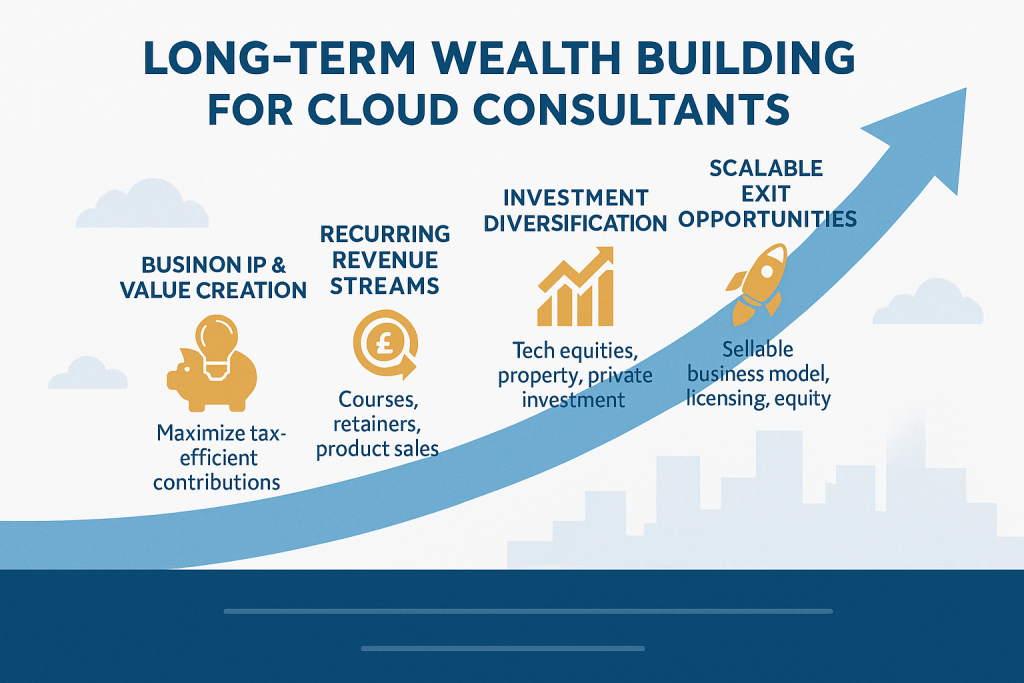
Successful consulting businesses provide opportunities for substantial wealth accumulation through multiple strategies including business value creation, investment diversification, and passive income development.
Business Value Creation
Intellectual Property Development Develop proprietary methodologies, software tools, and business processes that create transferable business value. These assets enable business sale opportunities or licensing revenue streams.
Brand and Reputation Building Invest systematically in professional brand development and industry recognition that creates premium positioning and competitive advantages. Strong brands command higher prices whilst attracting better opportunities.
Scalable Business Model Development Evolve from individual consultant to scalable business through team development, process systematization, and service productization. Scalable businesses create transferable value and exit opportunities.
Investment and Diversification Strategies
Pension and Retirement Planning Maximize pension contributions through corporate structure optimization whilst building substantial retirement savings. Consulting income provides excellent opportunities for accelerated wealth accumulation.
Property Investment Opportunities Commercial real estate investment can provide steady rental income whilst building long-term wealth. Many successful consultants develop property portfolios alongside consulting businesses.
Technology Investment and Equity Participation Consider technology investments, startup equity participation, or business acquisitions that leverage industry expertise whilst providing diversification and growth potential.
Getting Started: Your 90-Day Action Plan
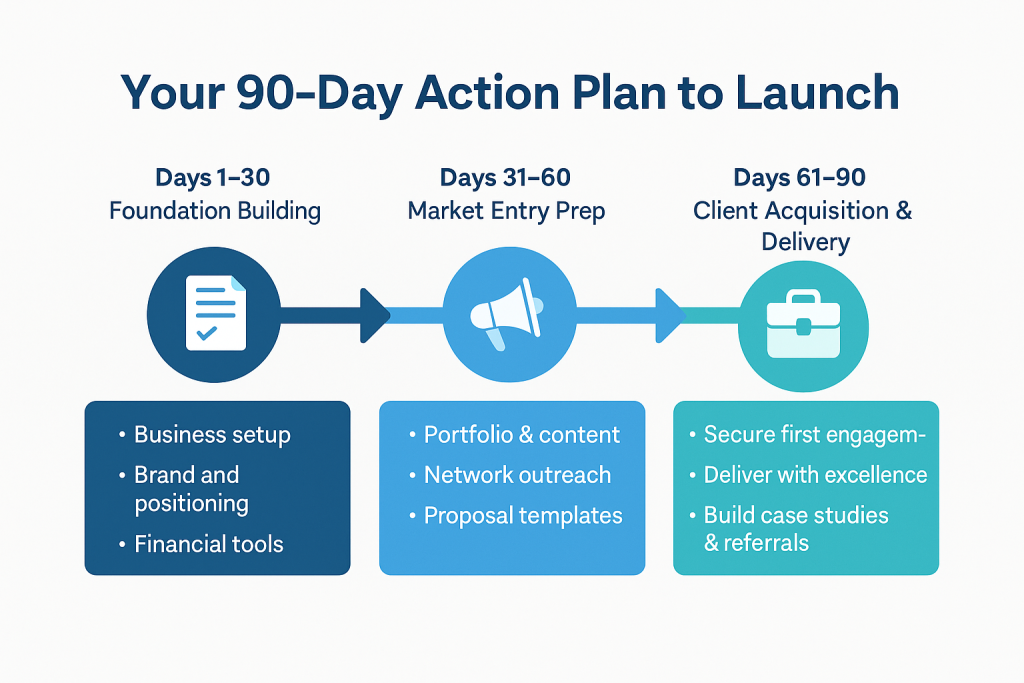
Transforming from employed professional to successful independent consultant requires systematic planning and execution across multiple business development areas.
Days 1-30: Foundation Building
Business Structure and Legal Setup Complete business registration, banking setup, insurance procurement, and basic legal documentation. Establish professional website and LinkedIn optimization for credibility and discoverability.
Market Research and Positioning Conduct comprehensive market research including competitor analysis, pricing research, and service positioning development. Define target market, service offerings, and unique value proposition.
Financial Planning and Pricing Strategy Develop financial projections, pricing strategies, and business development budgets. Establish financial management systems including invoicing, expense tracking, and tax planning.
Days 31-60: Market Entry Preparation
Portfolio and Content Development Create professional portfolio showcasing relevant experience, case studies, and technical capabilities. Develop initial content marketing materials including blog posts, LinkedIn articles, and presentation materials.
Network Activation and Relationship Building Systematically reach out to professional network including former colleagues, industry contacts, and potential referral sources. Inform your network about your consulting services and availability.
Proposal and Sales Process Development Create standardized proposal templates, pricing calculators, and sales process documentation. Practice presenting your services and value proposition through networking meetings and informal discussions.
Days 61-90: Client Acquisition and Service Delivery
First Client Acquisition Focus intensively on securing first consulting engagement through network activation, direct outreach, and partnership development. First client success provides credibility and case study material.
Service Delivery Excellence Execute first project with exceptional attention to client satisfaction, documentation quality, and results demonstration. Early success creates referral opportunities and reputation building.
Business Development System Implementation Establish ongoing business development systems including regular networking activities, content creation schedules, and relationship management processes for sustainable growth.
Strategic Recommendations for Different Experience Levels
For Recently Certified Professionals
Experience Building Priority Focus on building practical experience through volunteer projects, internships, or junior consulting roles before attempting independent consulting. Practical experience provides credibility essential for client confidence.
Niche Specialization Development Identify specific specialization areas that align with market demand and personal interests. Specialized expertise commands higher rates whilst reducing competition.
Network Development Investment Invest systematically in professional network development through industry events, online communities, and professional relationships that provide future opportunities.
For Experienced Practitioners
Portfolio Documentation and Case Study Development Document existing experience comprehensively to demonstrate proven capability and business impact. This documentation becomes essential sales and marketing material.
Market Positioning and Differentiation Develop clear market positioning that differentiates your services based on specific expertise, industry knowledge, or proven results rather than generic consulting offerings.
Business Development System Implementation Establish systematic business development processes including content marketing, relationship management, and lead generation systems for sustainable growth.
For Senior Technical Leaders
Strategic Advisory Positioning Position services at strategic advisory level rather than hands-on implementation to justify premium pricing whilst leveraging leadership experience and business acumen.
Team Building and Scaling Strategy Consider team building and business scaling opportunities that leverage existing relationships and reputation for accelerated growth and increased capacity.
Thought Leadership and Industry Recognition Invest in thought leadership development through speaking, writing, and industry participation that creates industry recognition and premium positioning.
Measuring Success and Continuous Improvement
Successful consulting businesses require systematic measurement and continuous improvement across all business dimensions including financial performance, client satisfaction, and professional development.
Financial Performance Metrics Track key financial metrics including revenue growth, profit margins, utilization rates, and client acquisition costs. These metrics guide pricing decisions and business development investments.
Client Satisfaction and Retention Monitor client satisfaction through regular feedback, project completion surveys, and retention rates. High client satisfaction generates referrals and repeat business essential for sustainable growth.
Professional Development and Capability Expansion Continuously assess and expand professional capabilities through certification advancement, skill development, and industry knowledge expansion. Capability development enables service expansion and premium positioning.
The transition from employed professional to successful independent consultant represents one of the most lucrative career advancement opportunities available to cloud professionals. With systematic planning, strategic execution, and continuous improvement, your cloud expertise can generate substantial additional income whilst providing professional freedom and growth opportunities.
The key insight: Success in consulting requires more than technical expertise—it demands business acumen, relationship management skills, and systematic approaches to client acquisition and service delivery. Invest in developing these capabilities alongside your technical skills for maximum success potential.
Next Week Preview: We’ll explore advanced business strategies including building cloud training businesses, developing SaaS products, and creating passive income streams from your cloud expertise.
Ready to transform your cloud knowledge into a profitable business? The market opportunity has never been larger, and the demand for quality consulting continues expanding rapidly.
Useful Resources for Getting Started:
- Companies House Business Registration
- HMRC Self-Employment Guide
- Professional Indemnity Insurance Comparison
- Cloud Consulting Rate Benchmarks
Planning your transition to independent consulting? Share your current experience level and biggest concerns in the comments—I’ll provide specific recommendations for your situation and market positioning strategy.