

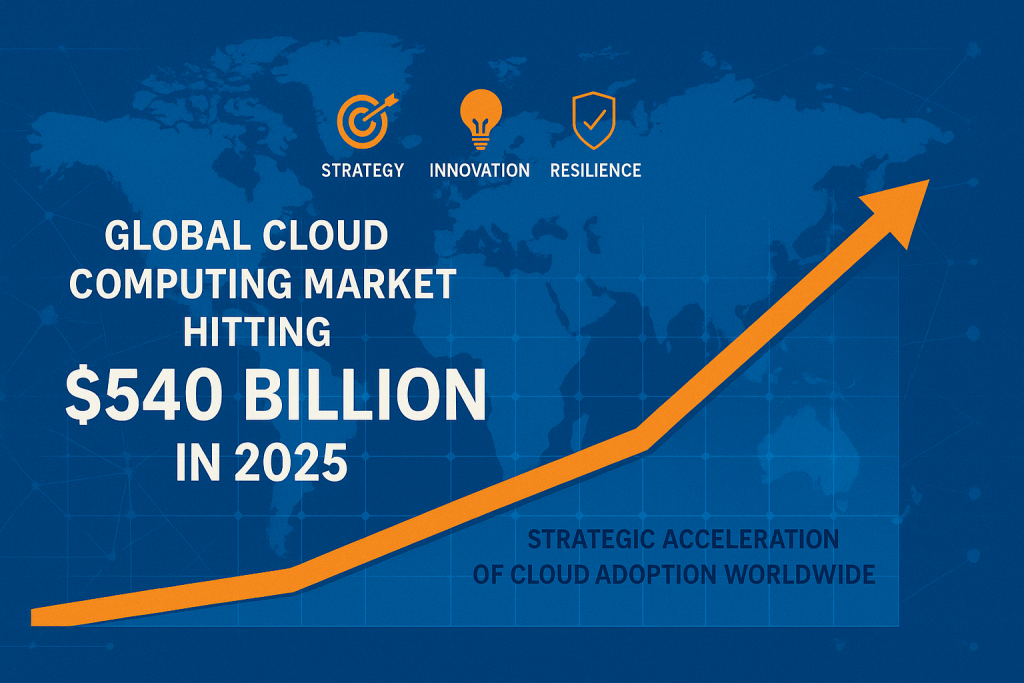
The digital transformation landscape has reached a tipping point. With the global cloud computing market hitting £540 billion in 2025, cloud adoption is no longer a question of “if” but “how quickly” and “how strategically” businesses can embrace this fundamental shift.
Yet despite cloud computing’s maturation over two decades, persistent misconceptions continue to influence boardroom decisions. Many executives still view cloud primarily as an IT cost-cutting exercise, missing its transformative potential as a driver of innovation, competitive advantage, and business resilience.
This comprehensive guide cuts through the noise to deliver what business leaders genuinely need to understand about cloud computing in 2025. From strategic decision-making frameworks to practical implementation approaches.
The Business Case Has Fundamentally Changed
Cloud as a Growth Engine, Not Just a Cost Centre
The traditional narrative positioning cloud as a cost-saving measure has evolved dramatically. Today’s research reveals that security has become the primary benefit cited by 60% of C-Suite executives, surpassing cost savings, scalability, and operational efficiency.
This shift reflects cloud computing’s maturation from a simple infrastructure replacement to a comprehensive business enablement platform. Small and medium businesses leveraging cloud technologies report 21% higher profits and 26% faster growth compared to their traditional counterparts. The value cloud generates from enabling innovation is worth more than five times what’s achievable through simple cost reduction.
The Innovation Multiplier Effect
Perhaps most significantly, cloud adoption enables organisations to launch new products 75% faster whilst entering new markets with minimal infrastructure investment. This acceleration stems from cloud’s ability to provide on-demand access to sophisticated technologies: artificial intelligence, machine learning, and advanced analytics that were previously accessible only to technology giants.
The compound effect becomes clear when examining business resilience. Cloud-enabled organisations resolve disaster recovery scenarios in just 2.1 hours, compared to 8 hours for traditional infrastructure setups. This operational agility proved invaluable during recent global disruptions and continues to provide competitive advantages in volatile markets.
Debunking the Persistent Myths
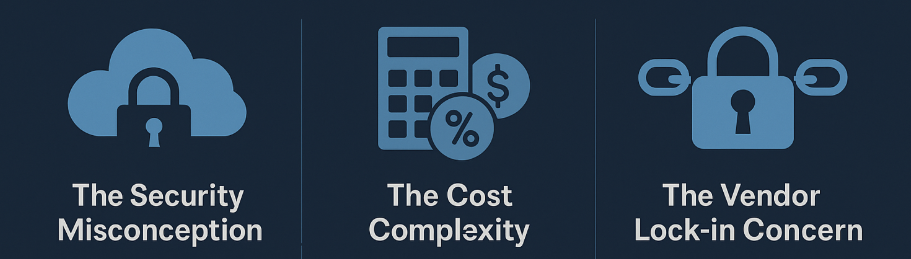
The Security Misconception
The most pervasive myth surrounding cloud adoption concerns security vulnerabilities. This misconception stems from early cloud implementations and high-profile misconfiguration incidents. However, current evidence paints a markedly different picture.
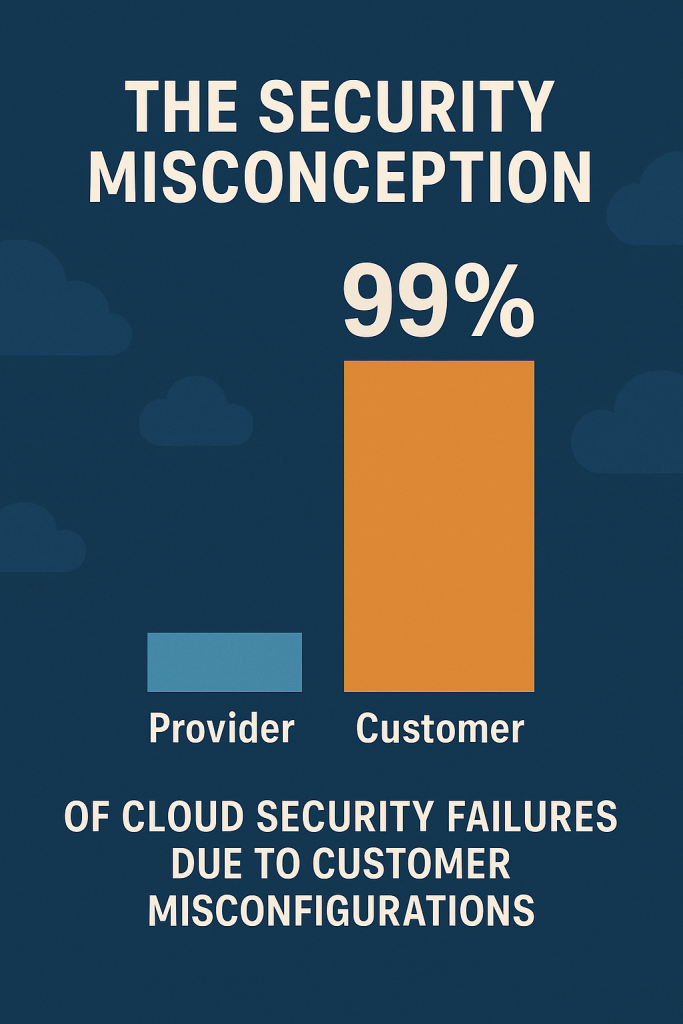
Major cloud service providers invest billions annually in security infrastructure and employ thousands of cybersecurity specialists, resources that far exceed what most organisations can afford internally. The reality is that 99% of cloud security failures result from customer misconfigurations, not provider inadequacies.
Leading cloud providers undergo rigorous compliance audits and maintain certifications across multiple regulatory frameworks, including ISO 27001, SOC 2, and industry-specific standards like HIPAA for healthcare organisations.
The Cost Complexity
Another persistent myth suggests that cloud computing automatically reduces costs. Whilst cost optimisation is achievable, approximately 30-32% of cloud expenditure typically represents waste due to poor governance and management practices.
The challenge lies not in cloud pricing models but in organisations’ approach to consumption management. Successful cloud adopters implement financial operations (FinOps) practices that treat cloud spending as a strategic business capability rather than a traditional IT expense.
The Vendor Lock-in Concern
Executives frequently express concerns about vendor dependency following cloud migration. This worry reflects legitimate business risk considerations but often overlooks available mitigation strategies.
Multi-cloud architectures, hybrid deployment models, and containerised applications can significantly reduce vendor dependency. Modern cloud strategies emphasise portability and interoperability, enabling organisations to leverage multiple providers’ strengths whilst maintaining flexibility.
The Strategic Decision Framework
Aligning Cloud Strategy with Business Outcomes
Successful cloud adoption begins with clearly defined business objectives rather than technology specifications. The most effective approach involves identifying key business outcomes, revenue growth, market expansion, operational efficiency, or customer experience enhancement and mapping cloud capabilities to these priorities.
Consider the decision framework used by leading organisations:
Business Impact Assessment: Evaluate how cloud infrastructure affects critical business processes and strategic objectives, comparing potential value against alternative approaches.
Risk-Benefit Analysis: Assess both immediate implementation risks and long-term strategic risks of delayed adoption, considering competitive positioning and market dynamics.
Resource Allocation: Determine optimal investment distribution across people, processes, and technology components required for successful transformation.
Implementation Approach: Start Strategic, Scale Gradually
Rather than attempting comprehensive migration immediately, successful organisations adopt a phased approach that begins with high-impact, lower-risk workloads. This strategy enables teams to develop cloud expertise whilst demonstrating tangible business value.
The recommended progression involves:
- Proof of Concept: Select applications or processes that clearly demonstrate cloud benefits whilst minimising organisational disruption
- Governance Framework: Establish cost management, security protocols, and operational procedures before scaling adoption
- Capability Building: Invest in skills development and change management to support broader transformation
- Strategic Expansion: Apply lessons learned to progressively migrate additional workloads and implement advanced cloud services
Managing the Critical Challenges
The Skills Gap Reality
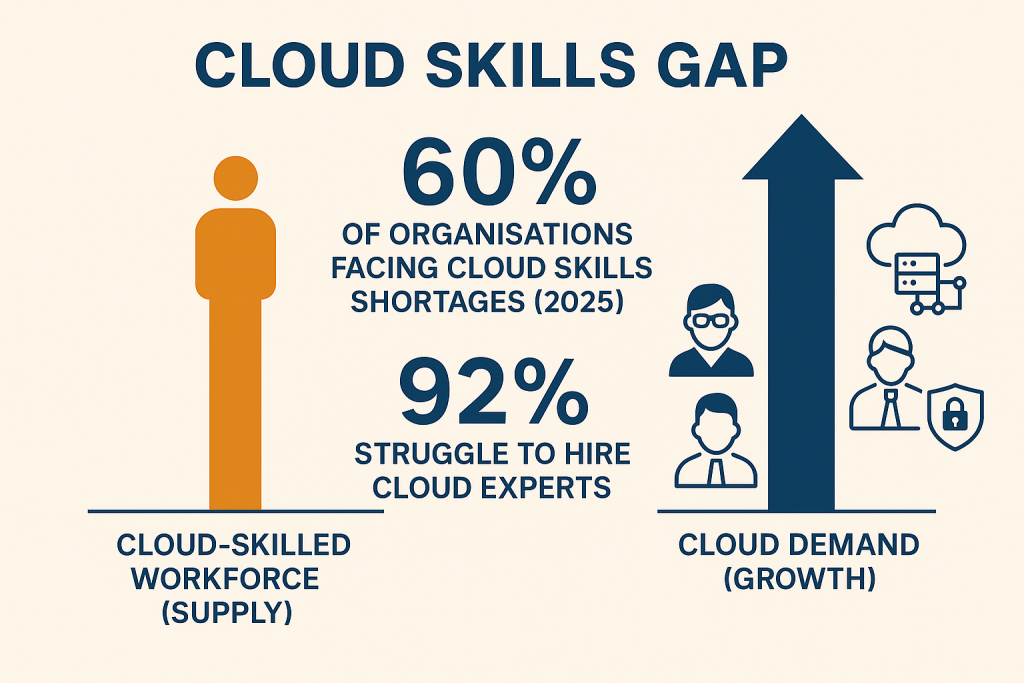
Perhaps the most significant constraint facing organisations today is the shortage of cloud-capable talent. Research indicates that 60% of organisations will face cloud skills shortages in 2025, with 92% struggling to hire personnel with sufficient cloud computing expertise.
This challenge extends beyond technical roles to encompass business analysts, project managers, and operational staff who require cloud literacy to function effectively in modern organisations. More than 90% of IT leaders plan to expand cloud environments, yet 80% report that inadequate employee skills constrain their progress.
Strategic Response: Rather than relying solely on external recruitment, leading organisations invest in comprehensive upskilling programmes. These initiatives often prove more effective and cost-efficient than competing for scarce external talent.
Cost Management and Financial Governance
Managing cloud spending has emerged as the primary operational challenge, overtaking security concerns for the first time. Only 40% of organisations report that their cloud costs align with expectations, with many experiencing significant budget overruns.
The solution lies in implementing FinOps practices, a discipline that brings financial accountability to cloud consumption. FinOps is no longer optional but represents an essential capability for modern technology operations management.
Effective FinOps implementation requires:
- Cross-functional collaboration between finance, technology, and business units
- Real-time visibility into cost allocation and consumption patterns
- Automated governance policies that prevent unauthorised spending
- Cultural transformation that makes cost optimisation everyone’s responsibility
Future-Proofing Your Cloud Strategy
Artificial Intelligence Integration
The convergence of cloud computing and artificial intelligence represents the next major business transformation wave. Organisations leveraging AI within cloud environments report significant returns on investment, with 77% of financial services executives using generative AI in production currently seeing positive ROI.
Cloud platforms provide the computational infrastructure, data storage capabilities, and AI/ML services required to implement intelligent applications at scale. This integration enables organisations to automate complex processes, enhance customer experiences, and derive actionable insights from vast data sets.
Edge Computing and Distributed Architecture
As organisations generate increasing volumes of data from IoT devices, mobile applications, and real-time processes, edge computing becomes essential for maintaining performance and controlling costs. Worldwide spending on edge computing is projected to reach £300 billion by 2028.
Edge computing extends cloud capabilities closer to data sources and end users, reducing latency whilst minimising bandwidth consumption. This distributed approach proves particularly valuable for manufacturing, retail, healthcare, and financial services organisations requiring real-time data processing.
Sustainability Considerations
Environmental impact increasingly influences technology decisions, with 70% of businesses expected to factor sustainability into cloud provider selection. Cloud computing can significantly reduce organisations’ carbon footprints through improved resource utilisation and access to renewable energy sources.
Cloud providers typically achieve far superior energy efficiency compared to traditional data centres, whilst offering transparency into environmental impact through detailed sustainability reporting.
Measuring Success: The KPIs That Matter
Business Impact Metrics
Effective cloud measurement extends beyond technical performance indicators to encompass business outcomes. Key performance indicators should align with strategic objectives whilst providing actionable insights for decision-making.
Financial KPIs include total cost of ownership reductions, revenue attributed to cloud-enabled capabilities, and return on investment calculations that account for both direct savings and innovation benefits.
Operational KPIs track application deployment velocity, system availability improvements, and mean time to resolution for technical issues.
Strategic KPIs measure competitive advantage gains, market entry acceleration, and customer satisfaction improvements resulting from cloud capabilities.
Governance and Compliance Indicators
Given the regulatory complexity facing modern organisations, compliance metrics deserve particular attention. These indicators should track adherence to industry standards, data protection requirements, and internal governance policies.
Regular assessment of security posture, audit readiness, and regulatory compliance helps organisations maintain trust whilst avoiding costly violations or reputational damage.
Building Your Cloud-Ready Organisation
Organisational Structure and Governance
Successful cloud adoption requires organisational changes that extend far beyond IT departments. Many organisations establish Cloud Centres of Excellence (CCoE) or similar governance structures that coordinate cloud activities across business units.
These cross-functional teams typically include representatives from IT, finance, security, compliance, and key business units. Their responsibilities encompass policy development, best practice sharing, cost optimisation, and strategic planning.
Cultural Transformation
Perhaps most critically, cloud adoption demands cultural change that embraces experimentation, continuous learning, and shared responsibility for outcomes. Traditional IT operating models often emphasise control and standardisation, whilst cloud environments reward agility and innovation.
This transformation requires leadership commitment, clear communication about changing roles and expectations, and ongoing support for skill development across the organisation.
Practical Next Steps for Executives
Immediate Actions
Assess Current State: Conduct a comprehensive evaluation of existing infrastructure, applications, and business processes to identify cloud readiness and migration priorities.
Define Business Objectives: Clearly articulate what the organisation hopes to achieve through cloud adoption, focusing on measurable business outcomes rather than technology features.
Establish Governance: Implement basic cost management, security protocols, and decision-making frameworks before initiating significant cloud investments.
Medium-Term Initiatives
Skill Development: Launch comprehensive training programmes that address both technical competencies and cultural adaptation requirements.
Pilot Projects: Execute carefully selected proof-of-concept initiatives that demonstrate cloud value whilst building organisational confidence and expertise.
Vendor Evaluation: Assess potential cloud service providers based on business requirements, compliance needs, and strategic alignment rather than purely cost considerations.
Looking Ahead: Cloud in 2025 and Beyond
The cloud computing landscape continues evolving rapidly, with emerging technologies like quantum computing, advanced AI models, and immersive experiences driving new requirements and opportunities. Organisations that establish strong cloud foundations today will be better positioned to leverage these innovations as they mature.
However, success requires moving beyond viewing cloud as a technology solution to embracing it as a fundamental business capability. The organisations that thrive in the digital economy will be those that integrate cloud thinking into their strategic planning, operational processes, and cultural DNA.
Cloud computing represents more than infrastructure modernisation—it enables entirely new business models, revenue streams, and competitive strategies. For business leaders, the question is not whether to embrace cloud computing, but how quickly and strategically they can harness its transformative potential.
The window for gaining competitive advantage through cloud adoption continues narrowing as market adoption accelerates. Organisations that approach cloud strategically, with proper governance and realistic expectations, position themselves for sustained success in an increasingly digital world.
Useful Links for Further Reading
- AWS Cloud Value Framework – Comprehensive methodology for measuring cloud business value
- FinOps Foundation – Best practices and certification for cloud financial management
- Cloud Security Alliance – Industry guidance on cloud security frameworks
- Gartner Cloud Strategy Research – Latest analyst insights on cloud adoption trends
- Microsoft Cloud Adoption Framework – Structured approach to cloud transformation
- Google Cloud Architecture Centre – Reference architectures and best practices
- Cloud Native Computing Foundation – Open-source cloud technologies and standards