
The cloud revolution isn’t coming, it’s here, and it’s reshaping the entire IT landscape. With over 95% of new digital workloads expected to deploy on cloud-native platforms by 2025, traditional IT professionals face a critical decision: evolve or risk obsolescence.
This transition represents more than a simple technology upgrade. It’s a fundamental shift in how infrastructure operates, how services are delivered, and how IT careers develop. The good news? This transformation opens doors to some of the fastest-growing, highest-paying roles in technology, with cloud computing positions projected to grow 23% through 2032, nearly three times the average for all occupations.
Understanding the Cloud Imperative
Why Traditional IT Must Evolve
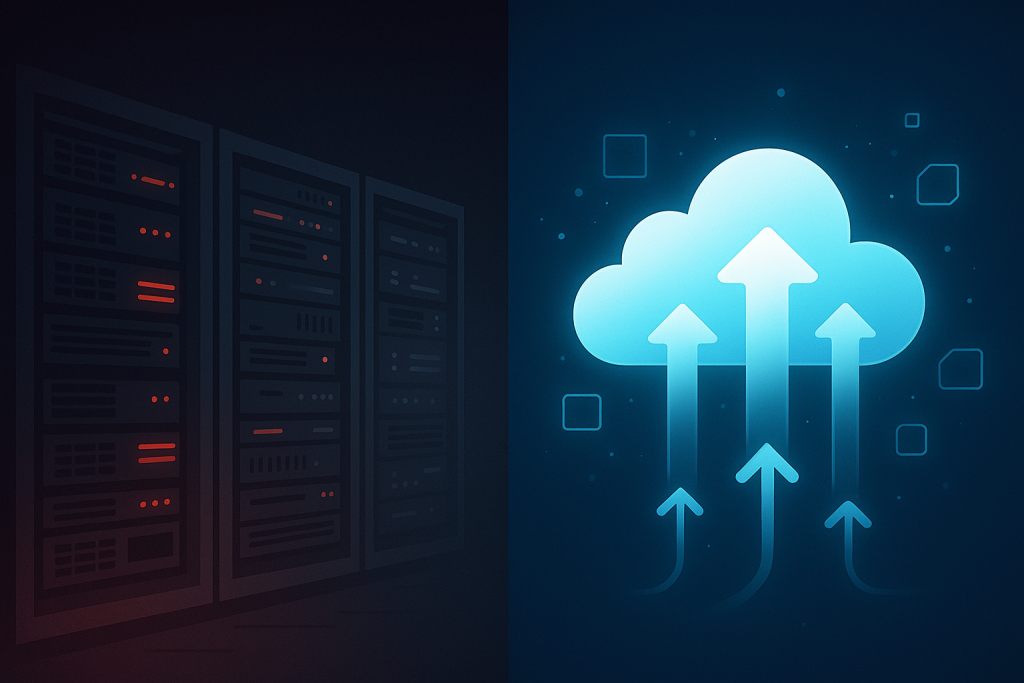
Traditional IT infrastructure, once the backbone of enterprise operations, now faces limitations that cloud computing effortlessly addresses:
Scalability constraints have become particularly acute. Physical servers require weeks or months to procure and deploy, whilst cloud resources scale in minutes. When demand spikes, traditional infrastructure often buckles under pressure or requires expensive over-provisioning to handle peak loads.
Cost inefficiencies plague on-premises deployments. Capital expenditure on hardware, ongoing maintenance costs, and energy consumption create substantial overheads. Cloud computing’s pay-as-you-use model transforms these fixed costs into variable expenses that scale with actual usage.
Innovation bottlenecks emerge when IT teams spend 70-80% of their time maintaining existing systems rather than driving business value. Cloud services eliminate much of this maintenance burden, freeing teams to focus on strategic initiatives.
The 2025 Cloud Landscape

The cloud ecosystem has matured significantly. Multi-cloud strategies have become standard practice, with 89% of enterprises adopting approaches that span multiple providers to avoid vendor lock-in and maximise capabilities.
Artificial intelligence integration now permeates cloud services, with AI-driven infrastructure management becoming commonplace. These systems autonomously detect anomalies, predict resource requirements, and optimise performance, capabilities that traditional IT infrastructure simply cannot match.
Edge computing has emerged as a critical component, processing data closer to its source to support applications requiring ultra-low latency. This distributed approach extends cloud capabilities to locations where centralised processing isn’t viable.
Common Transition Challenges and Solutions
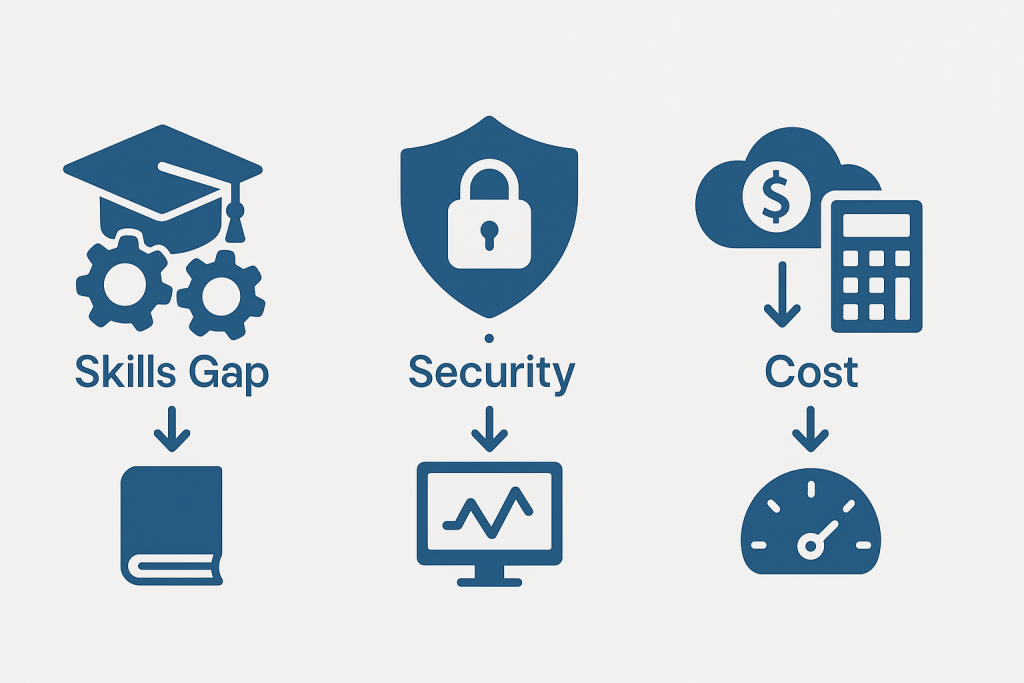
Challenge 1: Skills Gap Management
The Problem: Cloud technologies require expertise in areas many IT professionals haven’t encountered: containerisation, microservices architecture, Infrastructure as Code, and cloud-native security models.
The Solution: Adopt a structured learning approach rather than attempting to master everything simultaneously. Focus on foundational concepts first:
- Cloud fundamentals: Understanding service models (IaaS, PaaS, SaaS) and deployment models (public, private, hybrid)
- Core platform knowledge: Gaining hands-on experience with major providers (AWS Free Tier, Microsoft Azure Free Account, Google Cloud Free Trial)
- Automation skills: Learning Infrastructure as Code tools like Terraform or AWS CloudFormation
- DevOps integration: Understanding CI/CD pipelines and how development and operations converge in cloud environments
Challenge 2: Security Complexity
The Problem: Cloud security differs fundamentally from traditional perimeter-based approaches. Misconfigurations during migration have become a leading cause of data breaches.
The Solution: Embrace the shared responsibility model and implement cloud-native security practices:
- Identity and Access Management (IAM): Master fine-grained permissions and zero-trust architectures
- Encryption everywhere: Understand data protection both in transit and at rest
- Continuous monitoring: Implement automated security scanning and compliance checking
- Configuration management: Use infrastructure templates to ensure consistent, secure deployments
Challenge 3: Cost Management Complexity
The Problem: Cloud pricing models can include unexpected charges for data egress, storage tiers, and service interactions that weren’t apparent in traditional IT budgeting.
The Solution: Develop cloud financial management (FinOps) expertise:
- Resource tagging: Implement comprehensive labelling for cost allocation and tracking
- Automated cost controls: Set up billing alerts and automated shutdown of non-production resources
- Right-sizing strategies: Continuously optimise instance types and storage classes based on usage patterns
- Reserved capacity planning: Balance commitment discounts with flexibility requirements
The Strategic Transition Framework
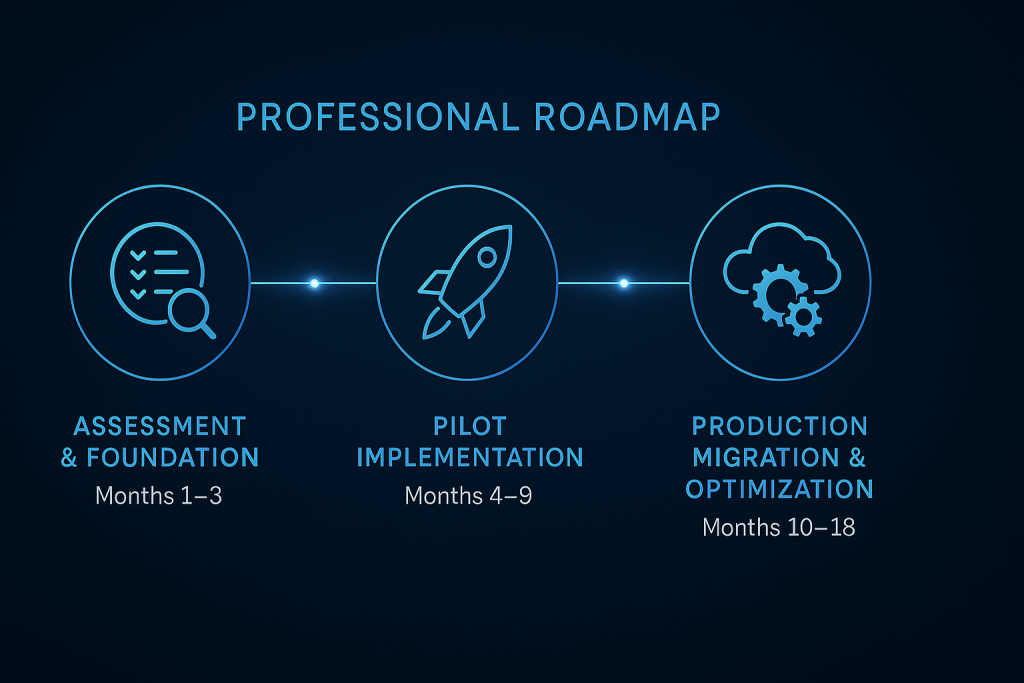
Phase 1: Assessment and Foundation Building (Months 1-3)
Begin with a comprehensive audit of existing infrastructure and applications. This assessment should identify:
- Application dependencies: Map interconnections between systems to understand migration complexity
- Performance requirements: Document current service levels to ensure cloud implementations meet or exceed expectations
- Compliance obligations: Understand regulatory requirements that will influence cloud architecture decisions
- Skills inventory: Assess current team capabilities and identify training priorities
Recommended Actions:
- Create proof-of-concept environments in major cloud platforms
- Begin foundational training through vendor-specific courses (AWS Training, Microsoft Learn, Google Cloud Training)
- Establish relationships with cloud solution architects or consultants
- Document current infrastructure to identify migration candidates
Phase 2: Pilot Implementation (Months 4-9)
Select non-critical applications for initial cloud deployment. This approach minimises risk whilst providing valuable learning experiences.
Migration Strategies to Consider:
Rehosting (Lift-and-Shift): The simplest approach, moving applications to cloud infrastructure with minimal changes. Whilst this doesn’t immediately leverage cloud-native capabilities, it provides quick wins and learning opportunities.
Replatforming: Involves minor optimisations to take advantage of cloud capabilities without full architectural changes. This might include switching to managed databases or implementing auto-scaling.
Refactoring: Complete application redesign to leverage cloud-native features like microservices, serverless computing, or managed services. This approach maximises cloud benefits but requires significant development effort.
Recommended Focus Areas:
- Development and testing environments (lower risk, immediate cost savings)
- Web-facing applications (benefit from cloud scalability and global reach)
- Data analytics workloads (leverage cloud’s computational resources)
- Backup and disaster recovery (often the first successful cloud use case)
Phase 3: Production Migration and Optimisation (Months 10-18)
Scale successful pilot approaches to production workloads whilst implementing advanced cloud capabilities.
Advanced Strategies:
- Multi-cloud deployment: Distribute workloads across providers to optimise performance, cost, and risk
- Containerisation: Implement Docker and Kubernetes for application portability and scalability
- Serverless adoption: Utilise Functions-as-a-Service for event-driven workloads (AWS Lambda, Azure Functions, Google Cloud Functions)
- Edge computing integration: Deploy processing closer to users for latency-sensitive applications
Essential Skills for Cloud Success
Technical Competencies
Programming and Scripting: Python, PowerShell, or Bash scripting becomes essential for automation. Infrastructure as Code requires understanding of declarative languages like YAML or JSON.
Networking Fundamentals: Cloud networking differs significantly from traditional approaches. Understanding virtual private clouds, software-defined networking, and load balancing concepts is crucial. (AWS VPC Guide, Azure Virtual Network)
Database Technologies: Cloud databases offer numerous options from traditional relational databases to NoSQL, graph databases, and data warehouses. Each serves specific use cases that traditional IT may not have encountered.
Monitoring and Observability: Cloud environments generate vast amounts of telemetry data. Skills in log analysis, metrics interpretation, and distributed tracing become essential for maintaining system health. (AWS CloudWatch, Azure Monitor, Google Cloud Monitoring)
Certification Pathway
Foundation Level:
- AWS Certified Cloud Practitioner
- Microsoft Azure Fundamentals (AZ-900) – Building on our previous AZ-900 deep dive
- Google Cloud Digital Leader
Associate Level:
- AWS Certified Solutions Architect Associate
- Microsoft Azure Administrator (AZ-104)
- Google Cloud Associate Cloud Engineer
Specialisation Areas:
- Security: AWS Certified Security – Specialty, Azure Security Engineer
- Data: Azure Data Engineer
- DevOps: AWS Certified DevOps Engineer, Azure DevOps Engineer
Soft Skills Development
Communication: Cloud projects often involve multiple stakeholders with varying technical backgrounds. The ability to explain complex concepts clearly becomes invaluable.
Project Management: Cloud migrations are complex undertakings requiring coordination across teams, vendors, and business units.
Continuous Learning: Cloud platforms evolve rapidly. Successful professionals develop habits of staying current with new services and best practices.
Career Pathways in Cloud Computing
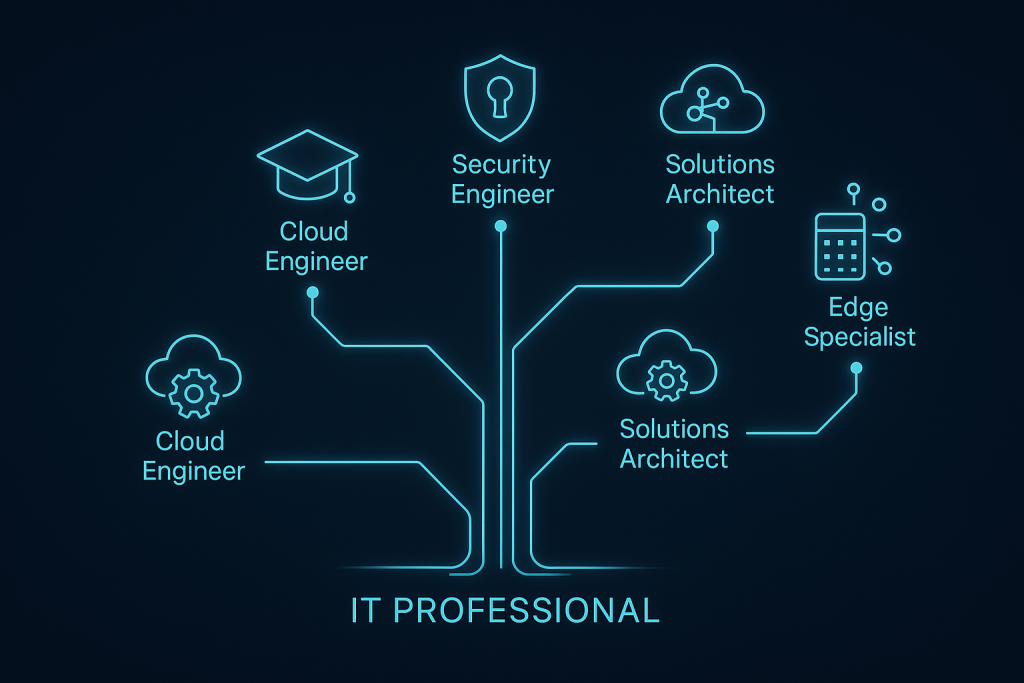
Infrastructure and Operations Track
Cloud Engineer: Designs and implements cloud infrastructure using Infrastructure as Code principles. Typical progression leads to Senior Cloud Engineer or Cloud Architect roles.
DevOps Engineer: Bridges development and operations, focusing on CI/CD pipelines, automation, and monitoring in cloud environments.
Site Reliability Engineer: Ensures service availability and performance through proactive monitoring, incident response, and capacity planning.
Specialisation Tracks
Cloud Security Engineer: Focuses on implementing security controls, compliance frameworks, and threat detection in cloud environments. This specialisation commands premium salaries due to high demand and complex requirements.
Data Engineer: Designs and maintains data pipelines, data lakes, and analytics platforms using cloud-native services. The explosion of data-driven business decisions makes this role increasingly critical.
Solutions Architect: Designs end-to-end cloud solutions that meet business requirements whilst optimising for performance, cost, and security. This role often serves as a bridge between technical teams and business stakeholders.
Emerging Opportunities
Platform Engineer: A relatively new role focused on building internal developer platforms that abstract infrastructure complexity. This position combines infrastructure expertise with developer experience design.
FinOps Practitioner: Specialises in cloud cost optimisation and financial management. As cloud spending grows, organisations increasingly value professionals who can optimise costs whilst maintaining performance.
Edge Computing Specialist: Designs and implements distributed computing architectures that process data closer to users or devices. This emerging field will grow significantly as IoT and real-time applications proliferate.
Avoiding Common Pitfalls
Technical Mistakes
Over-engineering initial implementations: Beginning cloud adopters often try to implement every advanced feature immediately. Start simple and add complexity gradually as expertise develops.
Ignoring cost implications: Cloud resources can scale infinitely, but so can costs. Implement cost controls and monitoring from the beginning rather than treating them as afterthoughts.
Neglecting security from the start: Cloud security models differ fundamentally from traditional approaches. Implement proper access controls, encryption, and monitoring from initial deployment.
Strategic Errors
Lack of clear business objectives: Successful cloud transitions align with specific business outcomes rather than pursuing technology for its own sake. Define success metrics before beginning migration efforts.
Inadequate change management: The shift to cloud affects not just technology but also processes, roles, and organisational culture. Invest in training and communication to ensure team buy-in.
Vendor lock-in through poor design: Whilst cloud providers offer compelling proprietary services, design applications with portability in mind to maintain negotiating leverage and flexibility.
Looking Ahead: Cloud Computing in 2025 and Beyond
The cloud landscape continues evolving rapidly. Several trends will shape the field:
AI-driven operations will become standard, with machine learning algorithms automatically optimising performance, predicting failures, and managing capacity. Cloud professionals will need to understand these systems and interpret their recommendations.
Quantum-safe security measures will become necessary as quantum computing advances. Understanding post-quantum cryptography and implementing quantum-resistant systems will become essential skills.
Sustainability considerations will influence architectural decisions as organisations seek to reduce their carbon footprint. Green cloud practices will become competitive differentiators.
Edge-to-cloud integration will create new architectural patterns as processing moves closer to data sources whilst maintaining cloud connectivity for management and analytics.
Your Next Steps
The transition from traditional IT to cloud computing represents one of the most significant career opportunities in decades. The demand for skilled professionals continues to outpace supply, creating excellent prospects for those willing to invest in developing cloud expertise.
Immediate actions to take:
- Assess your current position: Identify which traditional IT skills translate to cloud environments and which areas require development
- Create a learning plan: Choose one major cloud platform for deep focus whilst maintaining awareness of others
- Gain practical experience: Set up personal cloud accounts and experiment with services—hands-on experience proves invaluable (AWS Free Tier, Azure Free Account)
- Join the community: Engage with cloud professional groups (AWS User Groups, Azure Community), attend conferences (AWS re:Invent, Microsoft Ignite), and participate in online forums (r/aws, r/AZURE)
- Plan your certification journey: Start with foundational certifications and progress systematically toward specialisation
Helpful Resources:
- AWS Pricing Calculator | Azure Pricing Calculator | Google Cloud Pricing Calculator
- AWS Well-Architected Framework for best practices
- Microsoft Cloud Adoption Framework for strategic guidance
The cloud revolution isn’t slowing down, it’s accelerating. Traditional IT professionals who embrace this transition position themselves at the forefront of technological innovation whilst securing their relevance in an evolving landscape. The question isn’t whether to make this transition, but how quickly and effectively it can be accomplished.
The future belongs to those who bridge the gap between traditional IT foundations and cloud-native innovation. Start your journey today, and tomorrow’s opportunities will be within reach.