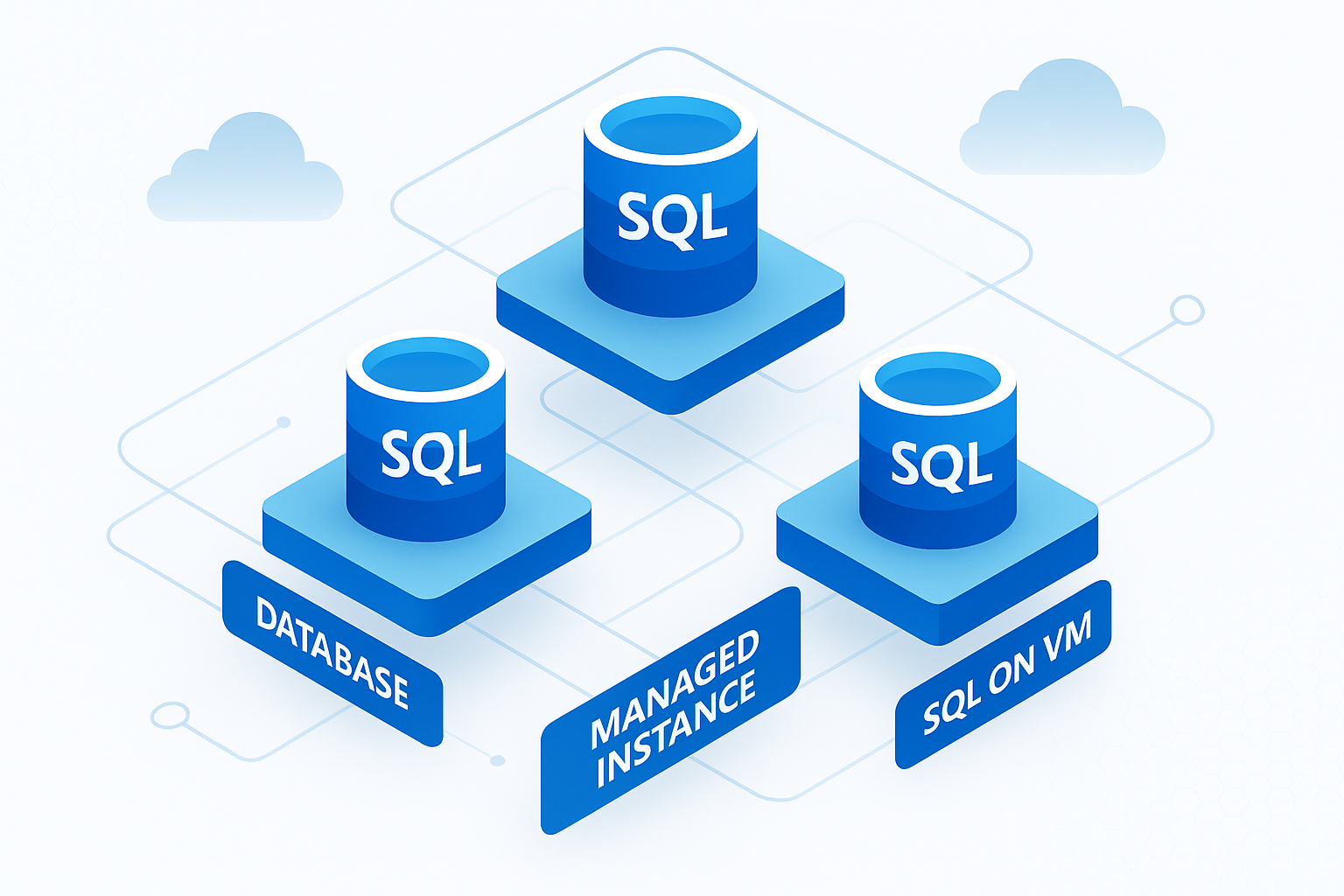
Azure SQL has evolved far beyond a simple database-as-a-service offering. Today’s Azure SQL family represents a sophisticated collection of deployment models, each architected for distinct workload patterns and organisational requirements. For cloud architects tasked with designing scalable, cost-effective data solutions, understanding these architectural differences isn’t just helpful, it’s essential.
The challenge lies not in the abundance of options, but in matching the right architectural pattern to specific business needs. A poorly chosen deployment model can result in unnecessary complexity, inflated costs, or performance bottlenecks that become apparent only after implementation.
Understanding the Azure SQL Architectural Landscape
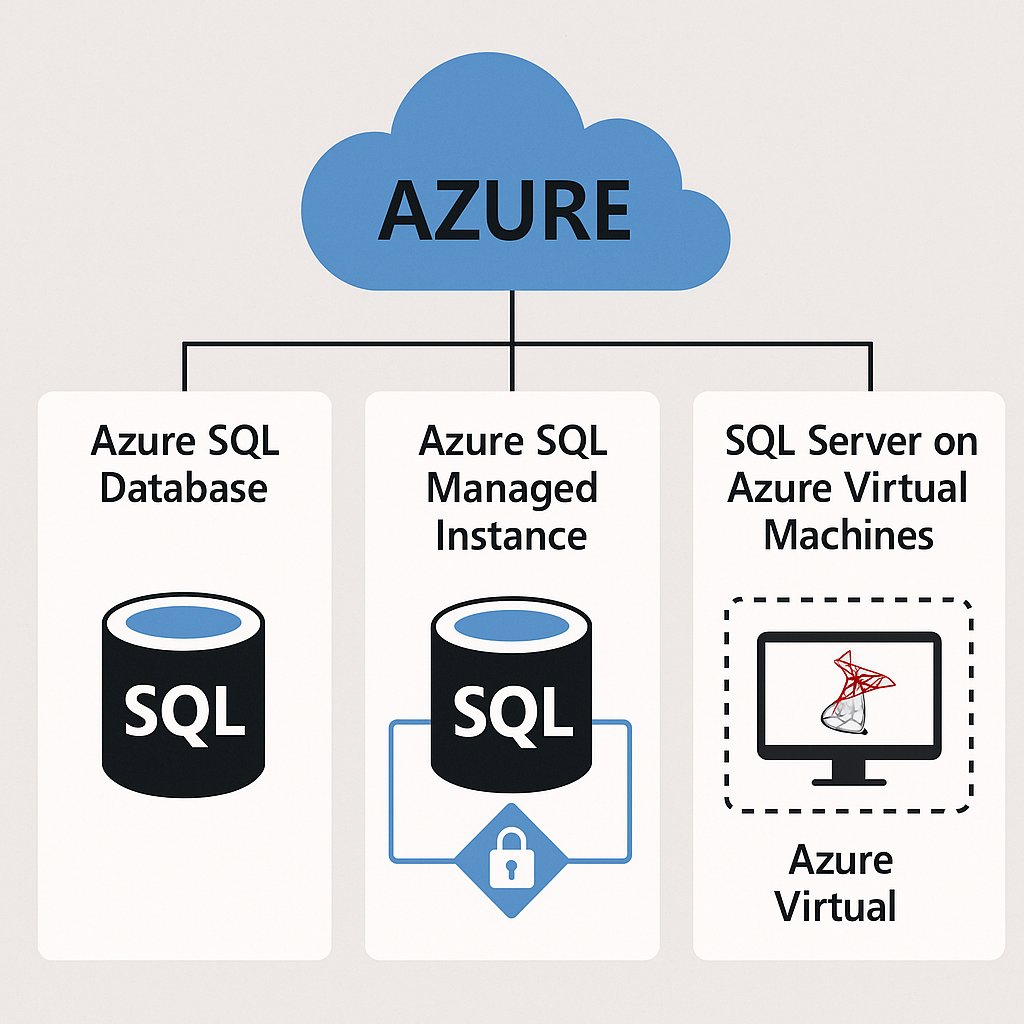
Azure’s SQL offerings span a comprehensive spectrum from fully managed Platform-as-a-Service (PaaS) solutions to complete Infrastructure-as-a-Service (IaaS) control. This architectural diversity serves a purpose: different workloads demand different levels of abstraction, control, and compatibility.
Azure SQL Database provides database-scoped PaaS deployments, available as single databases or elastic pools. The revolutionary Hyperscale tier pushes boundaries further, supporting databases up to 128 TB with near-instantaneous backups regardless of size.
Azure SQL Managed Instance delivers instance-scoped PaaS with near-complete SQL Server compatibility. Unlike SQL Database’s logical server concept, Managed Instance provides a genuine SQL Server instance deployed within customer virtual networks, offering private IP addresses and native VNet integration.
SQL Server on Azure Virtual Machines offers full IaaS control for workloads requiring operating system access, specific SQL Server versions, or configurations unavailable in PaaS offerings.
Additionally, Azure SQL Edge targets IoT scenarios with a containerised footprint under 500 MB, whilst Microsoft Fabric’s SQL Database integration provides automatic mirroring to OneLake for analytics workloads.
The Compute-Storage Separation Revolution
One of the most significant architectural innovations in modern Azure SQL is the separation between compute and storage resources. This fundamental shift changes how databases scale, perform, and cost.
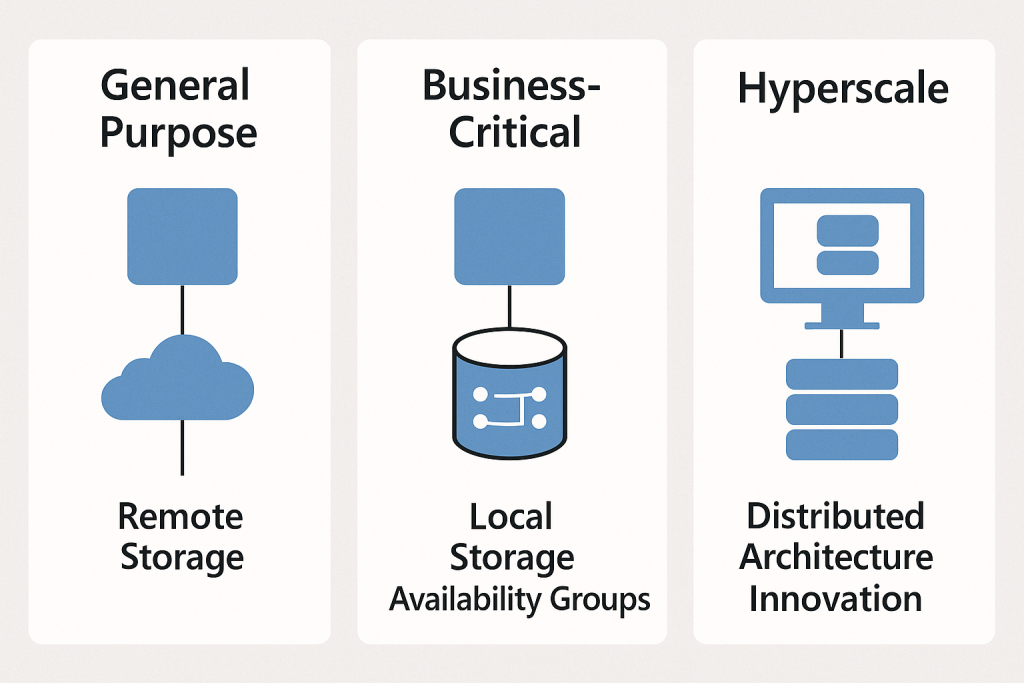
General Purpose: Remote Storage Architecture
The General Purpose tier employs a compute-storage separation model where database engine processes run independently from data stored in Azure Blob Storage. This architecture enables independent scaling of compute and storage resources, though it introduces 5-10ms latency due to remote storage access.
Business Critical: Local Storage with Availability Groups
Business Critical tier maintains traditional local SSD storage combined with Always On availability groups. This delivers 1-2ms latency and includes built-in readable secondaries, though at approximately 2.7 times the cost of General Purpose tier.
Hyperscale: Distributed Architecture Innovation
Hyperscale tier represents the most sophisticated architecture, featuring independent compute nodes, page servers, log service, and Azure Storage layers that scale independently. This distributed model supports databases up to 128 TB whilst maintaining consistent performance characteristics regardless of database size.
Serverless Computing: Redefining Cost-Performance Economics
Serverless compute architecture introduces auto-scaling between configurable minimum and maximum vCore ranges with per-second billing based on actual usage. The platform automatically pauses databases after configurable idle periods, charging only for storage during paused states.
This architectural pattern proves transformational for specific scenarios:
- Development environments with sporadic usage
- Reporting databases active only during scheduled operations
- Applications with significant idle periods
- New applications with uncertain sizing requirements
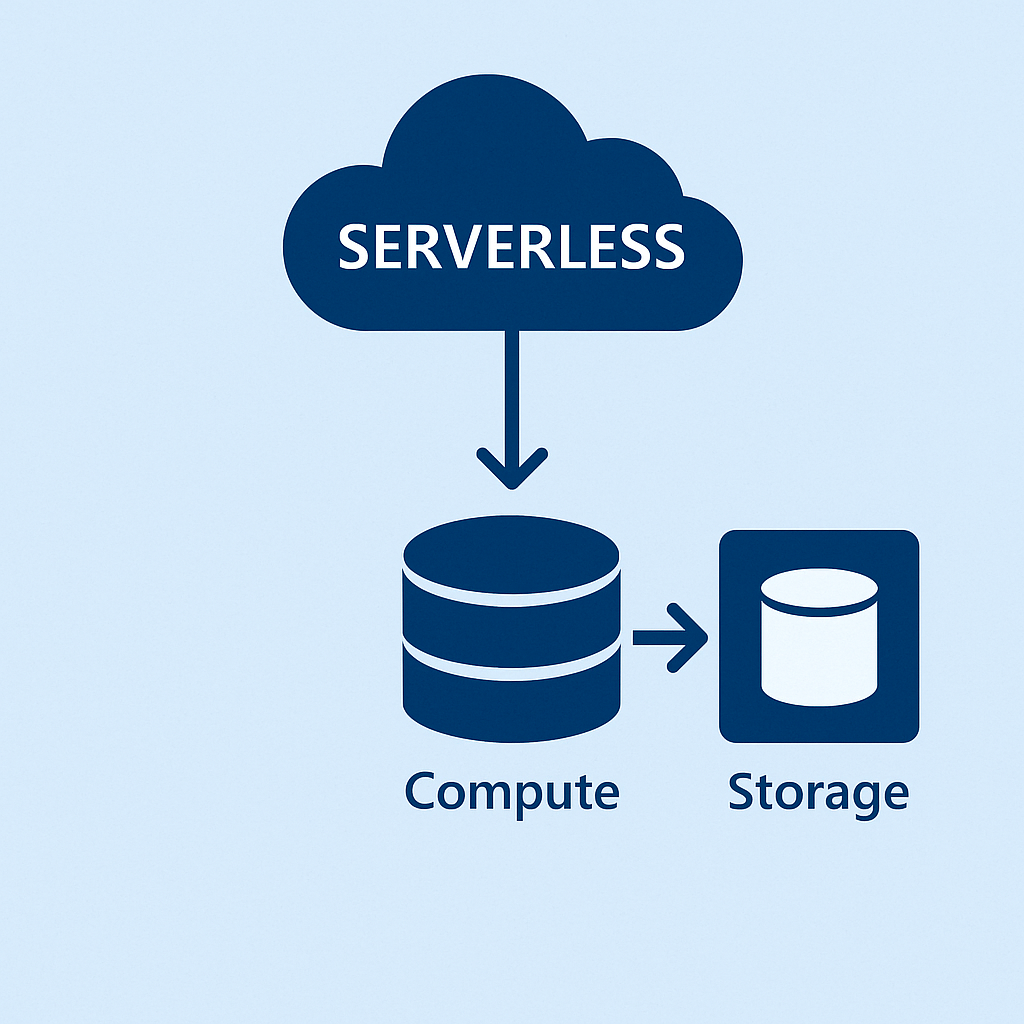
Organisations report 50-70% cost reductions for appropriate workloads, though the approximately one-minute resume latency requires applications to implement proper retry logic.
When to choose serverless: Databases that remain active less than 40-50% of the time typically benefit from serverless compute. Always-on production workloads generally achieve better economics with provisioned compute.
Multi-Tenant SaaS: Architectural Patterns for Scale
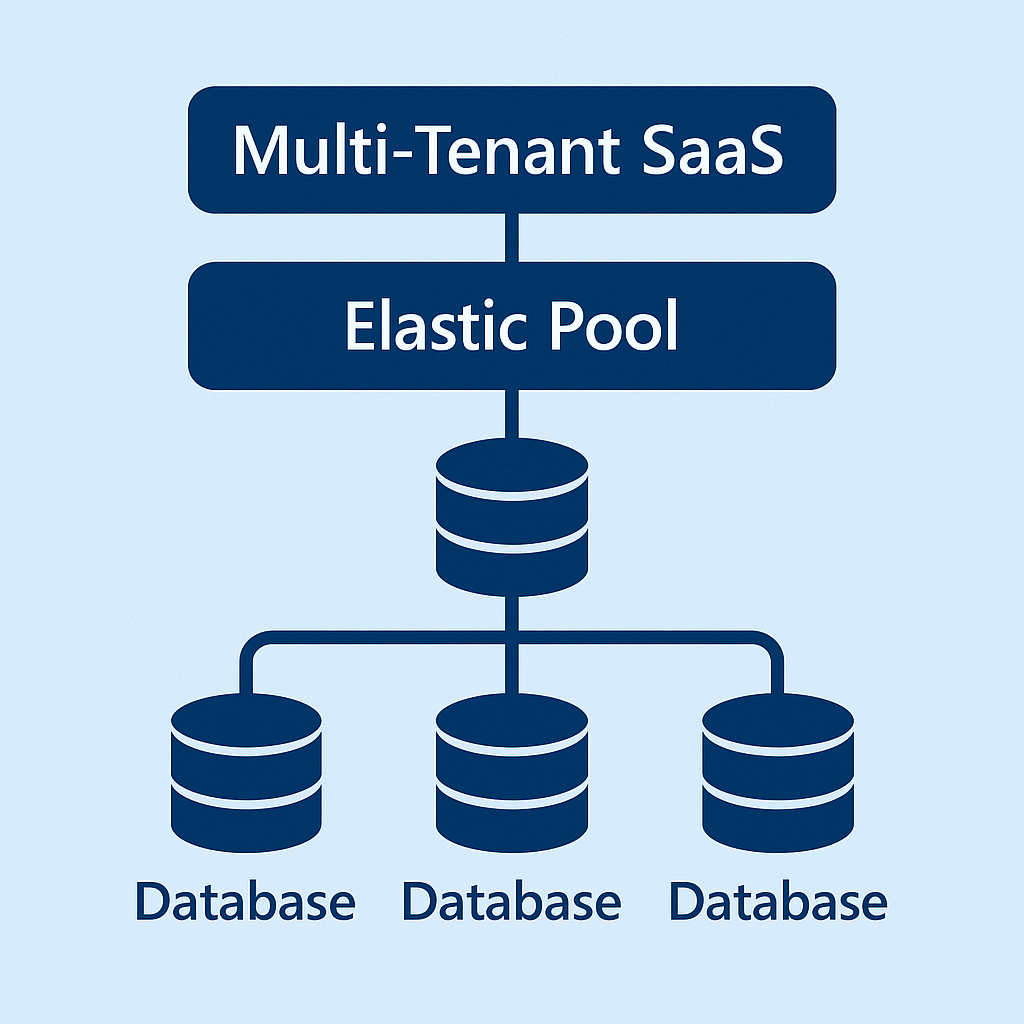
Multi-tenant Software-as-a-Service applications demand careful consideration of isolation, performance, and cost efficiency. The database-per-tenant pattern with elastic pools represents the optimal architecture for most scenarios.
Elastic Pools: Shared Resources, Individual Isolation
Elastic pools dynamically allocate resources based on real-time demand whilst maintaining complete tenant isolation through separate databases. This architecture protects against noisy neighbour problems whilst delivering 40-60% cost savings compared to individual databases.
The mathematics of elastic pools becomes compelling when aggregate resource usage stays substantially below the sum of individual database peaks, typically achievable with 15 or more databases exhibiting complementary usage patterns.
Alternative Patterns
Sharded multi-tenant databases, where multiple tenants share individual databases with Row-Level Security enforcement, offer the lowest per-tenant cost for millions of small tenants but sacrifice isolation benefits.
Hybrid architectures combining dedicated databases for premium tenants with shared databases for basic tiers provide flexibility to optimise costs across different service levels.
Migration Strategies: Balancing Speed and Modernisation
Migration approach selection fundamentally impacts both timeline and long-term architectural benefits.
Lift-and-Shift: Speed Over Optimisation
Azure SQL Managed Instance serves as the primary target for lift-and-shift migrations, offering near 100% SQL Server compatibility including SQL Server Agent jobs, cross-database queries, linked servers, and CLR assemblies. This approach enables migration in weeks rather than months but may not fully leverage cloud-native capabilities.
Refactor: Balanced Modernisation
Re-platforming to Azure SQL Database involves moderate changes to leverage PaaS benefits: consolidating databases into schemas, removing cross-database dependencies, and implementing cloud-aware patterns like retry logic. This balanced approach delivers improved cost optimisation whilst requiring manageable testing overhead.
Re-architect: Maximum Cloud-Native Benefits
Complete re-architecture pursues significant changes such as microservices patterns, serverless implementations, or globally distributed architectures. Whilst time-intensive, this approach delivers optimal long-term characteristics and eliminates accumulated technical debt.
High Availability: Architectural Resilience Patterns
Azure SQL implements multiple availability architectures depending on service tier and configuration choices.
Zone Redundancy
Zone redundancy distributes resources across 2-3 availability zones within regions, achieving 99.995% SLA (26.28 minutes annual downtime) compared to 99.99% for locally redundant deployments. This architecture leverages zone-redundant storage with stateless compute nodes managed by Service Fabric.
Geo-Replication
Geo-replication enables disaster recovery across Azure regions through continuous asynchronous replication. Failover groups provide stable read-write and read-only listener endpoints that automatically redirect after failover, eliminating application connection string changes.
The architecture guarantees 5-second Recovery Point Objective (RPO) and 30-second Recovery Time Objective (RTO) under SLA conditions.
Security Architecture: Defence in Depth
Azure SQL implements comprehensive security through multiple architectural layers.
Network Isolation
Network security spans from VNet service endpoints extending VNet identity to the service, through to Private Link providing dedicated private IP addresses within customer VNets. SQL Managed Instance’s native VNet integration provides the strongest network isolation with private endpoints by default.
Encryption Strategies
Transparent Data Encryption (TDE) encrypts data at rest using AES-256 encryption, enabled by default for all new databases. Customer-managed keys via Azure Key Vault provide bring-your-own-key capabilities for compliance scenarios.
Always Encrypted extends protection to data in use, maintaining encryption during query processing with keys stored separately from data. This requires application code changes but provides the strongest protection for sensitive information.
Integration Architecture: Building Comprehensive Solutions
Azure SQL integrates seamlessly with the broader Azure ecosystem through established architectural patterns.
Data Platform Integration
Azure Data Factory orchestrates data movement through Azure Integration Runtime for public endpoints or Self-Hosted Integration Runtime for private connectivity. Power BI connects via DirectQuery for real-time analytics, whilst Azure Synapse Analytics enables analytical workloads through optimised bulk copy operations.
Application Integration
Azure Functions provides serverless API layers and event-driven processing, connecting via VNet Integration when using Private Endpoints. Managed identity authentication eliminates credential storage whilst ensuring secure service-to-service communication.
Cost Optimisation: Architectural Economics
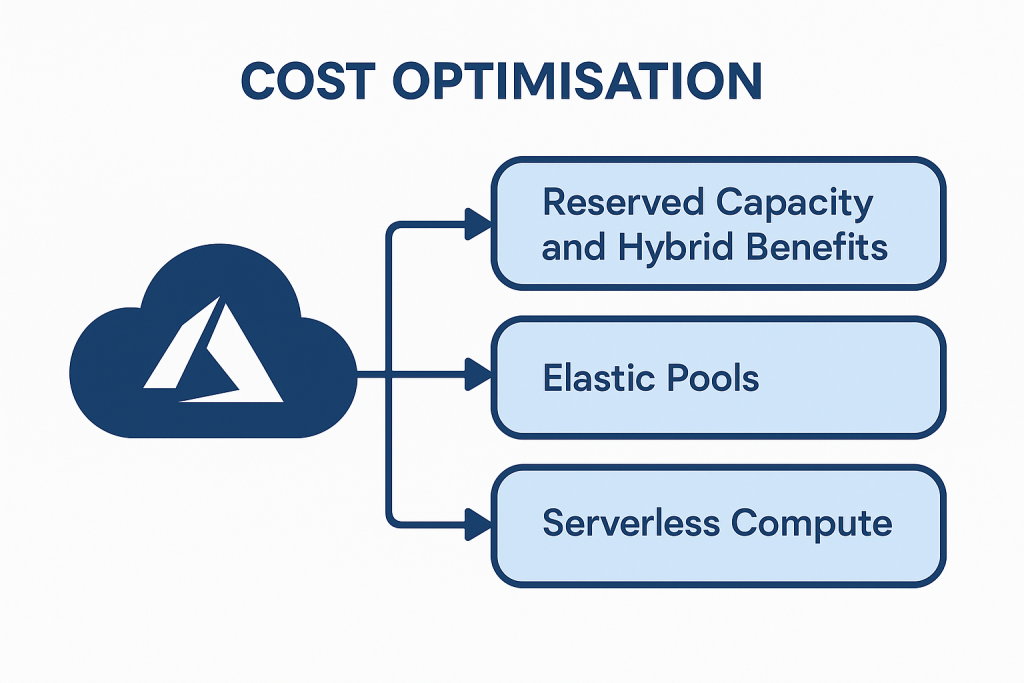
Effective cost optimisation requires architectural planning from inception rather than reactive cost management.
Reserved Capacity and Hybrid Benefits
Reserved capacity delivers 20-25% savings for one-year terms and 30-33% for three-year commitments. Combined with Azure Hybrid Benefit for organisations with existing SQL Server licenses, total savings can reach 80% compared to pay-as-you-go pricing.
Right-Sizing Strategies
Elastic pools achieve optimal cost efficiency when aggregate peak usage remains substantially lower than individual database peak sums. Serverless compute provides significant savings for databases active less than half the time, whilst Hyperscale addresses scenarios requiring rapid scaling independent of data size.
Making Architectural Decisions
Successful Azure SQL architecture requires understanding fundamental trade-offs between control and management overhead, cost and features, isolation and efficiency.
Choose Azure SQL Database for cloud-native applications where database-scoped features suffice and minimal management overhead is prioritised. Serverless compute particularly suits development environments and applications with unpredictable usage patterns.
Select Azure SQL Managed Instance for lift-and-shift migrations requiring minimal application changes. Near-complete SQL Server compatibility and native VNet integration address enterprise networking requirements and complex database ecosystems.
Consider SQL Server on VMs only when OS-level access, specific SQL Server versions, or custom configurations unavailable in PaaS offerings are mandatory requirements.
Looking Forward: Emerging Architectural Trends
SQL Server 2025, announced in November 2024, brings AI-ready capabilities with native vector support and enhanced Azure Arc capabilities. Microsoft Fabric integration represents a significant shift, providing transactional databases automatically mirrored to OneLake without traditional ETL pipelines.
These developments suggest continued architectural evolution towards unified transactional and analytical workloads, with improved hybrid management capabilities and AI-native database features.
Conclusion
The Azure SQL portfolio provides architecturally diverse options for virtually any database workload. Success depends on understanding fundamental architectural characteristics, making informed deployment decisions based on workload requirements, and implementing cloud-native patterns from the outset.
Start with Azure SQL Database for new cloud-native applications, escalate to Managed Instance for lift-and-shift scenarios requiring SQL Server compatibility, and reserve VMs for cases where PaaS options cannot meet specific requirements. Implement comprehensive resilience through zone redundancy, failover groups, and tested disaster recovery procedures whilst monitoring continuously for optimization opportunities.
The architectural decisions made today shape long-term success in the Azure data platform ecosystem. Choose wisely, plan comprehensively, and remain adaptable as the platform continues evolving.
Useful Links
- Azure SQL Database documentation – Official Microsoft documentation covering all deployment options
- Azure SQL Database Hyperscale architecture – Detailed technical architecture documentation
- Azure Database Migration Service – Migration planning and execution guidance
- Azure SQL pricing calculator – Cost estimation for different deployment models
- Azure Architecture Center – Data guidelines – Architectural decision frameworks
- Azure SQL security best practices – Comprehensive security implementation guidance
- Azure Well-Architected Framework for Azure SQL – Best practices for production deployments
- Elastic pools overview – Multi-tenant architecture patterns and implementation