If you’ve spent any time on LinkedIn lately, you’ve probably seen it: long lists of skills in cloud job ads that would make even the most experienced engineer sweat. AWS, Azure, GCP, Kubernetes, Terraform, Python, security, FinOps, AI, and ideally, all mastered by one person.
It’s the myth of the full-stack cloud professional, someone who can do it all.
The truth? No one can.
And chasing that illusion is one of the fastest routes to career fatigue and shallow expertise in 2025.
The ‘Full-Stack’ Mirage
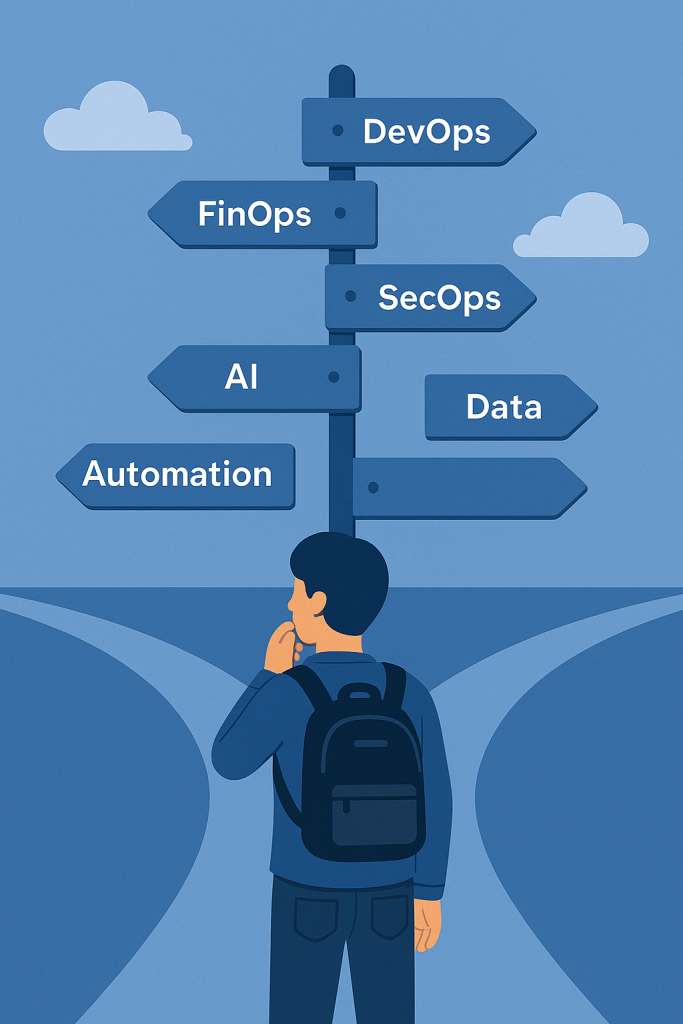
The idea of a “full-stack” professional once made sense in web development, where a person could handle both the front end and the back end. In cloud computing, the stack isn’t two layers deep, it’s a skyscraper.
Infrastructure, security, data pipelines, cost management, AI integration, automation, governance…
The stack has grown taller, wider, and more fragmented than ever before.
Yet, many cloud professionals still feel pressure to keep up with every new service launch, certification path, and trending acronym. The result is what I call breadth burnout, a sense of always learning but never mastering. The only thing “full-stack” about most of us in 2025 is our to-do list.
Why the ‘Full-Stack’ Mindset Fails
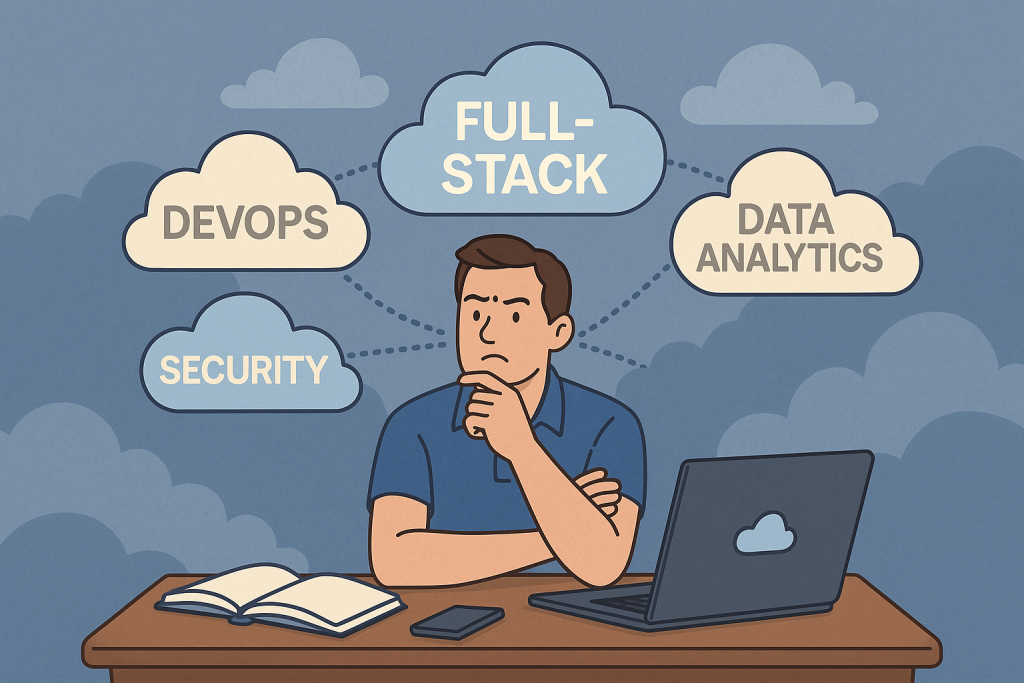
It’s not laziness or lack of ambition that makes the full-stack goal impossible. It’s the sheer scale of cloud evolution.
Every major provider adds hundreds of new features each year. Entire disciplines like FinOps or AI governance have appeared in just the past few.
Trying to stay current across it all leads to three predictable outcomes:
- Shallow learning. You skim tutorials but never apply them deeply enough to retain the knowledge.
- Constant comparison. You scroll through LinkedIn wondering how others seem to be doing more.
- Lost relevance. You end up spreading your learning so thin that you never build authority in any single area.
The irony is that the cloud industry itself doesn’t work that way. Teams are built around specialisation, not generalisation. The myth of the “cloud Swiss Army knife” looks great on paper but rarely works in production.
The Power of Focused Depth
The professionals who stand out in 2025 aren’t the ones with the longest list of buzzwords. They’re the ones who’ve chosen their lane and gone deep.
A FinOps architect who can translate usage data into boardroom-level insights is far more valuable than someone who’s half-learned five cloud platforms.
A cloud security specialist who understands compliance frameworks in detail will outpace a generalist every time.
Depth doesn’t mean narrowness, it means clarity.
It’s about choosing what matters most to your work and ignoring the noise around it.
Focused learning creates confidence. Shallow learning creates anxiety.
Finding Your Cloud Focus
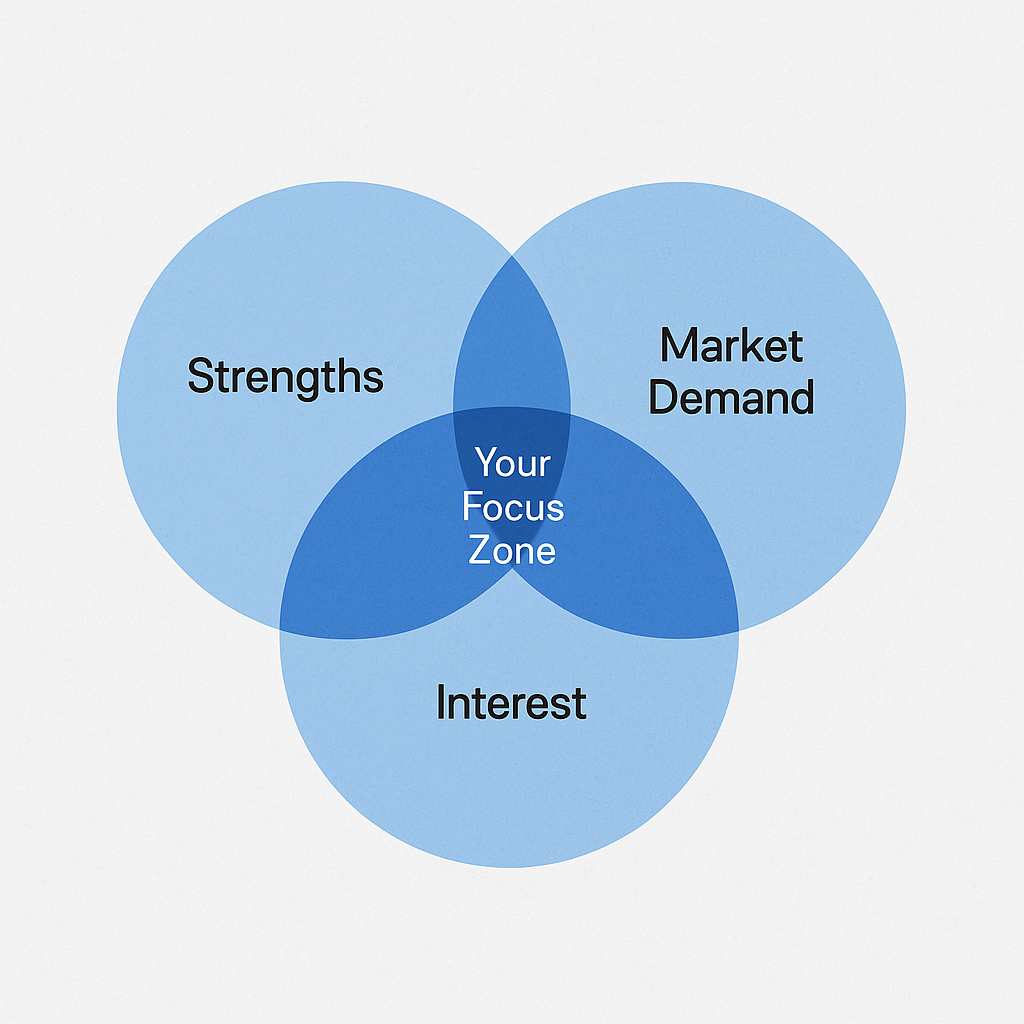
So how do you decide what to specialise in when everything feels important?
Try using this simple three-point focus map:
- Strengths: What do people already rely on you for? (architecture, automation, cost control, security, etc.)
- Market Demand: What roles are hiring strongly in your region or industry? (For example, in the UK right now: FinOps, cloud security, AI integration.)
- Interest: What can you talk about for hours without it feeling like work?
Where these three circles overlap is your focus zone, your best chance at building expertise that’s both valuable and sustainable. It’s not about closing doors. It’s about opening the right ones.
Building a Focused Learning Plan
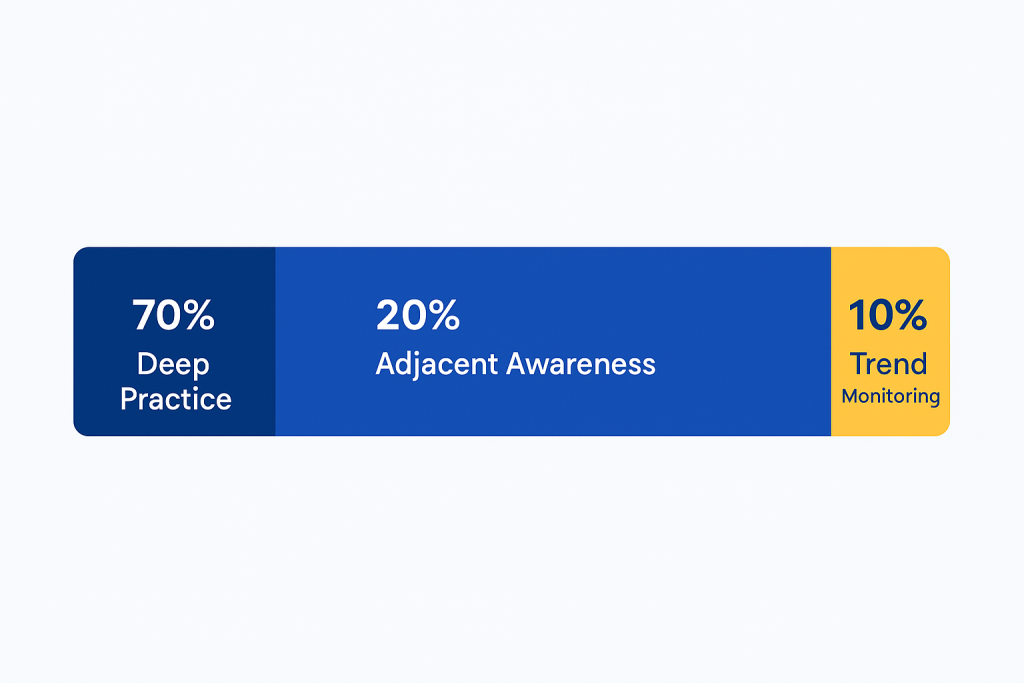
Once you’ve identified your lane, the next step is designing how you’ll learn.
Forget endless certification chasing and create a learning rhythm that balances focus with curiosity.
A useful model is the 70-20-10 framework, adapted for cloud careers:
- 70% Deep Practice: Real projects, labs, client work that build mastery in one domain.
- 20% Adjacent Awareness: Complementary topics that add perspective (for example, if you’re in FinOps, learn some DevOps automation).
- 10% Trend Monitoring: Keep a light pulse on emerging areas like AI or sustainability without diving in head-first.
This structure keeps you adaptable without losing direction.
Each quarter, set a learning sprint with one specific outcome you can apply at work or document on your blog.
Small, consistent progress beats scattered effort every time.
Redefining Success in 2025
The cloud world rewards those who connect technology to outcomes, not those who memorise service names.
You don’t need to master every platform; you need to master your role’s value within it.
The myth of full-stack cloud isn’t just unrealistic, it’s unproductive.
In 2025, depth is the new full-stack.
So choose your focus, protect your time, and invest in learning that compounds instead of learning that drains.
🔍 Key Takeaway
The smartest cloud professionals in 2025 aren’t learning everything. They’re learning exactly what matters and ignoring the rest.