Cloud computing evolves at a pace where yesterday’s expertise can quickly feel outdated. Professionals who thrive are those who learn continuously, applying knowledge in real-world contexts while building strong peer networks. One proven framework for structuring this learning journey is the 70-20-10 rule, adapted here for cloud professionals seeking sustainable growth.
Why the 70-20-10 Rule Matters for Cloud Skills
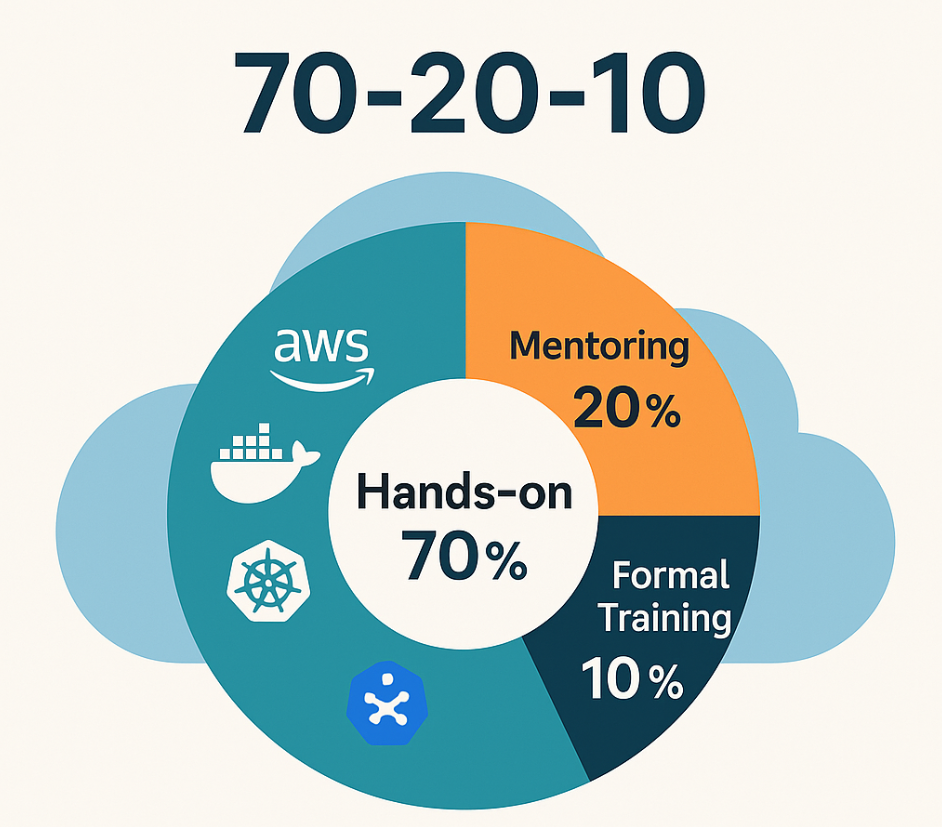
Originally developed by the Center for Creative Leadership in the 1980s, the 70-20-10 model suggests:
- 70% of learning comes from hands-on experience
- 20% from interactions with others
- 10% from formal training
While academic critics have questioned its empirical rigour, the model’s principle resonates strongly in technology domains. Cloud skills are best forged through experimentation, reinforced through collaboration, and formalised through structured training.
Organisations adopting this approach report measurable benefits. Studies show that blending experiential, social, and formal learning delivers up to 234% ROI on training investments and accelerates career advancement. For individual professionals, it provides a roadmap to balance practical mastery with recognised credentials.
The 70%: Hands-on Cloud Mastery
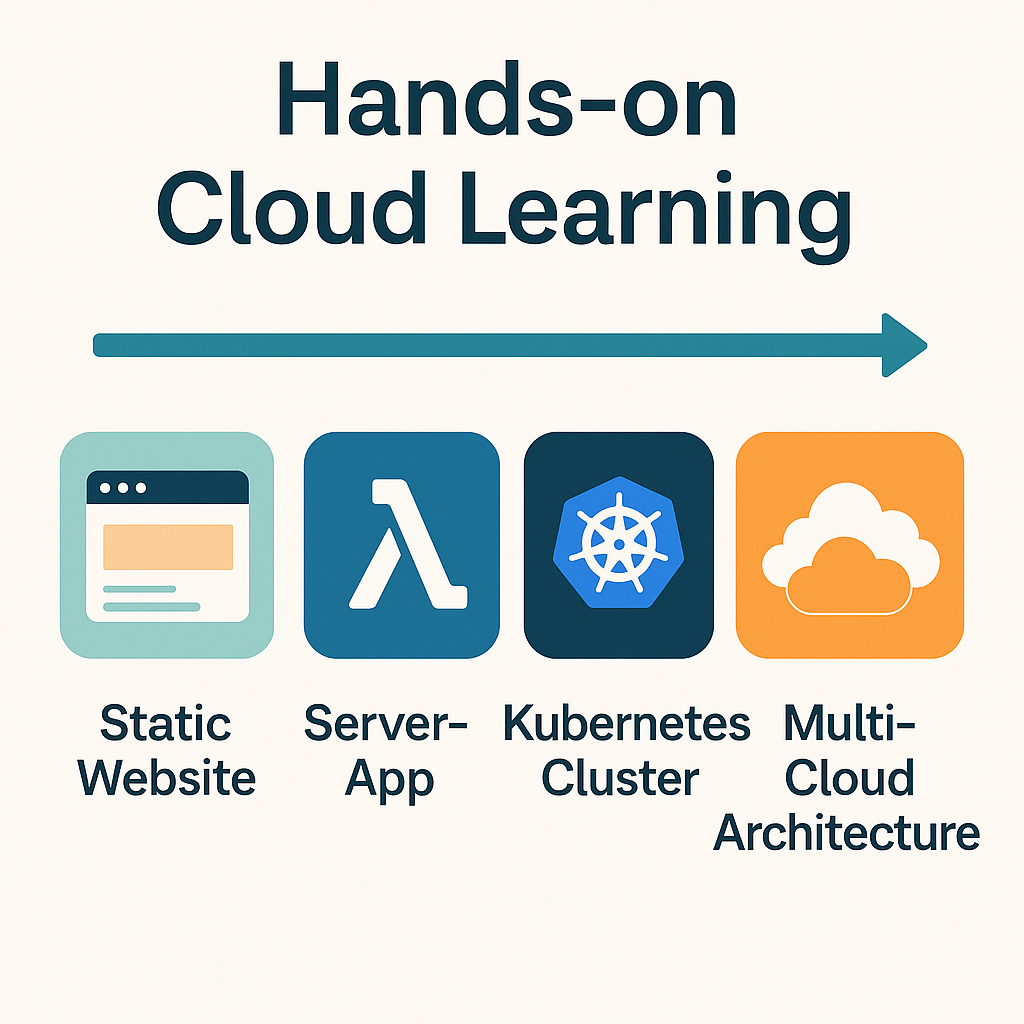
The bulk of cloud learning happens not in classrooms but in the console. Deploying, configuring, and troubleshooting real workloads develops the intuition and confidence that no textbook can provide.
- Beginners can start by hosting static websites with Amazon S3 and CloudFront, writing Infrastructure-as-Code templates in Terraform, or building simple CI/CD pipelines.
- Intermediate learners should progress to container orchestration with Kubernetes, serverless architectures using AWS Lambda or Azure Functions, and data engineering pipelines with Glue or Data Factory.
- Advanced practitioners gain most from multi-cloud designs, complex migration projects, and disaster recovery blueprints that require both technical skill and strategic thinking.
Major providers offer cost-effective sandboxes for this purpose: AWS Builder Labs, Azure Sandbox, and Google Cloud Qwiklabs all provide guided hands-on labs with minimal risk. The golden rule is to start simple, grow complexity gradually, and document everything for both personal reflection and professional portfolios.
The 20%: Learning Through Mentoring and Community
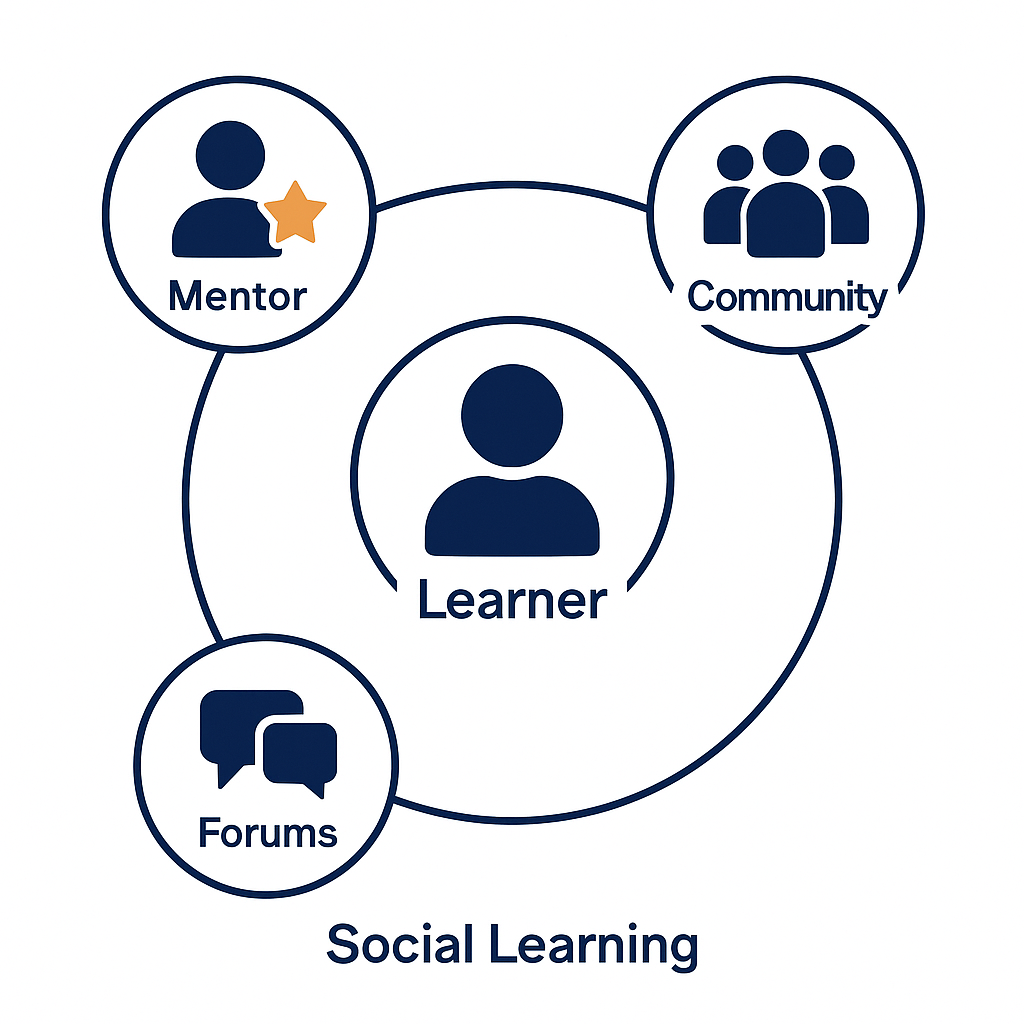
Cloud learning accelerates dramatically when shared with others. The 20% social learning component covers mentorship, networking, and community engagement.
- Mentorship platforms such as MentorCruise connect learners to industry veterans for tailored guidance. Structured programmes like AWS re/Start or Google Cloud Career Launchpad also embed mentoring into training.
- Communities: Both physical and virtual, are invaluable. Local user groups, global events like AWS re:Invent or Microsoft Ignite, and online spaces such as Reddit’s r/cloudcomputing or Stack Overflow Collectives create rich opportunities to exchange knowledge.
- Contribution matters as much as consumption. Sharing lessons learned, answering forum questions, or presenting at meetups transforms learners into recognised practitioners and strengthens professional networks.
The 10%: Formal Training and Certification
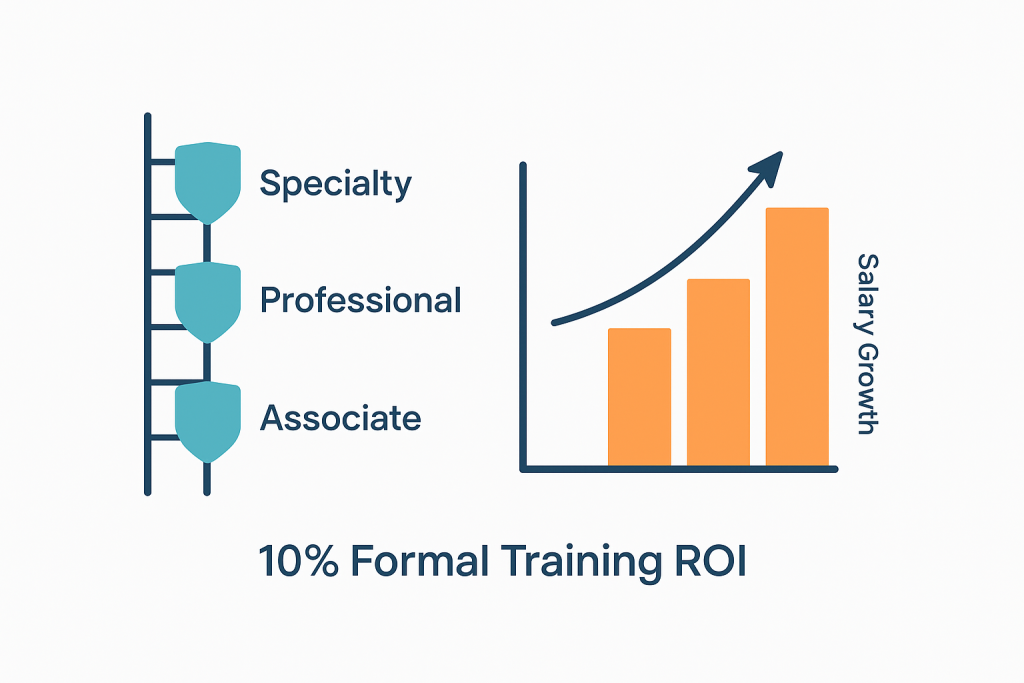
Although it represents the smallest share, formal training is the foundation that supports everything else. It provides structured coverage, recognised credentials, and confidence for both professionals and employers.
Cloud certifications continue to carry weight:
- AWS Certified Solutions Architect – Associate remains one of the most sought-after qualifications, with average salaries exceeding $130,000.
- Microsoft Azure and Google Cloud certifications are equally valuable depending on market and sector focus.
- Bootcamps and degree programmes offer intensive or broad learning pathways, often bundling industry-recognised certifications.
The key is not chasing certificates for their own sake but selecting training that aligns with specific career goals.
Implementing the 70-20-10 Rule in Cloud Learning
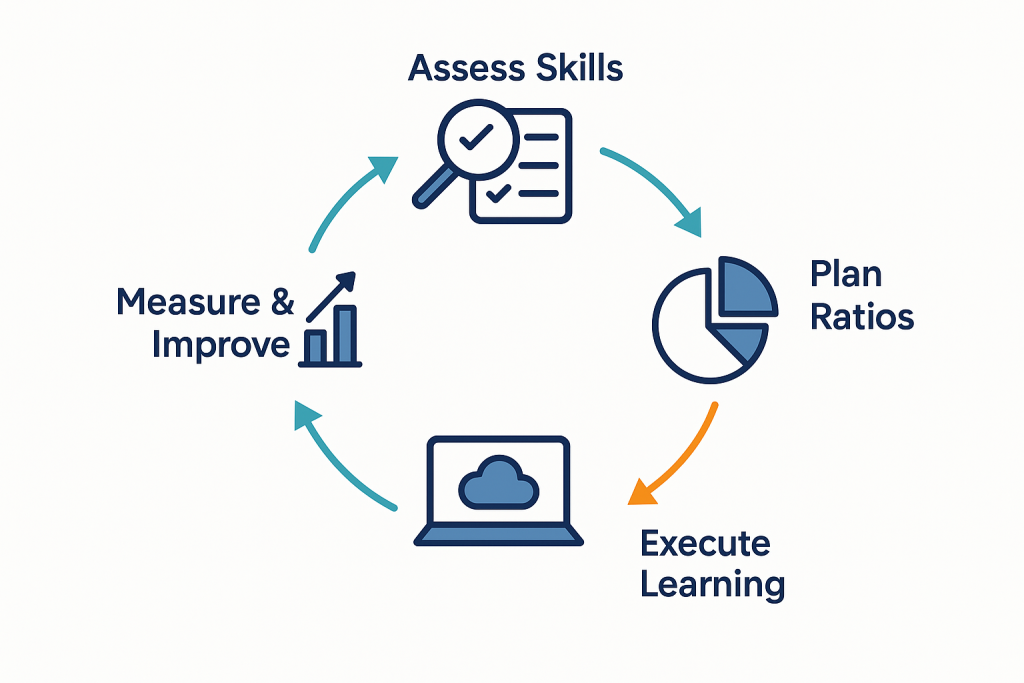
Applying this framework effectively requires planning:
- Assess skills – Identify current strengths and gaps against desired roles.
- Balance activities – Treat hands-on work, mentorship, and formal learning as interconnected, not separate.
- Adapt to career stage – Junior staff may benefit from a 60-30-10 mix with more mentoring, while senior professionals may shift towards 75-15-10 with a focus on leadership challenges.
- Measure progress – Track project completion rates, certification milestones, and improvements in deployment quality, cost optimisation, or delivery speed.
Common pitfalls include over-investing in classroom training, neglecting peer learning, or failing to provide safe environments for experimentation. Success comes from treating 70-20-10 as a flexible framework rather than a rigid formula.
Looking Ahead: Adapting for the Cloud Era
Remote-first work and rapid innovation cycles mean the 70-20-10 rule must adapt. Some organisations are experimenting with 65-25-10 models to emphasise collaboration, or 75-15-10 agile models aligned to sprint-based learning.
Artificial intelligence, VR labs, and learning analytics are also reshaping how experiential, social, and formal learning overlap. The principle remains constant: cloud expertise grows fastest when built through action, reinforced by peers, and validated with credentials.
Conclusion
The 70-20-10 framework gives cloud professionals a structured, balanced approach to continuous development. It emphasises:
- Hands-on experience as the driver of mastery
- Mentorship and community as accelerators
- Formal training as the foundation of credibility
In a field defined by constant change, professionals who apply this framework not only keep pace but often move ahead. For individuals and organisations alike, the message is clear: learning is not an event but a competitive advantage.